
Hyundai’s Versatile MobED: Pioneering Adaptive Robotics for Tomorrow’s Tasks
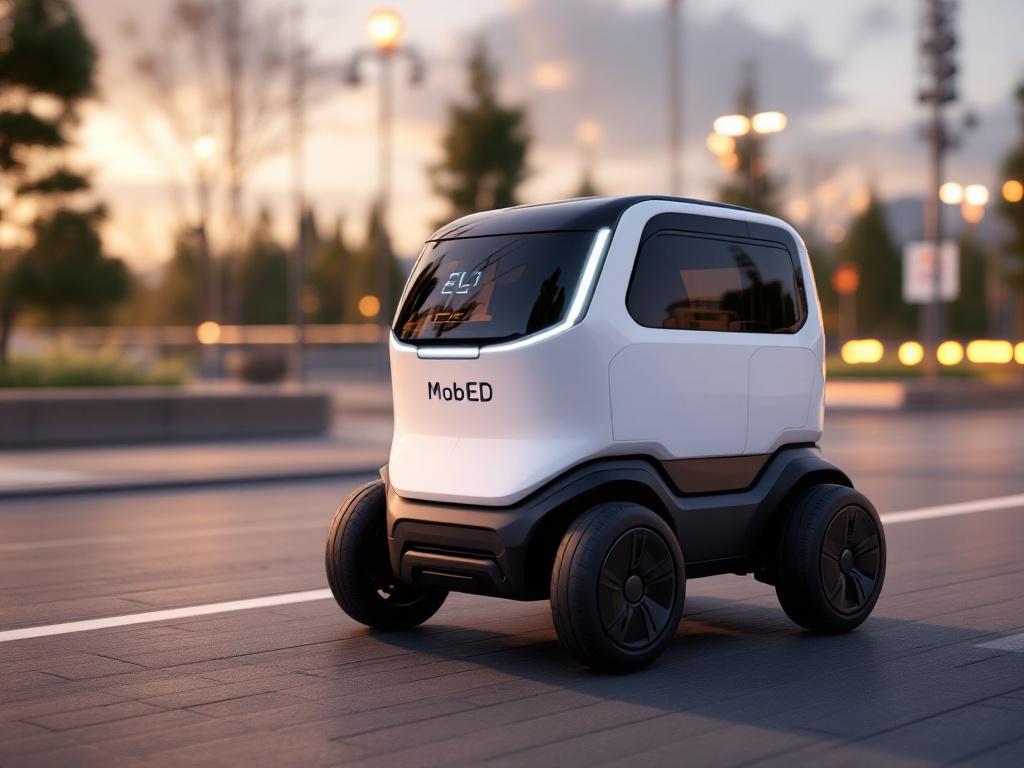
In the bustling halls of the International Robot Exhibition 2025 in Tokyo, Hyundai Motor Group unveiled a breakthrough that could reshape how industries and individuals interact with robotic assistants. The MobED, short for Mobile Eccentric Droid, represents the company’s first mass-produced mobility robot platform, designed to adapt to a multitude of roles from industrial logistics to everyday personal use. This four-wheeled wonder, powered by advanced AI and autonomous navigation, promises to handle everything from carrying golf clubs across a course to zipping around as an electric scooter, all while navigating complex environments with minimal human input.
Drawing from Hyundai’s extensive background in automotive innovation, the MobED builds on technologies like the e-Corner system, which allows wheels to pivot independently for maneuvers such as crab walking or 360-degree turns. This isn’t just a gimmick; it’s a practical evolution aimed at solving real-world mobility challenges in sectors like manufacturing, healthcare, and urban delivery. According to reports from Hyundai’s official newsroom, the platform debuts with two models: a Basic version for research and a Pro variant optimized for delivery tasks, both equipped with adaptive suspension that adjusts to terrain variations.
The robot’s design emphasizes versatility, featuring an eccentric wheel mechanism that enables it to traverse slopes up to 30 degrees and maintain stability even on uneven surfaces. Hyundai’s Robotics Lab has poured years of development into this, integrating intuitive autonomy software that uses AI to perceive surroundings, avoid obstacles, and plan paths dynamically. As noted in coverage by CleanTechnica, MobED’s “Adaptive Mobility” hardware and “Intuitive Autonomy” software create a foundation for what the company calls an “Infinite Journey” of applications, extending far beyond traditional robotics.
Unveiling the Mechanics Behind MobED’s Adaptability
At its core, MobED measures about 67 cm long, 60 cm wide, and 33 cm high in its compact form, but it can extend its wheelbase for enhanced stability when carrying heavier loads up to 30 kg. This scalability is key to its appeal, allowing it to morph from a compact trolley into a more robust platform. Industry insiders point out that this flexibility draws from Hyundai’s prior experiments, such as the e-Corner system showcased at CES events, where vehicles demonstrated lateral movements and precise parking in tight spaces.
Integration with Hyundai’s broader ecosystem is evident, including compatibility with hydrogen fuel cell technology, as seen in related innovations like the autonomous hydrogen charging robot displayed at the World Hydrogen Expo 2025. Posts on X highlight public excitement, with users sharing videos of similar wheel technologies enabling sideways movements, underscoring the buzz around such advancements. For instance, demonstrations of Hyundai’s robots carrying diverse payloads have gone viral, illustrating potential in scenarios like warehouse automation or personal assistance.
Hyundai plans to roll out over-the-air updates, mirroring its software-defined vehicle strategy, which aims to equip all models with advanced autonomous capabilities by 2025. This aligns with the company’s ambitious electric vehicle goals, targeting 670,000 EVs annually, including fuel-cell variants, backed by a $51 billion investment in R&D. As detailed in Allen Turner Hyundai’s blog, these efforts position Hyundai as a leader in blending robotics with mobility solutions.
Strategic Expansion into Robotics and AI
The push into robotics isn’t isolated; it’s part of Hyundai’s transformation from a carmaker to a comprehensive mobility provider. The acquisition of Boston Dynamics in 2021 accelerated this shift, infusing expertise in dynamic locomotion into projects like MobED. At events like the 2025 ZER01NE Day, Hyundai showcased AI and robotics innovations, fostering collaborations with creative talents to explore new applications.
Market projections suggest strong demand, with Hyundai aiming for 10,000 units sold in three years, as reported in Bloomberg posts echoed on X. This optimism stems from MobED’s practical design for industrial settings, where it can perform inspections, transport goods, or even assist in healthcare by delivering supplies autonomously. The Pro model’s enhanced sensors and AI enable it to operate in dynamic environments, learning from interactions to improve efficiency over time.
Critics and analysts, however, note challenges in scaling production and ensuring reliability in varied conditions. Yet, Hyundai’s track record with autonomous technologies, such as the Level 4 robotaxi developed with Motional, provides a solid foundation. Equipped with over 30 sensors including LiDAR and radar, these systems ensure safe navigation, a feature MobED inherits for its operations.
Applications Spanning Industries and Daily Life
Imagine a golf course where MobED trails players, carrying clubs and navigating bunkers effortlessly, or urban streets where it serves as an e-scooter for short commutes. TechRadar’s coverage describes it as a “charming” companion, emphasizing its user-friendly interface and modular attachments that allow customization for tasks like surveillance or entertainment.
In manufacturing, MobED could revolutionize logistics by integrating with factory systems, reducing human error and boosting productivity. News from Chosun highlights its debut alongside hydrogen innovations, pointing to eco-friendly applications in sustainable energy sectors. The robot’s ability to handle high-pressure tasks, like charging stations, extends its utility to infrastructure maintenance.
Furthermore, Hyundai envisions MobED in service industries, such as hospitality, where it could deliver room service or guide guests. X users have speculated on its potential as a personal mobility aid, with posts praising the e-Corner-inspired maneuvers for accessibility in crowded cities.
Overcoming Hurdles in Autonomous Innovation
Despite the promise, deploying such robots raises questions about regulatory compliance and ethical AI use. Hyundai addresses this through rigorous testing, similar to its Las Vegas robotaxi pilots, ensuring safety standards are met. The company’s focus on over-the-air updates allows for continuous improvements, adapting to new regulations or user feedback without hardware overhauls.
Collaboration plays a crucial role, with partnerships like those at ZER01NE Day fostering innovative ideas. As per Hyundai’s announcements, these events highlight the group’s commitment to open innovation, inviting external talents to co-develop applications.
Economic factors also influence adoption; with global robotics markets expanding, Hyundai’s early entry could secure a competitive edge. Analysts from AInvest describe it as a strategic move in industrial robotics, driven by needs in logistics and manufacturing.
Future Visions and Market Impact
Looking ahead, MobED could integrate with Hyundai’s urban air mobility and last-mile solutions, creating a seamless ecosystem. The company’s investment in software-defined approaches ensures longevity, with plans for global OTA updates by 2025 enhancing all connected devices.
Public sentiment on X reflects enthusiasm, with viral content showcasing similar technologies, though some express skepticism about affordability and real-world reliability. Hyundai counters this by offering Basic models for researchers, democratizing access to advanced robotics.
In healthcare, MobED’s potential for contactless delivery could prove invaluable, especially in post-pandemic scenarios. Its AI-driven autonomy minimizes risks, aligning with Hyundai’s broader innovation strategy outlined in Hyundai Worldwide’s innovation page.
Pushing Boundaries in Sustainable Mobility
Hyundai’s hydrogen focus complements MobED, as seen in the autonomous charging robot, promoting clean energy integration. News from Korea JoongAng Daily notes the company’s persistence despite rivals’ retreats, showcasing robots that identify and connect to vehicles precisely.
This dedication extends to environmental benefits, with MobED’s electric propulsion reducing emissions in industrial applications. Partnerships with entities like Aptiv enhance technological robustness, ensuring dependable performance.
Ultimately, MobED embodies Hyundai’s vision of a future where robots enhance human capabilities without replacing them, fostering efficiency across diverse sectors.
Global Reach and Collaborative Horizons
Expansion plans include targeting markets in Asia, Europe, and North America, with initial sales focusing on industrial clients. Hyundai’s Robotics Lab continues to iterate, incorporating feedback from iREX 2025 demonstrations.
Collaborations with startups through events like ZER01NE Day could yield novel uses, such as in agriculture for crop monitoring or in retail for inventory management. The platform’s modularity invites customization, potentially sparking a new wave of robotic applications.
As Hyundai navigates this evolving field, MobED stands as a testament to innovative engineering, blending automotive heritage with cutting-edge AI to address modern mobility needs.


 WebProNews is an iEntry Publication