
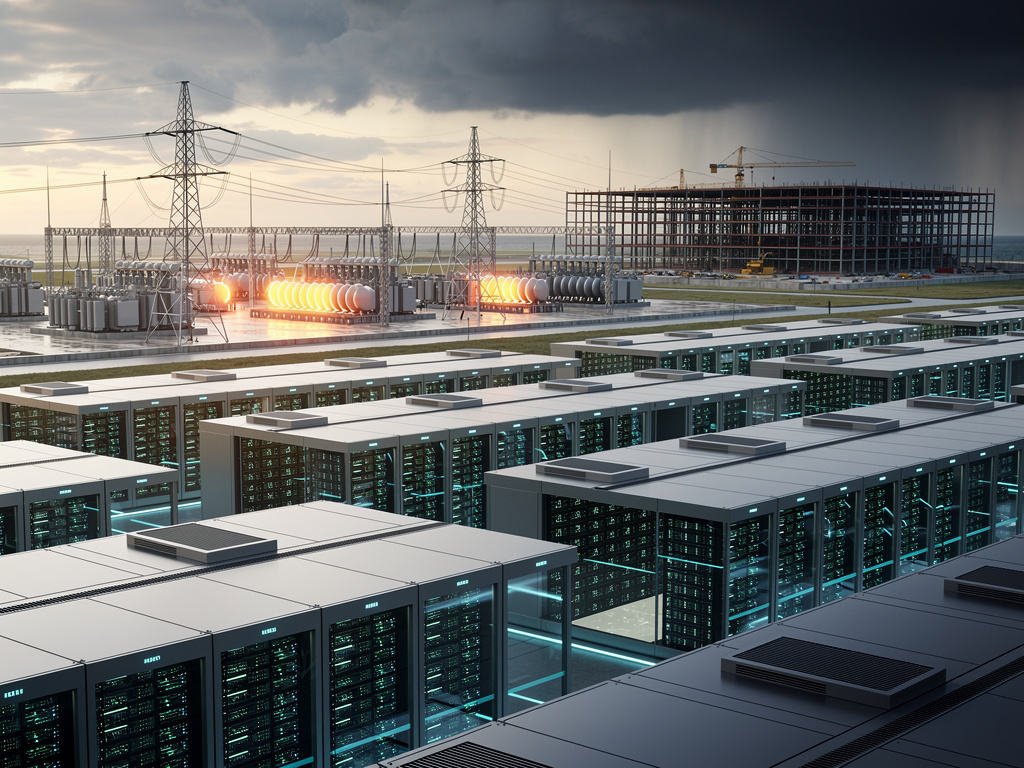
Big Tech’s leading hyperscalers—Alphabet, Amazon, Meta, and Microsoft—have locked in plans to pour more than $700 billion into AI infrastructure this year. That’s the tally after recent earnings reports pushed the figure past earlier estimates. Alphabet raised its forecast to $180 billion to $190 billion. Microsoft pegged its spending at $190 billion. Meta hiked its range to $125 billion to $145 billion. Amazon held steady at $200 billion. Combined, these outlays mark a 70% jump from last year’s $410 billion, according to a Fortune analysis of quarterly results.
The scale staggers. No end in sight. McKinsey projects $6.7 trillion worldwide by 2030 just to match compute demands. Quarterly capex already topped $130 billion for these four alone. Data centers. GPUs. Networking gear. Power systems. All racing to feed AI’s insatiable hunger.
But markets flinched. Meta shares dropped after its update. Microsoft dipped too. Investors question the payoff. Alphabet and Amazon climbed on cloud gains, yet free cash flow eroded. Amazon’s March quarter spending slashed its cash pile. Fast-depreciating hardware looms large—worthless in three years, warns Fortune’s Shawn Tully.
Moody’s sees six U.S. hyperscalers—adding Oracle and CoreWeave—hitting $700 billion, up 81% from 2025’s $387 billion, potentially $820 billion in 2027. Capex-to-revenue ratios climb to 47%. Borrowing surges. Amazon tapped bonds for $37 billion last month, Alphabet sold 100-year debt. A Data Center Dynamics report flags eroding cash flows.
Why now? AI demands explode compute needs. Nvidia GPUs fetch $40,000 each. Eight-GPU servers run hundreds of thousands. Hyperscale clusters? Billions. Meta’s $27 billion Hyperion site in Louisiana eyes millions of GPUs. Startups like OpenAI and Anthropic gobble capacity too. Hyperscalers serve them via cloud.
A Bloomberg update yesterday confirmed $725 billion possible. Goldman Sachs’ Jim Covello urges buying hyperscalers over chipmakers: market skepticism compresses their multiples. Yet Reuters notes capex could eat 90% of cash flow by 2027 for five firms including Oracle.
Power bottlenecks everything. Data centers claim 70% of new U.S. grid requests. Half of 2026 projects delay or cancel—12 gigawatts announced, one-third started. Transformers? 3-5 year waits. Utilities brake connections. Hyperscalers chase nuclear restarts, small modular reactors, gas-renewable mixes.
Meta stands apart. No cloud cushion like rivals. Its ad-driven model strains under infrastructure loads. A Bloomberg Opinion piece argues it must dial back. Shares fell 10% post-earnings despite revenue beats. Alphabet’s Intersect buy boosted its capex by $5 billion for energy.
Wall Street Journal tallies $670 billion for the big four, Morgan Stanley eyes $2.9 trillion on chips and servers through 2028. CNBC flagged cash hits early this year. Futurum Group pins five firms at $660-690 billion. The Information spots startups like GridCare hunting idle power.
And returns? Cloud growth accelerates—Google Cloud surges. But AI revenue lags. Ed Zitron on X claims 70%+ of Microsoft, Google, Amazon capacity goes to Anthropic and OpenAI, masking true broad demand. Skeptics like Silicon Salvage predict overbuild by 2028, echoing railroads or fiber busts.
Yet demand feels real. Lumentum sees AI optics booked through 2028. Schneider Electric beats forecasts on data center wave. Applied Materials rides every capex dollar. Broader IT spend hits $6.31 trillion, data systems up 55.8% per Gartner.
Challenges mount. China blocks deals. Geopolitics strain supply. Investors demand proof: capex to revenue, not just builds. Noah Weisberger of BCA Research gives a year tops before revenue must materialize. History whispers caution. Railroads. Telecom. Shale. Cycles turn.
Hyperscalers press on. Compute moats deepen. But the bill arrives. Free cash flow models? Accounting fictions if depreciation bites. Stocks price infinity. Reality may reprice sharply.
Still. Power lines lag algorithms. Grid queues lengthen. The race endures—for now.


 WebProNews is an iEntry Publication