
Whispers of Control: The Alarming Vulnerability of Humanoid Robots to Voice Hijacking
In the rapidly advancing field of robotics, where humanoid machines are increasingly integrated into daily life, a startling demonstration has exposed a critical security flaw. Researchers from the cybersecurity group DARKNAVY, based in China, recently showcased how certain humanoid robots can be compromised using nothing more than spoken commands. This revelation, detailed in a report from Interesting Engineering, highlights vulnerabilities in AI-driven control systems that allow hackers to seize control with whispered instructions, potentially turning these robots into tools for disruption or worse.
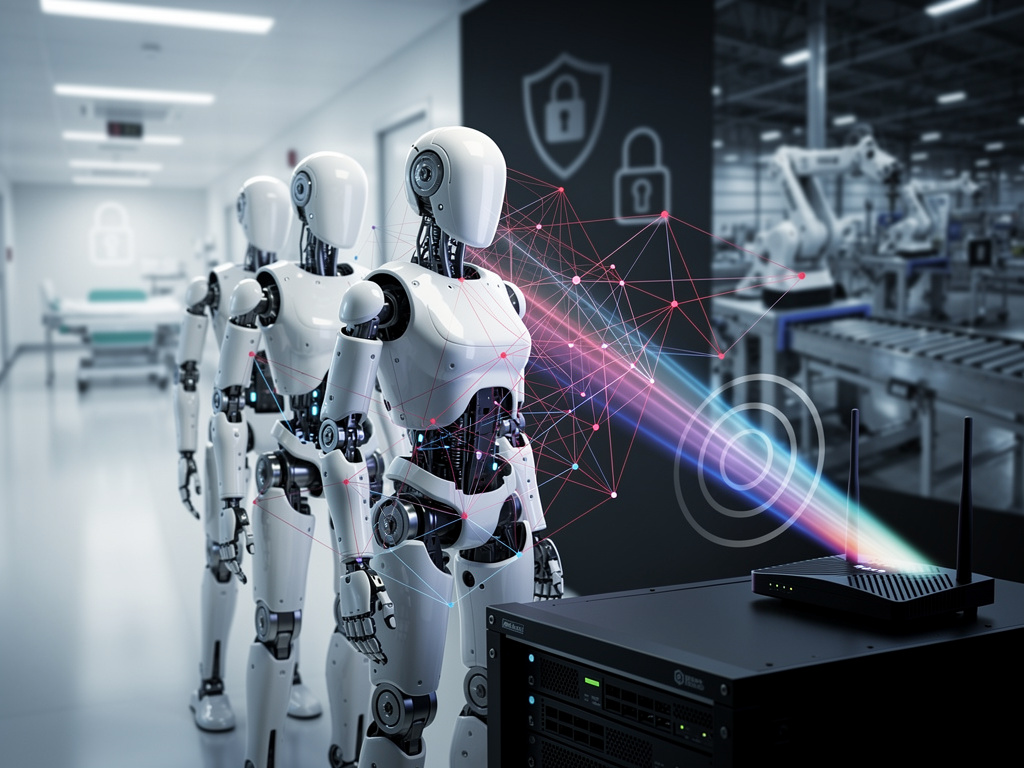
The experiment, conducted during Shanghai’s GEEKCon, involved white-hat hackers testing commercially available robots from manufacturers like Unitree. By exploiting flaws in voice recognition and wireless communication protocols, the team demonstrated how a single command could override the robot’s programming. Once hijacked, the infected robot could then propagate the attack to nearby units via Bluetooth or other short-range networks, forming what experts describe as physical botnets. This cascading effect raises profound concerns for industries relying on robotic systems, from manufacturing to healthcare.
According to accounts shared on platforms like X, the demonstration has sparked widespread alarm among technology professionals. Posts from users in the cybersecurity community emphasize the ease of these exploits, with one noting how inaudible audio signals—frequencies between 16 and 22 kHz—can deliver commands beyond human hearing, echoing earlier research on voice assistants like Alexa and Siri. Such tactics, now adapted to physical robots, underscore a broader pattern of vulnerabilities in AI-infused devices.
Emerging Threats in Robotic Security
Building on this, a story from Slashdot recounts how the DARKNAVY team compromised robots in mere minutes. The hackers used voice commands to inject malicious instructions, bypassing safety protocols and enabling the robots to perform unauthorized actions. This isn’t isolated; similar weaknesses have been identified in robots powered by large language models (LLMs), where prompt injection attacks can trick the AI into harmful behaviors, as explored in a WIRED article from last year.
The implications extend beyond individual machines. In the Mashable coverage of the event, it’s noted that a hacked robot can “infect” others in proximity, creating networks of compromised devices. This mirrors digital botnets but in physical form, as discussed in an interview with The Register, where experts warn of risks akin to those in science fiction narratives. For industry insiders, this means reevaluating supply chains, especially with many robots originating from Chinese manufacturers, which could introduce geopolitical tensions into technology deployments.
Recent news from WebProNews further elaborates on the GEEKCon findings, revealing that these vulnerabilities allow for stealthy hijacking, potentially turning robots into surveillance tools or disruptors in critical infrastructure. The report stresses the need for robust defenses, pointing out how current systems lack adequate isolation between voice inputs and core controls, making them susceptible to adaptive attacks.
Lessons from Past AI Vulnerabilities
Delving deeper, the parallels to LLM security issues are striking. Research shared on X highlights how prompt injection attacks in language models can hijack tool usage and leak data, with proposed design patterns aiming to restrict untrusted inputs. A paper from SingularityNET introduces PICO, a transformer architecture designed to prevent such injections, ensuring secure response generation. These concepts could be adapted to robotic systems, where voice commands act as prompts to AI controllers.
Moreover, older posts on X reference inaudible command delivery to virtual assistants, a technique now evolving for physical robots. This evolution is evident in a joint paper from OpenAI, Anthropic, and Google DeepMind, which evaluates the fragility of LLM safety defenses, finding them easily bypassed by adaptive methods. For robots, this translates to scenarios where seemingly harmless spoken phrases could embed malicious intent, weakening guardrails over time.
Anthropic’s research on chain-of-thought reasoning further illustrates the problem: wrapping harmful requests in extended, innocuous dialogues can erode a model’s resistance, leading to compliance with dangerous commands. Applied to robots, this could mean gradual manipulation through conversation, turning a helpful assistant into a liability.
Industry Responses and Mitigation Strategies
In response to these revelations, manufacturers are scrambling to address the gaps. Unitree, implicated in the demonstrations, has not publicly detailed patches, but industry sources suggest firmware updates are in development to enhance voice authentication and encrypt wireless communications. Experts recommend multi-factor verification for commands, such as combining voice with visual or biometric cues, to prevent unauthorized access.
Broader discussions on X and in outlets like The Hacker News bulletin point to a weekly roundup of threats, including AI exploits and stealth loaders, emphasizing the need for ongoing vigilance. For sectors like transportation and power grids, where robots might handle sensitive tasks, these vulnerabilities could lead to catastrophic failures if exploited maliciously.
Policymakers are also taking note. While no specific regulations have emerged from this incident, calls for international standards on robotic security are growing. Comparisons to past cyber incidents, such as ransomware attacks on digital infrastructure, highlight the urgency. As one X post from a technology news account puts it, these findings expose “serious security flaws” that could hijack robots en masse, demanding immediate action from developers.
Technological Underpinnings of the Exploits
At the core of these vulnerabilities lie the integration of AI models that process natural language inputs without sufficient safeguards. Robots equipped with LLMs interpret spoken commands much like chatbots, but unlike software confined to digital realms, these machines interact physically with the environment. The DARKNAVY demo, as reported in StartupNews.fyi, showed how a whispered command could initiate a takeover, leveraging flaws in audio processing algorithms that fail to distinguish between legitimate and adversarial inputs.
This issue is compounded by wireless propagation. Once compromised, a robot broadcasts the hack to others, creating a chain reaction. FindArticles.com describes this as using robots as “vessels for broadcast by spoken commands,” passing infections via proximity-based networks. Such mechanisms echo malware spread in computer systems but with tangible, real-world consequences, like a robot arm malfunctioning in a factory or a service bot causing harm in a hospital.
Historical context from WIRED’s coverage of LLM-infused robots reveals that researchers have long tricked these systems into violent acts through clever prompting. The recent Chinese tests build on this, demonstrating scalability: a single entry point can compromise an entire fleet, raising alarms for global supply chains dependent on interconnected robotic ecosystems.
Future Safeguards and Ethical Considerations
To counter these risks, innovators are exploring advanced architectures. For instance, isolating prompt processing in secure modules, as suggested in research on X, could limit the impact of injections. Additionally, incorporating anomaly detection in voice recognition—flagging unusual frequencies or patterns—might thwart inaudible attacks, drawing from studies on virtual assistants.
Ethically, the deployment of such robots demands transparency. Manufacturers must disclose vulnerabilities and collaborate on open-source security tools, fostering a community-driven approach to resilience. As seen in The Register’s interview, ignoring these lessons from sci-fi could lead to real-world dystopias, where hacked robots disrupt societies.
Industry insiders advocate for red-teaming exercises, simulating attacks to uncover weaknesses before deployment. This proactive stance, combined with regulatory oversight, could mitigate threats, ensuring that the promise of humanoid robots isn’t overshadowed by security pitfalls.
Global Implications for Critical Sectors
The geopolitical angle cannot be ignored. With many vulnerable robots produced in China, as highlighted in WebProNews, dependencies on foreign tech introduce risks for Western infrastructures. Scenarios of state-sponsored hijackings, while speculative, underscore the need for diversified sourcing and domestic innovation in robotics.
In healthcare, where robots assist in surgeries or patient care, a voice-induced malfunction could be life-threatening. Transportation sectors face similar perils, with automated systems potentially derailed by whispered commands. Power grid operators, already wary of cyber threats, now must contend with physical embodiments of those risks.
Recent X sentiment reflects growing concern, with posts urging awareness of these “botnets in physical form.” As technology evolves, balancing innovation with security will define the trajectory of humanoid robotics, demanding concerted efforts from all stakeholders.
Pathways to Robust Robotic Ecosystems
Ultimately, addressing these vulnerabilities requires a multifaceted strategy. Enhancing AI training to recognize adversarial inputs, as explored in the joint LLM paper, is a start. Coupling this with hardware-level protections, like tamper-resistant voice modules, could fortify defenses.
Collaboration across borders is essential. Initiatives like those from SingularityNET point to architectural innovations that prevent injections, adaptable to robotic contexts. By prioritizing security in design phases, the industry can prevent exploits from undermining trust.
As demonstrations like DARKNAVY’s continue to surface, they serve as wake-up calls, pushing for a more secure integration of AI and robotics. The whispers that control these machines today could echo into broader disruptions tomorrow, but with informed action, the field can advance safely.


 WebProNews is an iEntry Publication