
Xu Zhijun delivered the words with striking candor. Huawei’s rotating chairman told interviewers that American pressure had done what domestic incentives alone could not. “If the United States hadn’t forced our country, our companies, and our industry, we wouldn’t have done something like this,” he said. “But we are also grateful to the US for enabling our country’s semiconductor industry chain to truly grow. Now the momentum is very good, and everyone recognizes and supports it.”
The remarks, reported this week by TechRadar and days earlier by Tom’s Hardware, land at a pivotal moment. U.S. export controls imposed since 2019 have reshaped global semiconductor competition. They aimed to slow China’s military and technological advances. Instead they accelerated Beijing’s push for self-reliance. Chinese firms poured resources into domestic tools, processes and architectures. Progress followed. Sometimes faster than expected.
Huawei itself stands as Exhibit A. Blacklisted by the U.S. Commerce Department in May 2019, the company lost access to advanced chips from TSMC and others almost overnight. Its smartphone business cratered. Revenue plunged. Yet the pressure forced reorganization. Engineers designed hundreds of chips tailored to available domestic production. Supply chains knit together across Chinese designers, manufacturers and research institutes. A domestic market for those solutions expanded. The result? Huawei’s 2023 Mate 60 Pro phone, powered by a SMIC-made 7-nanometer Kirin processor, marked a surprise return to 5G capability. Consumers lined up. The signal was clear. Sanctions had not crippled the firm. They had compelled adaptation.
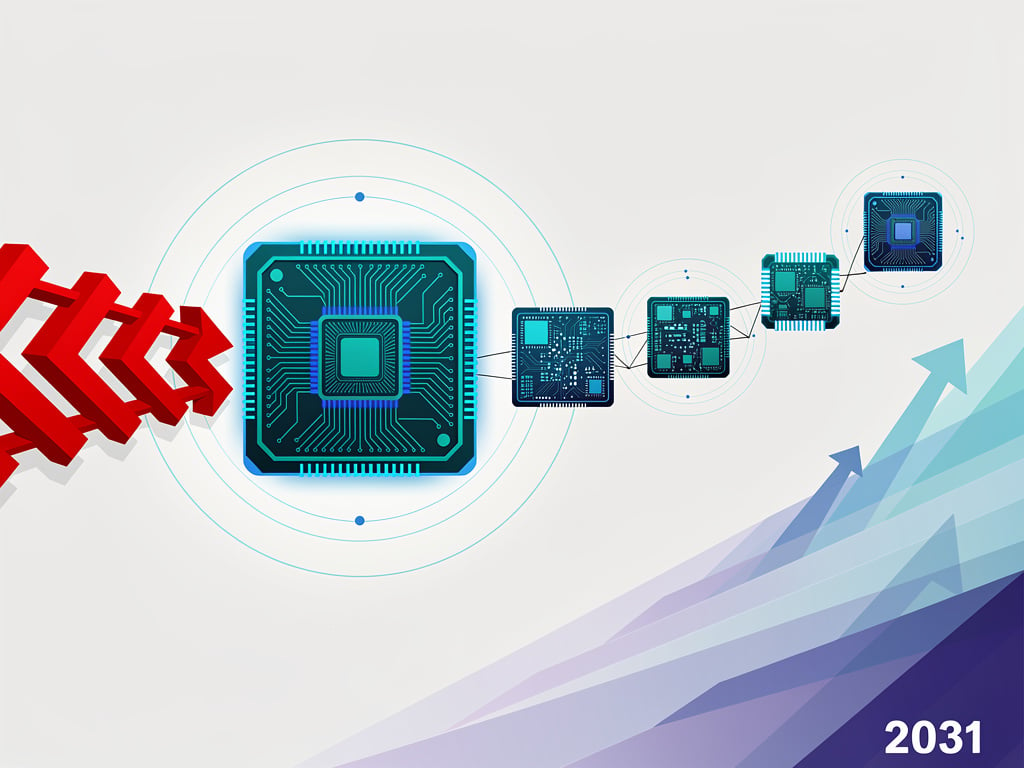
That adaptation continues. Last month Huawei outlined a new chip design strategy. Called LogicFolding and paired with what the company terms a Tau Scaling Law, the approach shifts emphasis. Instead of chasing ever-smaller transistors, it optimizes signal and data movement inside the chip. Shorter wiring distances. Lower latency. Higher effective density. Huawei claims the architecture can deliver 55 percent higher transistor density and reach 1.4-nanometer-class performance by 2031. All without reliance on extreme ultraviolet lithography machines that remain tightly controlled. Reuters detailed the announcement on May 25, 2026. SMIC shares jumped 7.6 percent that day.
The claims invite scrutiny. Industry observers note that multi-patterning deep ultraviolet techniques allow SMIC to reach 7-nanometer and even 5-nanometer-class output today. Yields remain lower than TSMC’s. Costs run higher. Capacity stays limited. Still, the trajectory holds. Recent reports show SMIC preparing to scale 7-nanometer production further in 2026 while advancing 5-nanometer pilot lines. Huawei’s Ascend 910C AI accelerator already runs on SMIC’s 7-nanometer process. It competes in Chinese enterprise workloads against mid-tier Nvidia offerings. And newer partnerships point toward 3-nanometer ambitions by late in the decade, according to industry sources cited in multiple outlets.
But the story extends beyond one company. China’s broader semiconductor push gained momentum under duress. Government directives now favor homegrown chips. Imports of certain Nvidia models face blocks at the border. Beijing’s latest five-year plans prioritize advanced logic nodes, yield improvements and regional clusters in Beijing, Shanghai, Shenzhen, Wuhan and Hefei. Memory production at YMTC and CXMT complements logic work at SMIC and Huawei. The result is a thickening web of local suppliers. Equipment makers. Material providers. Talent programs that repatriate engineers.
Analysts differ on the net effect. Some argue the controls hurt American firms more than they slowed China. A October 2025 report from the Information Technology and Innovation Foundation found that U.S. export curbs helped Huawei rebuild while eroding market share for Western suppliers in China. Nvidia’s sales in the country dropped toward zero for cutting-edge parts. Chinese AI labs turned to domestic alternatives and still produced competitive models. Others point to persistent gaps. China still imports billions in advanced equipment and chemicals. Leading-edge foundry capacity lags global leaders. EUV machines from ASML remain off limits.
And yet the gratitude expressed by Xu Zhijun carries weight. It reflects a view inside Huawei that external force accomplished what internal bureaucracy might have delayed. “The momentum is very good,” he said. That momentum appears in Huawei’s 2025 annual report, which showed revenue of 880.9 billion Chinese yuan. It appears in SMIC’s expanding advanced-node output, projected to approach 60,000 wafer starts per month through 2026. It appears in the quiet accumulation of patents, tools and experience that multiplies with each passing quarter.
Washington watches closely. The Trump administration has adjusted some rules, allowing limited sales of Nvidia’s H20 chips with fees attached. Yet core restrictions on the most advanced AI training hardware remain. Congressional reports and think tank assessments continue to debate whether tighter controls or smarter ones would better serve U.S. interests. Recent congressional research service documents highlight the tension between national security and commercial competitiveness.
For industry insiders the lesson is pragmatic. Pressure can spur innovation. It can also raise costs and fragment markets. Huawei’s pivot to advanced packaging, system-level optimization and domestic vertical integration offers one model for operating under constraint. SMIC’s success with DUV multi-patterning offers another. Neither fully replaces the global supply chain that existed before 2019. Both demonstrate that determined investment and forced focus produce results.
So the cycle continues. New U.S. rules prompt new Chinese workarounds. Those workarounds generate fresh capabilities. And those capabilities invite further restrictions. Xu Zhijun’s thanks may have been rhetorical. The progress it acknowledges is not. China’s semiconductor sector has grown stronger precisely because it had to. How far that strength carries, and at what cost to all sides, will shape technology competition for the rest of the decade.


 WebProNews is an iEntry Publication