
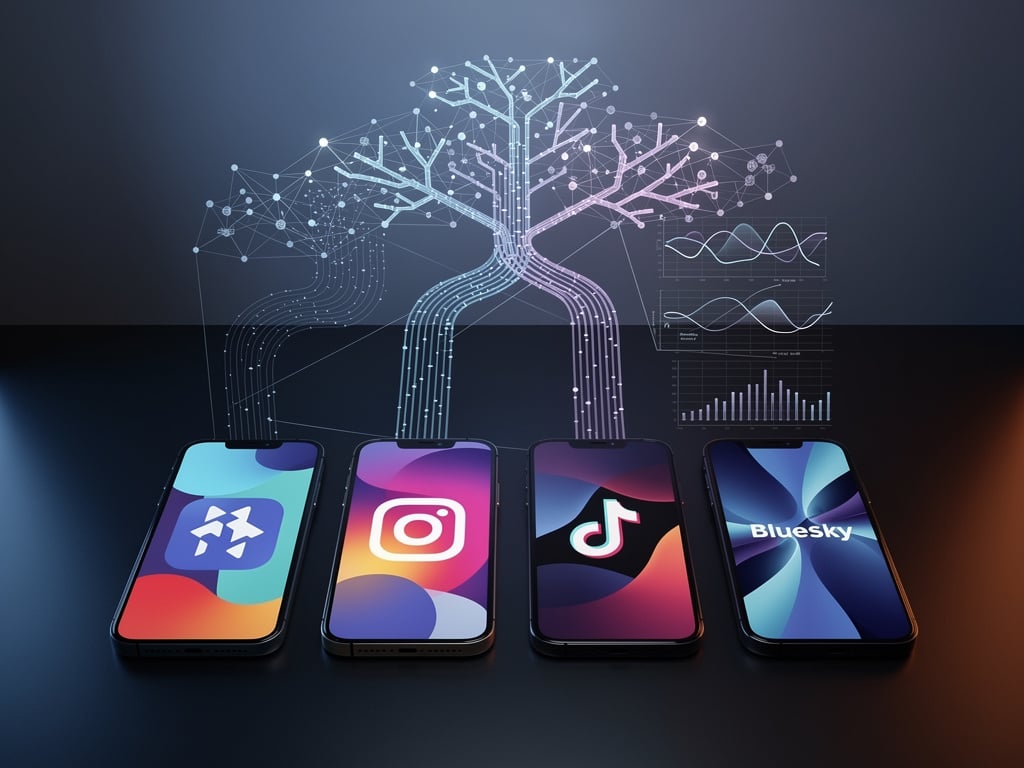
Social media platforms long decided what appeared in users’ feeds. Algorithms, opaque and all-powerful, dictated the mix of posts, videos and ads. Users could follow accounts or tap “not interested.” Yet the real power stayed with the companies. That dynamic has started to change.
Threads, Instagram and TikTok now offer tools that let people directly shape their recommendation systems. The features go beyond simple toggles. They hand users ways to train algorithms with explicit preferences, topic sliders and even natural language requests. And the shift comes at a moment when trust in platform curation sits near rock bottom.
Aisha Malik laid out the latest moves in TechCrunch on June 17, 2026. Threads rolled out “Your Algo” the day before. It builds on the February “Dear Algo” experiment, where users posted public messages such as “Dear Algo, show me more posts about podcasts.” The new private version removes the performance pressure of broadcasting those requests. People select topics, signal more or less interest, and set the preference to last one, three or seven days. One example: request extra baseball coverage while dialing down stressful news.
Instagram moved earlier. It expanded its “Your Algorithm” tool in early June 2026 after first testing it on Reels in December 2025. Users now access it across feed, Explore and Reels. The interface shows the topics the system believes matter most to them. Then they edit the list. Add interests. Subtract others. The recommendations adjust. Adam Mosseri, head of Instagram, explained the thinking. He told followers, “Ever wish you could see your algorithm? Make some changes? Well, as of this week, you can do so on Instagram.” In the The National report from January 2026, Mosseri added, “I’m particularly excited about a world where there’s transparency and control around your algorithm.”
Large language models make this possible. They translate user instructions into something the ranking systems understand. Mosseri noted that previous ranking models “have historically been built with technology that wasn’t transparent to users.” Now LLMs show why certain content appears and let people communicate preferences directly. The result feels less like a black box. More like a collaborator.
TikTok took an earlier path. Its “Manage Topics” tool, introduced in 2024 and expanded in 2025, gives users sliders for categories such as sports, travel, humor, current affairs, dance and food. An information button explains each bucket. “Creative arts” covers painting, drawing, graphic design and art-related tutorials. The 2025 update added AI-powered Smart Keyword Filters. Block “remodeling” and the system also suppresses “renovation” and similar terms. The For You feed reshapes based on these signals.
Bluesky pushes the concept furthest. The open-source platform defaults to a chronological feed of accounts users follow. Its Discover tab mixes suggestions with followed content. But the real difference lies in algorithmic choice. Users create, curate and subscribe to custom algorithms. Hootsuite reported in May 2026 that more than 50,000 such feeds exist on the service. Anyone can build one. Hootsuite noted, “users aren’t subjected to one algorithm, but free to create and curate multiple algorithms to match their interests.” Relevancy and community connection matter more than universal engagement signals here. The contrast with centralized platforms stands out sharply.
Meta has offered chronological options on Facebook and Instagram for years, partly in response to regulatory pressure. Threads supports custom feeds. Yet the new transparency features mark a deeper evolution. Feeds no longer mimic a single broadcast channel. They start to resemble personalized streaming libraries where viewers adjust the programming.
The business logic holds. Tailored content keeps people scrolling longer. Higher engagement lifts ad performance. For users the appeal is obvious. Less unwanted material. More of what actually interests them. But the change carries risks.
The National outlined several. Legal accountability grows murky when users co-design their feeds. Can platforms still be held responsible for harmful content that appears because of explicit user choices? Publicly shared algorithm preferences give marketers and malicious actors fresh targeting data. Stronger signals train recommendation engines even better at holding attention. Echo chambers become easier to build. Users can mute entire categories of opposing views. The article asked whether this new era “empowers users or amplifies the potential for harm.” It concluded that 2026 is the year to start training algorithms, one way or the other.
Other platforms show parallel moves. YouTube tests features that let viewers filter Shorts from search results. Google has adjusted Discover to respect preferred sources. These tweaks reflect broader pressure from regulators and users tired of algorithmic surprises. The EU’s Digital Services Act and proposed U.S. legislation on algorithm accountability add weight.
Content creators and marketers must adapt. Saves, shares and meaningful comments may gain importance over raw views in user-shaped environments. Niche consistency could outperform broad virality when people explicitly choose their topics. Brands that once gamed opaque systems now compete on sustained value. Stop delivering what a specific audience asked for and risk being removed with one reset.
Research backs the shift toward deliberate user signals. A March 2026 study highlighted that intentional feedback, flags and requests for human review change how algorithms learn. Passive scrolling tells one story. Active shaping tells another. Entrepreneurs who track these signals position themselves to work with the systems rather than against them.
Yet transparency has limits. Platforms still control the underlying models. They decide which user inputs carry the most weight. They can update ranking logic without notice. The new tools give the appearance of control. Full mastery remains elusive.
Bluesky’s model suggests one possible future. Thousands of community-created algorithms compete. Users mix and match. The platform becomes a host for many recommendation engines instead of the sole author of one. Success depends on whether enough people invest time in building or discovering those feeds. Early numbers look promising. Over 50,000 and counting.
Instagram and Threads take a different route. Centralized but more communicative. The company shows its work through topic lists and explanations. Users speak back in clear terms. The conversation between person and algorithm grows more direct. Engagement may rise. Polarization could too.
TikTok’s sliders and keyword filters feel pragmatic. They suit a video-first audience that wants quick ways to tune an endless stream. The AI layer that understands synonyms demonstrates how machine learning now interprets intent rather than exact matches. That sophistication will spread.
No single approach will dominate. Different platforms serve different needs. Some users want maximum customization. Others prefer simplicity. The common thread is the transfer of influence. After years of complaints about manipulative feeds, companies respond by sharing the steering wheel. Not all of it. Just enough to improve retention and blunt criticism.
The experiment is young. Threads’ “Your Algo” is barely a day old as of the latest reports. Instagram’s expansion is weeks old in its current form. Results will emerge over months. Watch for changes in time spent, ad click-through rates and user satisfaction scores. Watch also for unintended consequences. Coordinated campaigns that poison specific topics. Filter bubbles that grow tighter than before. Legal tests that question platform immunity.
One fact stands clear. The age when algorithms operated in complete secrecy has ended. Users now see the ingredients and adjust the recipe. Platforms gain better data in return. The relationship evolves from dictation to dialogue. How that dialogue shapes public discourse, creator economies and digital well-being will define the next chapter of social media.
Marketers who treat these tools as temporary fads will fall behind. Those who study user preferences at the individual level and create content that survives explicit filtering stand to gain. The feed belongs a little more to each person now. Make it count.


 WebProNews is an iEntry Publication