
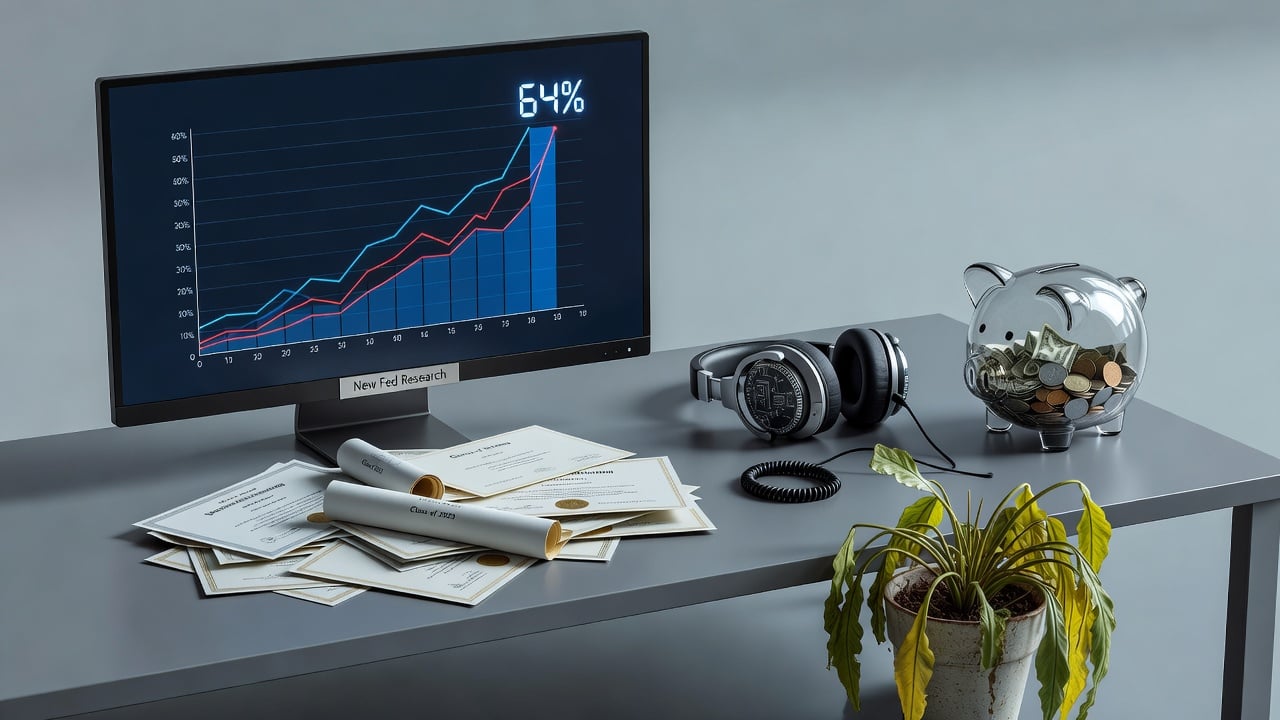
Remote work promised flexibility. It delivered isolation for many new graduates. Companies once touted the model as a way to attract fresh talent without geographic limits. Data now tells a different story. Unemployment for young college graduates climbed from 3.6% in 2019 to 5.6% by early 2026. Researchers at the Federal Reserve Bank of New York attribute nearly two-thirds of that rise to the spread of remote and hybrid arrangements.
NPR reported the findings in June. The analysis combined federal employment statistics with internal data from a large technology firm. Companies grew four times more likely to fill remote-capable roles with experienced workers. Training entry-level staff over video calls simply costs too much in senior time and lost productivity. One startup founder called the process “a silent tax on senior time,” according to a Yahoo Finance article published at the end of June.
But the problem runs deeper than hiring. Young workers miss the casual exchanges that once accelerated learning. “Sending someone a Slack message admitting ‘I don’t know what I’m doing’ is harder than leaning over at lunch,” a recent graduate told the same outlet. The result? Slower skill development. Longer ramp-up periods. And a growing reluctance among managers to take chances on unproven talent.
New Research Challenges Old Assumptions
And the numbers keep mounting. A study published in Science and covered by NewsNation in early June found remote work substantially increases time spent alone. It worsens mental well-being across several measures. Use of mental health services and prescriptions rises, especially among those living by themselves. For recent graduates entering the workforce during this shift, the timing could not be worse.
The New York Fed paper suggests remote work explains 64% of the post-pandemic unemployment increase for this group. Older workers with established skills face fewer barriers in remote settings. Newcomers do not. They need repeated observation, immediate feedback, and the chance to absorb company culture through daily interactions. Those opportunities shrink when everyone logs in from separate locations.
Wall Street Journal coverage highlighted similar concerns. In a recent piece, the paper noted that many Gen Z professionals remain alien to the American office. Executives at major banks and tech firms push for return-to-office policies. Yet remote options persist. This leaves entry-level roles scarce. The Wall Street Journal reported three days ago that frustration over mentoring challenges has led some employers to simply hire fewer juniors altogether.
Less than a quarter of Gen Z workers prefer fully remote setups, according to Gallup data cited in the reporting. Most want hybrid at minimum. They recognize what data now confirms. Informal learning suffers without proximity. Career trajectories flatten. Promotions come slower when visibility depends on scheduled video meetings rather than hallway conversations.
So companies adapt in telling ways. Revolut updated its policy for 2027 graduate and intern programs. Participants must now spend at least three days per week in the office. The fintech firm kept its broader remote-first stance for existing staff. The move, shared widely on X in late June, signals growing recognition that early-career development demands different conditions than established roles.
Productivity data tells only part of the tale. A Fortune 500 tech company’s internal records, examined by New York Fed researchers, showed clear patterns. Remote positions went disproportionately to candidates with prior experience. Entry-level hiring contracted. The unemployment rate for recent graduates sat at 3.7% between 2022 and 2025. That marked a 20% increase from pre-pandemic levels. Older college graduates saw no comparable rise.
Mental health effects compound the issue. Gen Z reports higher burnout and emotional exhaustion in remote environments than older cohorts, according to the 2026 Remote Work Well-Being Survey covered by Coworking Cafe. Average well-being scores landed lower for this group. Stress from constant digital communication adds up. Boundaries blur. Feedback loops weaken. The very tools meant to connect end up creating distance.
Frontiers in Public Health published related findings this year. Higher-educated remote workers showed increased odds of diagnosed depression and anxiety disorders despite reporting fewer acute symptoms. The gap between self-reported feelings and clinical outcomes suggests underreporting or delayed recognition. Either way, the pattern raises alarms for a generation already navigating post-pandemic social disruptions.
Some organizations push back. They schedule more structured mentoring sessions. They invest in better virtual collaboration platforms. They create artificial water-cooler moments through mandatory office days for new hires. Yet these fixes carry their own costs. And many firms simply avoid the problem by hiring experienced remote workers instead.
The shift carries long-term consequences. Entire cohorts risk missing foundational experiences that once shaped successful careers. Networking happens less organically. Sponsorship relationships form more slowly. Corporate culture transmits unevenly when half the team appears only as faces on a screen.
Recent X discussions reflect the tension. Korn Ferry experts posted about the New York Fed research in mid-June. They questioned whether remote work, not artificial intelligence, drives youth unemployment. Replies from sales professionals and recruiters echoed the sentiment. Real development, several argued, still happens best in person during early career stages.
Yet fully reversing course seems unlikely. Too many workers value the flexibility. Too many companies have built infrastructure around distributed teams. The challenge lies in designing hybrid models that protect early talent pipelines without sacrificing the gains remote work provides for mid-career employees.
Leaders face hard choices. Accept slower development of junior staff. Increase investment in virtual training and mentorship programs. Or bring more new graduates into physical offices, even as the broader workforce stays flexible. Each option carries trade-offs. None fully resolves the core tension.
Data from the past six years paints a consistent picture. Remote work delivers real benefits for experienced professionals. It creates measurable obstacles for those just starting out. The next phase of work policy must address this divide directly. Otherwise, a generation of talent risks being left behind. Not by automation. But by the very arrangements once sold as liberating.


 WebProNews is an iEntry Publication