
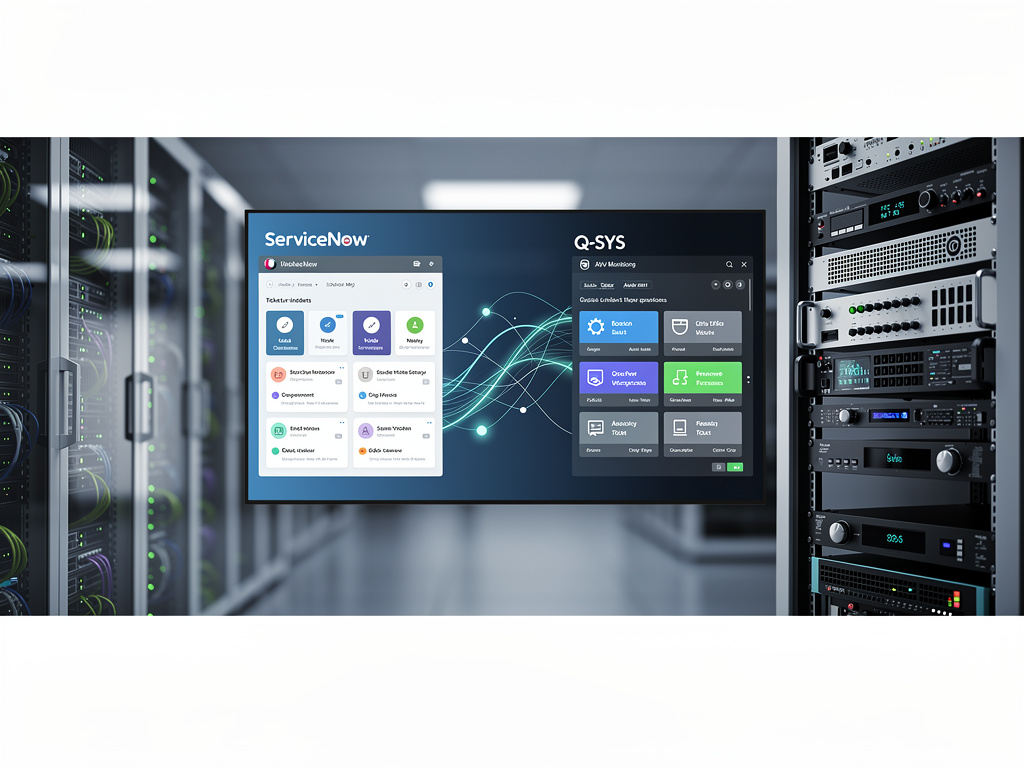
The convergence of audiovisual technology and enterprise IT management has taken a significant leap forward with Q-SYS’s integration into ServiceNow’s IT Service Management platform. This development represents a fundamental shift in how organizations approach the oversight of their AV infrastructure, moving away from siloed management approaches toward unified IT operations frameworks that promise greater efficiency and reduced operational complexity.
According to AV Interactive, Q-SYS Reflect now automates the flow of AV system data directly into ServiceNow’s widely adopted ITSM platform, enabling IT teams to manage AV infrastructure alongside their traditional IT assets. This integration addresses a longstanding challenge in enterprise technology management: the disconnect between sophisticated AV systems and the IT service management tools that govern most organizational technology operations.
The timing of this integration reflects broader industry trends toward IT-AV convergence, a movement that has accelerated dramatically as hybrid work environments become permanent fixtures of corporate operations. Organizations have invested heavily in conference room technology, digital signage systems, and distributed audio solutions, yet many continue to manage these assets through separate processes and teams, creating inefficiencies and visibility gaps that impact both operational costs and user experience.
Bridging the Historical Divide Between AV and IT Operations
For decades, audiovisual systems existed as a distinct category within enterprise technology portfolios, managed by specialized teams using proprietary tools and processes. This separation made sense when AV equipment consisted primarily of standalone devices with minimal network connectivity. However, the transition to IP-based AV systems and software-defined infrastructure has fundamentally altered this calculus, making the separation increasingly untenable from both technical and operational perspectives.
The Q-SYS Reflect integration with ServiceNow represents a recognition that modern AV systems are network devices that require the same rigorous management, monitoring, and lifecycle oversight as servers, switches, and other IT infrastructure components. By enabling AV asset data to flow automatically into ServiceNow, organizations can finally achieve a unified view of their technology estate, applying consistent policies and procedures across all technology domains.
Technical Architecture and Operational Implications
The integration operates through Q-SYS Reflect, a cloud-based management platform that provides centralized monitoring and control capabilities for Q-SYS ecosystems. By establishing a bidirectional data flow between Reflect and ServiceNow, the integration enables real-time synchronization of asset information, operational status, and maintenance requirements. This automated data exchange eliminates manual data entry processes that have historically plagued AV asset management efforts, reducing errors and ensuring that IT service management databases maintain accurate, current information about AV infrastructure.
From an operational standpoint, this integration transforms how organizations handle common AV-related scenarios. When a conference room audio processor requires firmware updates, for example, the requirement can now appear automatically in ServiceNow’s change management workflows, subject to the same approval processes and scheduling coordination that govern other infrastructure changes. Similarly, when AV equipment experiences performance degradation or failure, incidents can be automatically created in ServiceNow, routed to appropriate support teams, and tracked through resolution using established ITSM processes.
The implications extend beyond simple asset tracking. Organizations using ServiceNow for IT financial management can now incorporate AV assets into their total cost of ownership calculations, depreciation schedules, and budget planning processes with unprecedented accuracy. This visibility enables more informed decisions about technology investments, replacement cycles, and resource allocation across the technology portfolio.
Strategic Advantages for Enterprise IT Organizations
The strategic value of this integration becomes particularly evident in large, distributed organizations where AV infrastructure spans multiple locations and encompasses hundreds or thousands of individual components. Without automated integration, maintaining accurate inventories of AV equipment requires significant manual effort, often resulting in outdated or incomplete asset databases that undermine effective management and planning.
By automating this data flow, organizations can redirect staff time from administrative tasks to higher-value activities such as optimizing system performance, planning strategic upgrades, and improving user experiences. The integration also enhances compliance and audit readiness by ensuring that AV assets are documented with the same rigor as other IT infrastructure, complete with configuration details, maintenance histories, and lifecycle information.
Furthermore, the unified management approach facilitated by this integration supports more effective vendor management and support coordination. When issues arise with AV systems, having comprehensive asset and configuration information readily available within ServiceNow accelerates troubleshooting and resolution, whether problems are addressed by internal teams or external service providers.
Industry Context and Competitive Positioning
The Q-SYS-ServiceNow integration arrives as the AV industry continues its rapid evolution toward software-defined, network-centric architectures. This shift has created both opportunities and challenges for organizations seeking to modernize their AV infrastructure while maintaining operational stability and cost control. The integration positions Q-SYS as a forward-thinking platform that recognizes and addresses the operational realities of enterprise IT environments.
ServiceNow’s dominant position in the ITSM market makes it a particularly strategic integration target. Organizations that have standardized on ServiceNow for IT service management can now extend that platform’s capabilities to encompass AV infrastructure without requiring additional specialized tools or creating separate management silos. This unified approach aligns with broader enterprise technology trends toward platform consolidation and operational standardization.
The integration also reflects Q-SYS’s understanding that purchase decisions for enterprise AV systems increasingly involve IT leadership rather than being confined to AV specialists or facilities management. By demonstrating compatibility with established IT management frameworks, Q-SYS strengthens its appeal to IT decision-makers who prioritize operational consistency and integration with existing tools and processes.
Implementation Considerations and Best Practices
Organizations considering implementation of the Q-SYS-ServiceNow integration face several important planning considerations. Successful deployment requires coordination between AV teams, IT operations groups, and ServiceNow administrators to ensure proper configuration of data flows, appropriate mapping of AV assets to ServiceNow’s configuration management database structure, and establishment of workflows that accommodate AV-specific requirements while maintaining consistency with broader ITSM processes.
Data governance represents another critical consideration. Organizations must determine which AV system attributes should synchronize to ServiceNow, how frequently updates should occur, and what thresholds should trigger automated incident creation or other workflow actions. These decisions require input from multiple stakeholders and should reflect both technical requirements and organizational policies regarding incident management, change control, and asset lifecycle management.
Training and change management also merit careful attention. While the integration automates data flow, realizing its full value requires that IT staff understand AV system characteristics and that AV teams become proficient with ServiceNow workflows and processes. Organizations that invest in cross-training and establish clear roles and responsibilities typically achieve better outcomes than those that attempt to maintain strict separation between IT and AV functions despite implementing unified management tools.
Future Trajectory and Emerging Possibilities
The Q-SYS-ServiceNow integration represents an important milestone in IT-AV convergence, but it also points toward future developments that could further transform enterprise technology management. As artificial intelligence and machine learning capabilities mature within both platforms, organizations may gain predictive maintenance capabilities that identify potential AV system issues before they impact users, automatically schedule preventive maintenance, and optimize system configurations based on usage patterns and performance data.
The integration could also facilitate more sophisticated analytics that correlate AV system performance with business outcomes, helping organizations understand how technology investments contribute to productivity, collaboration effectiveness, and employee satisfaction. Such insights could inform more strategic approaches to technology planning and investment prioritization.
Additionally, as organizations continue expanding their use of ServiceNow beyond traditional ITSM into areas such as IT operations management, IT business management, and customer service management, the presence of comprehensive AV asset data within the platform creates opportunities for new use cases and workflows that span multiple ServiceNow modules and business processes.
Measuring Success and Demonstrating Value
Organizations implementing the Q-SYS-ServiceNow integration should establish clear metrics for measuring its impact and value. Relevant key performance indicators might include reductions in time required for AV asset inventory updates, improvements in mean time to resolution for AV-related incidents, increases in first-call resolution rates for AV support requests, and enhancements in asset utilization rates resulting from better visibility into system deployment and usage patterns.
Financial metrics also warrant attention, including reductions in operational costs associated with AV infrastructure management, more accurate total cost of ownership calculations that inform better investment decisions, and improvements in budget forecasting accuracy for AV-related expenses. Organizations that systematically track these metrics can build compelling business cases for the integration while identifying opportunities for continuous improvement in their technology management practices.
The integration of Q-SYS with ServiceNow ultimately represents more than a technical achievement; it embodies a philosophical shift toward treating AV infrastructure as integral components of the enterprise IT ecosystem rather than separate, specialized systems requiring distinct management approaches. As organizations continue navigating the complexities of hybrid work, distributed collaboration, and digital transformation, this unified approach to technology management will likely become not just advantageous but essential for maintaining operational efficiency and delivering consistent, high-quality user experiences across all technology touchpoints.


 WebProNews is an iEntry Publication