
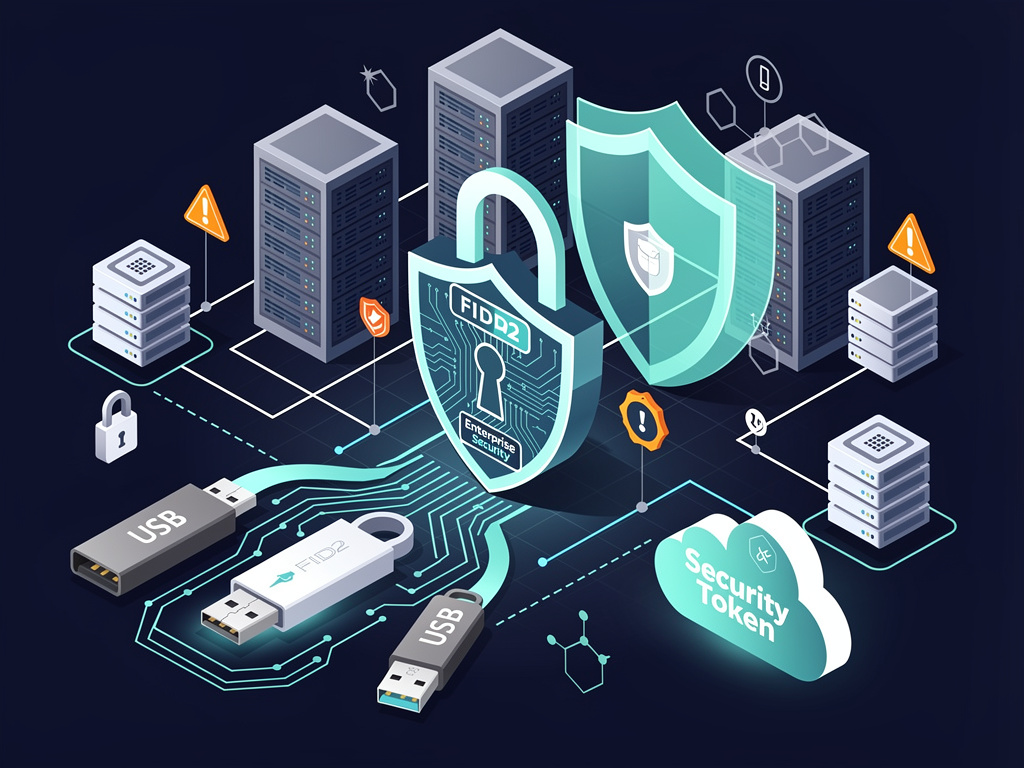
The humble USB flash drive, long relegated to basic file storage duties, is experiencing an unexpected renaissance as a critical component in enterprise cybersecurity infrastructure. As organizations grapple with increasingly sophisticated phishing attacks and credential theft, security professionals are discovering that the same portable storage devices cluttering desk drawers can be repurposed into robust multi-factor authentication tokens—often at a fraction of the cost of dedicated hardware security keys.
This transformation comes at a pivotal moment for corporate IT departments. According to recent industry analysis, the global hardware security module market continues expanding as businesses seek alternatives to password-based authentication systems that have proven vulnerable to modern attack vectors. The convergence of open-source authentication protocols and readily available consumer hardware is democratizing access to security measures previously reserved for enterprises with substantial budgets.
The technical foundation enabling this shift rests on the Universal 2nd Factor (U2F) protocol, now evolved into the FIDO2 standard, which allows any USB device to function as a physical authentication key. As detailed by MakeUseOf, the process involves reformatting standard USB drives to emulate the cryptographic capabilities of purpose-built security keys like YubiKey or Google Titan devices. This approach leverages the same public-key cryptography that underpins dedicated security tokens, creating a hardware-backed authentication factor resistant to remote exploitation.
The Technical Architecture Behind USB-Based Authentication
The conversion process fundamentally alters how a USB drive interacts with authentication systems. Rather than simply storing files, the reformatted device generates and securely stores cryptographic key pairs—a public key registered with online services and a private key that never leaves the device. When authentication is required, the service sends a challenge that only the device holding the corresponding private key can properly sign, creating a verification mechanism that cannot be replicated through phishing or man-in-the-middle attacks.
Implementation typically requires specialized software tools that can reconfigure the USB drive’s firmware or partition structure. Open-source solutions have emerged to facilitate this transformation, though the process demands careful attention to compatibility requirements. Not all USB drives support the necessary firmware modifications, and organizations must verify that their chosen devices can reliably execute cryptographic operations without introducing latency that might frustrate end users.
Cost-Benefit Analysis for Enterprise Deployment
The economic implications of this approach are substantial for organizations managing authentication infrastructure at scale. Dedicated hardware security keys typically cost between $20 and $70 per unit, while commodity USB flash drives can be purchased in bulk for under $5 each. For an enterprise deploying multi-factor authentication to thousands of employees, this price differential translates to six-figure savings—capital that can be redirected toward other security initiatives or compliance requirements.
However, the total cost of ownership extends beyond initial hardware acquisition. IT departments must factor in the resources required for initial configuration, user training, and ongoing support. Unlike plug-and-play commercial security keys that arrive pre-configured with vendor support, repurposed USB drives require in-house expertise to set up and troubleshoot. Organizations must also consider the durability concerns inherent in consumer-grade USB devices, which may not withstand the daily insertion cycles and physical stress that dedicated security tokens are engineered to endure.
Security Considerations and Potential Vulnerabilities
While the cryptographic principles underlying USB-based authentication remain sound, security professionals must evaluate several implementation-specific risks. Consumer USB drives lack the tamper-resistant enclosures and secure elements found in purpose-built security keys, potentially exposing them to sophisticated physical attacks. An adversary with temporary access to an unattended device might attempt firmware manipulation or side-channel analysis to extract private key material—attack vectors that dedicated security tokens are specifically hardened against.
The firmware modification process itself introduces additional risk surfaces. Unlike commercial security keys that undergo rigorous security audits and certification processes, open-source conversion tools may contain undiscovered vulnerabilities or implementation flaws. Organizations must carefully vet the software tools they employ for this purpose, reviewing source code where possible and monitoring for security advisories that might affect their authentication infrastructure.
Integration Challenges Within Existing IT Infrastructure
Deploying USB-based authentication tokens requires careful coordination with existing identity and access management systems. Most modern web services support FIDO2/WebAuthn standards, but legacy enterprise applications may require additional middleware or authentication proxy services to bridge compatibility gaps. IT teams must conduct thorough testing across their application portfolio to identify services that cannot accommodate hardware-based authentication, developing fallback procedures that maintain security without blocking legitimate access.
The user experience dimension presents its own set of challenges. While dedicated security keys are designed for intuitive operation with clear visual indicators and tactile feedback, repurposed USB drives may lack these user-friendly features. Organizations must invest in comprehensive training programs that help employees understand the authentication workflow, recognize legitimate authentication prompts, and troubleshoot common issues like improper device insertion or driver conflicts.
Regulatory Compliance and Audit Considerations
For organizations operating under strict regulatory frameworks, the choice between commercial security keys and repurposed USB drives carries compliance implications. Industries subject to standards like PCI DSS, HIPAA, or SOC 2 must ensure their authentication mechanisms meet specific technical requirements and can withstand audit scrutiny. While the underlying cryptographic protocols may be identical, auditors may question the use of non-certified consumer hardware in security-critical roles, requiring organizations to provide extensive documentation of their security controls and risk assessments.
The documentation burden extends to incident response and forensic capabilities. Commercial security key vendors typically maintain detailed logs of device manufacturing, firmware versions, and security patches—information that proves invaluable during security investigations. Organizations using repurposed USB drives must establish their own asset tracking and configuration management processes to maintain comparable visibility into their authentication infrastructure.
The Future of Democratized Hardware Authentication
The emergence of USB drives as viable security tokens reflects broader trends toward accessible, hardware-based authentication mechanisms. As passwordless authentication gains momentum across the technology industry, the barrier to entry for robust security continues to fall. This democratization enables smaller organizations and individual users to implement security measures previously available only to well-resourced enterprises, potentially raising baseline security standards across entire sectors.
Industry observers anticipate continued evolution in this space as authentication protocols mature and hardware capabilities advance. The next generation of USB devices may incorporate security features as standard components, blurring the distinction between general-purpose storage and dedicated authentication tokens. Meanwhile, emerging standards for mobile device-based authentication may eventually supersede physical tokens altogether, though hardware keys are likely to retain relevance in high-security environments where air-gapped authentication remains essential.
Strategic Implementation Recommendations
Organizations considering this approach should adopt a phased deployment strategy that begins with pilot programs in non-critical environments. This allows IT teams to refine their configuration processes, develop troubleshooting procedures, and gather user feedback before expanding to production systems. Pilot participants should represent diverse technical skill levels to ensure the solution remains accessible to all employee segments.
Risk management frameworks must be updated to reflect the specific vulnerabilities associated with repurposed USB authentication tokens. This includes establishing clear policies around physical device security, such as requirements for device storage when not in use and procedures for reporting lost or stolen tokens. Organizations should also maintain a supply of backup authentication methods to prevent lockouts when primary tokens fail or are unavailable, ensuring business continuity while preserving security controls.
The transformation of ordinary USB drives into security tokens represents more than a cost-saving measure—it exemplifies how open standards and technical innovation can democratize cybersecurity capabilities. While this approach may not suit every organization’s risk profile or operational requirements, it offers a compelling alternative for those seeking to strengthen authentication infrastructure without incurring the full cost of commercial hardware security keys. As the technology matures and best practices emerge, USB-based authentication may become a standard component of the modern enterprise security toolkit.


 WebProNews is an iEntry Publication