
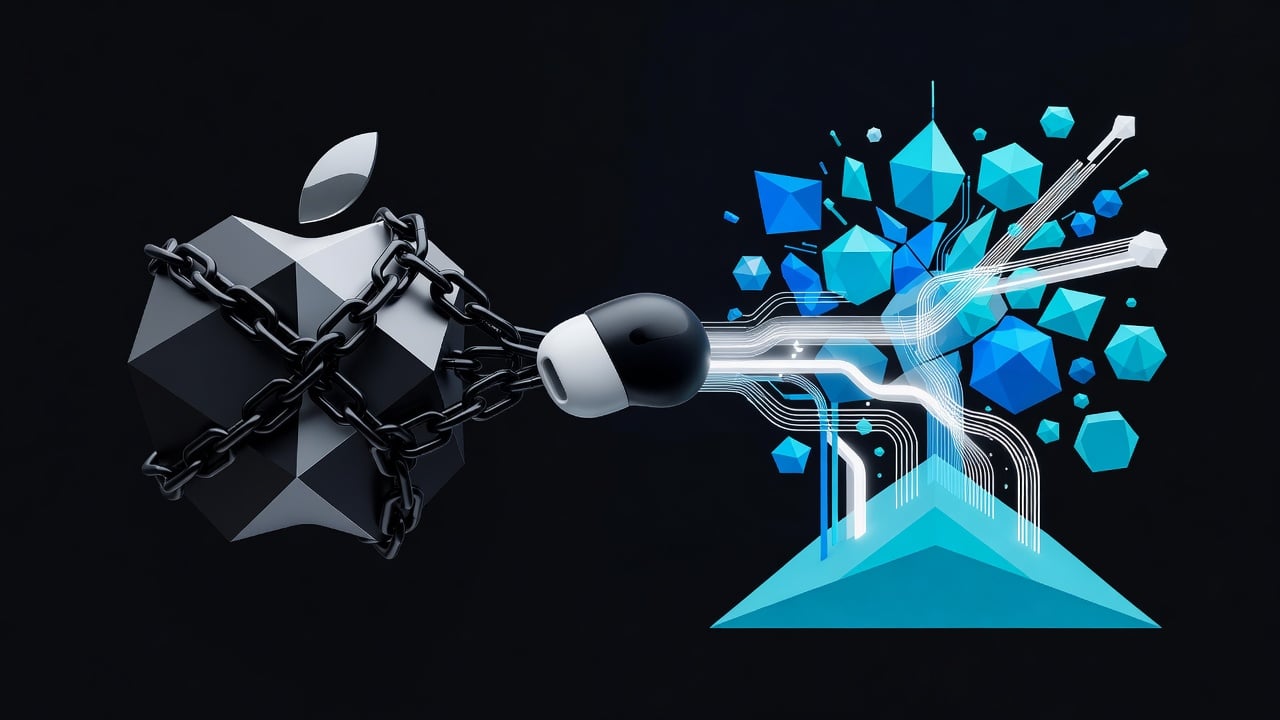
Apple’s AirPods generate billions in revenue each year. Yet for users who step outside the company’s walled garden, those sleek white earbuds lose much of their magic. Features like precise battery readings, automatic ear detection, noise control mode switching, and conversational awareness simply vanish on Android phones or Linux laptops. Or they did, until a determined open-source developer decided to change that.
Enter LibrePods. The project, hosted at https://github.com/librepods-org/librepods, implements the proprietary protocol Apple uses to communicate advanced features between its earbuds and iOS devices. The result? Non-Apple users can now access many of the capabilities they paid for. And the project has gained serious traction, with more than 28,000 stars on GitHub.
But here’s the thing. This isn’t some polished commercial product. It’s a community effort born from reverse engineering. One that highlights both the ingenuity of independent developers and the deliberate choices companies make to tie hardware to specific software platforms.
The story starts with frustration. AirPods have worked as basic Bluetooth headphones on Android since their 2016 launch. Users could play audio and maybe toggle noise cancellation with a long press. Yet deeper integration remained out of reach. Apple doesn’t follow Bluetooth standards in every respect, according to reporting from How-To Geek. The company built a custom control layer on top of the standard that only its own devices could fully speak.
That changed quietly in 2026. Google rolled out fixes in Android 16 QPR3 for Pixel devices in March. The updates addressed compatibility gaps that had blocked richer AirPods support. OnePlus, Oppo, and Realme incorporated similar changes in their Android 16 builds. Suddenly the door cracked open.
LibrePods stepped through. The Android app landed on the Google Play Store in May 2026. Its description pulls no punches. “LibrePods allows Apple’s exclusive AirPods features to be used on non-Apple devices. Get access to noise control modes, adaptive transparency, ear detection, battery status, conversational awareness, head gestures, and more – all the premium features you paid for but Apple locked to their ecosystem.” The listing, available at https://play.google.com/store/apps/details?id=me.kavishdevar.librepods, notes an update date of May 17, 2026.
Core functions now work without rooting a phone. Precise battery percentages. Automatic pause and resume when removing or inserting the buds. Switching between noise cancellation, transparency, and off modes directly from quick settings or a widget. Customizing the long-press action. These land for free. Some advanced options sit behind an in-app purchase, though downloading the APK from GitHub unlocks everything at no cost.
Reviews paint a mostly positive picture. The app holds a 4.8-star rating from hundreds of users. One Pixel owner called it “brilliant,” noting fast ear detection compared with rival apps. A OnePlus user reported occasional disconnects with controls but praised overall performance. Developer responses appear promptly in the reviews, addressing bugs on specific devices.
Linux support arrived too. A Rust rewrite powers a desktop client available as an AppImage. Users on Ubuntu and other distributions can compile from source or grab nightly builds. The feature matrix shows strong parity for listening mode changes, ear detection, battery status, renaming, and conversational awareness. Head gestures work on Android but not yet on Linux. Several accessibility tweaks, including hearing aid customizations drawn from audiograms, are available or coming soon.
Not everything succeeds. Some capabilities require spoofing an Apple vendor ID, a step that carries risks and may need Xposed Framework on Android for full effect. Features like Find My network integration, head-tracked spatial audio, and heart rate monitoring from newer AirPods Pro models remain incomplete or out of scope. The project openly documents what works, what needs extra steps, and what won’t be attempted. Transparency like that stands out.
The technical approach relies on painstaking protocol analysis. Contributors credit a Wireshark dissector by pabloaul for guidance. Much of the Android code is written in Kotlin, while the Linux branch shifted to Rust for better performance and safety. Interestingly, the maintainer notes that AI tools helped generate portions of the code, including head gesture logic and certain Rust translations. Human oversight remains central. The license is GPLv3, with clear disclaimers that the project carries no affiliation with Apple and that trademarks belong to the company.
Original development traces back to kavishdevar, who now appears tied to the librepods-org GitHub organization. The repository lists dozens of contributors and supporters ranging from individual testers to organizations like Hack Club. Special recognition goes to those who defined protocol details or provided early patches for root-level access.
Alternatives exist. CAPod offers a non-root option for older Android versions. MagicPods targets Windows and Steam Deck. Yet LibrePods distinguishes itself through its open nature and expanding platform reach. Discussions on X in recent days highlight growing interest. One post framed the project as a “protocol story” rather than merely an app, pointing out how modern device value often lives in hidden control layers that platforms gatekeep.
Broader questions emerge from its success. When a consumer buys expensive wireless earbuds, how much of the promised experience should travel with the hardware? Apple’s strategy maximizes ecosystem stickiness. Features that feel like software updates are in practice tightly coupled to iOS and macOS. LibrePods demonstrates that those behaviors can be replicated elsewhere through determined engineering.
Of course, challenges remain. Battery life, connection stability, and firmware compatibility can vary across phone models and AirPods generations. Some users report having to re-pair devices after renaming them on Android. Edge cases with cars or multiple audio outputs still surface in bug reports. The project continues to iterate. Recent releases fixed bypass issues on older Android 16 Pixels, redesigned dialogs, and improved compatibility checks.
Its appearance on the Play Store marks a milestone. No longer confined to sideloading or rooted devices for basic use, the tool reaches a wider audience. That accessibility could accelerate feedback and contributions. At the same time, it invites scrutiny from those wary of any software that interacts so deeply with proprietary Bluetooth traffic.
Industry watchers note the pattern. Right-to-repair advocates have long pushed against locked-down hardware. Projects like this extend the conversation to wireless accessories and firmware features. They show that ownership doesn’t have to end at the physical object. With the control protocol documented in open code, the conversation shifts. Who gets to decide which devices may speak the full language of a pair of earbuds?
LibrePods won’t displace Apple’s own experience for most iPhone users. The polish, automatic switching across Apple devices, and tight Find My integration still favor the native platform. Yet for the growing number of people mixing Android phones with premium audio gear, or running Linux on their laptops, it delivers meaningful relief. Accurate battery widgets. Automatic pausing without awkward delays. The ability to nod your head to answer a call.
And the project keeps moving. With 33 releases behind it and active development visible in commits, new capabilities keep appearing. Hearing aid mode enhancements. Better multipoint connections limited to two devices for now. Customization options that match or exceed what Apple’s settings offer in some areas.
The real impact may prove cultural as much as technical. When thousands of users gain access to features previously withheld by vendor choice, expectations change. Hardware manufacturers face pressure to either open their protocols or accept that clever developers will fill the gaps. Users gain agency. They no longer accept that buying AirPods means buying into one company’s full stack.
That shift matters. In a market where earbuds have become everyday computing devices, the ability to carry features across operating systems strikes at the heart of platform lock-in. LibrePods doesn’t claim to solve every problem or support every possible configuration. It simply refuses to accept the limitation as permanent.
Whether this particular implementation becomes the standard or inspires successors, its existence already changes the calculation. Apple hardware can live a fuller life outside Apple software. The code sits in public view for anyone to audit, extend, or learn from. For an industry often criticized for closed systems, that openness offers a refreshing counterpoint.
Developers and tinkerers have taken notice. Discussions on Reddit, Hacker News, and X reflect a mix of excitement and pragmatic caveats about root requirements for advanced functions. Yet the core message resonates. You bought the buds. You should get to decide how they behave.


 WebProNews is an iEntry Publication