
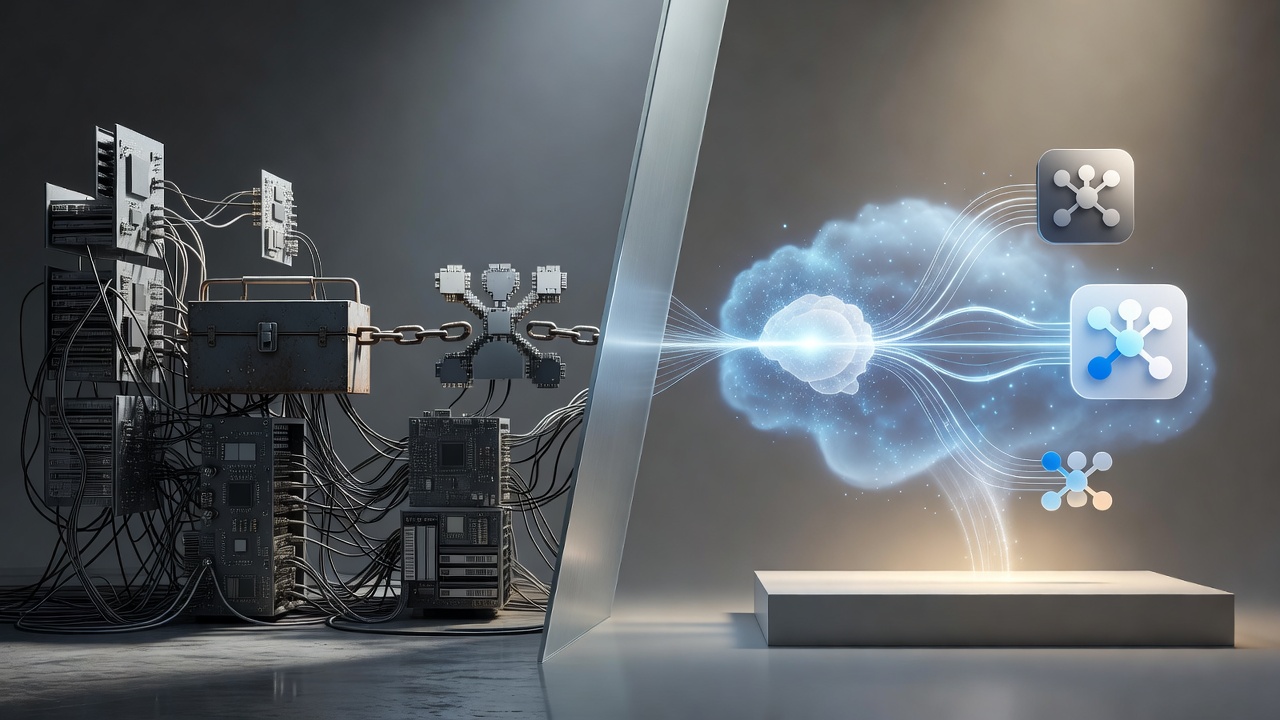
Nadeem Sarwar never set out to become a software developer. Yet here he sits, voice dictating features to an AI that quietly assembles entire applications in the background. The result feels less like coding and more like conversation. Bliss, he calls it.
Sarwar, managing editor at Digital Trends, built Framely first. The browser-based tool converts screenshots into editable mockups. It weighs just eight megabytes. No internet connection required. No privacy worries about cloud servers. He described the desired workflow to Claude. The model generated the code, handled edits, and adapted the interface to macOS Liquid Glass styling. Sarwar barely touched a keyboard.
“I talk to Claude. It builds me apps. It’s as simple as that!” he wrote. Other projects followed. A Chrome extension here. An offline Grammarly alternative for Mac that blends with his note-taking app there. An AirPods-based posture monitor. Even a minimalist word processor under 20 megabytes that runs in-browser on an old Intel i3 machine. One took two hours using Claude Opus.
His relationship with computers shifted. He talks more. Types less. The machine no longer feels like a rigid tool demanding precise syntax. It responds to natural language. It anticipates. And Sarwar gains complete command over features, user experience, and data handling. No bloat. No unwanted telemetry. Updates happen instantly because the code lives locally. “This is a transformational phase for how we interact with computers,” he observed.
But Sarwar’s story represents only one thread in a larger pattern unfolding across developers, hobbyists, and professionals in 2026. Anthropic’s Claude models, particularly the latest iterations, have accelerated this change. The company released Claude 4 in May 2025. Anthropic positioned Opus 4 as the world’s strongest coding model. It scored 72.5% on SWE-bench and 43.2% on Terminal-bench. More importantly, it sustains focus across hours-long agent workflows. Sonnet 4 followed with 72.7% on the same coding benchmark while offering better instruction adherence.
These numbers matter less than the practical outcome. Users report building functional software without traditional programming expertise. Christopher Meiklejohn took it further. In February 2026 he constructed a private social app for his friends in roughly a week. The application lets a tight circle share live recordings of bands like Phish and the Grateful Dead, discuss favorite films and books, and track upcoming concerts. It includes live chat, Spotify and setlist.fm integrations, an AI-powered discovery feature, invite management, and analytics.
Meiklejohn worked mostly at night, often past 2 a.m., starting on an 11-inch iPad with the Claude Code app pointed at an empty GitHub repository. The first version stood up in hours: login, feed, posting, deployment on Railway. Scope expanded naturally. Claude scaffolded the Go backend, wired the database, generated the server-driven UI that sends JSON to a React frontend, and produced native iOS and Android builds for TestFlight. Twenty-seven sessions across six days. One hundred sixty-eight files touched. Median response time of 29 seconds.
Anthropic’s own insights report on his usage described the style as “reactive and corrective rather than spec-driven.” Meiklejohn agrees. “You’re not writing code with Claude Code. You’re steering,” he explained in his post on his personal site. “The gap between those two things is where all the frustration lives, and also where all the speed comes from. When you accept that you’re the judgment layer — deciding when to redirect, when to stop, when a fix is making things worse — the tool becomes something genuinely extraordinary.”
Frustrations appeared. A database migration corrupted production timestamp data. Push notification debugging followed wrong paths. The model occasionally forgot to restart the Go server. Yet the app shipped. Friends use it. Spring tour arrived with the tool ready. Some things don’t change, Meiklejohn noted in a postscript. Even AI-assisted work carries the risk of overconfidence.
Alek Dobrohotov tested newer capabilities last fall. On October 3, 2025, he spent about eight hours across two projects with Claude Sonnet 4.5. One involved Magic BI, a business intelligence platform for his company C&C that turns raw data into actionable insights. The other created Quack, a Tauri-based desktop application that coordinates multiple AI coding assistants including Claude Code, Factory AI, and Codex in a single interface. He found the model fluent with complex logic and context switches. Responses arrived quickly. Consistency held across long sessions. Error handling proved solid.
It didn’t leave him speechless. But it delivered a reliable quality-of-life improvement. The experience felt like pair programming with an indefatigable partner. “Delightfully recursive quality” emerged when he used the tool to build a manager for similar tools. Dobrohotov compared it to OpenAI’s Codex. Different strengths. Not clearly superior across the board. His account appeared on Substack.
Recent discussions on X echo these accounts. Non-technical users report Claude Code replacing up to 70% of their computer time. They issue instructions. The system builds, audits, and iterates. One poster described it as beyond the impact of discovering Google or getting a first smartphone. Another highlighted how treating the model as a collaborator with opinions yields better results than command-style prompts. Features like Projects for persistent context, Skills for reusable automations, and Cowork for graphical computer control have expanded the audience.
Anthropic continues to iterate. Claude Science arrived in June 2026 as a customizable workbench for researchers. Claude Cowork extends agentic capabilities beyond coding to general tasks with a user-friendly interface. Desktop apps, browser extensions, and integrations with tools like Gmail, Calendar, Slack, and Figma multiply the possibilities. Pricing tiers from free to enterprise unlock higher limits and advanced features including Claude Code.
The shift carries implications for software creation itself. Traditional development cycles that once demanded teams, weeks, and specialized skills now compress. Individuals prototype ideas rapidly. They refine based on immediate feedback. Privacy improves when applications run locally. Customization reaches levels impossible with off-the-shelf software. Yet judgment remains essential. Steering demands clarity about goals. Debugging still requires understanding when the AI heads down unproductive paths.
Sarwar argues others should try it. Personal apps eliminate redundant features. They avoid jargon that complicates interfaces in commercial products. Real-time modifications respond to changing needs without waiting for vendor updates. Control over data stays with the user. The barrier to entry has dropped dramatically.
But. Success depends on clear direction. Vague requests produce vague results. The most effective builders combine domain knowledge with the ability to evaluate output critically. They iterate quickly. They learn the model’s tendencies. And they treat the interaction as collaboration rather than delegation.
Meiklejohn’s closing reflection lingers. Spring tour is coming. The app is ready. That sentence captures the new reality. Ideas that once lived only in notebooks or late-night thoughts can reach friends, colleagues, or customers in days. The computer no longer stands as an obstacle between intention and creation. It becomes an extension of thought itself.
Plenty of challenges persist. Context windows still limit enormous codebases. Hallucinations require vigilance. Production deployment brings its own set of operational concerns. Yet the momentum feels unmistakable. More stories surface weekly. More non-programmers ship real software. The bond between person and machine evolves once again. This time, the machine listens. And builds.


 WebProNews is an iEntry Publication