
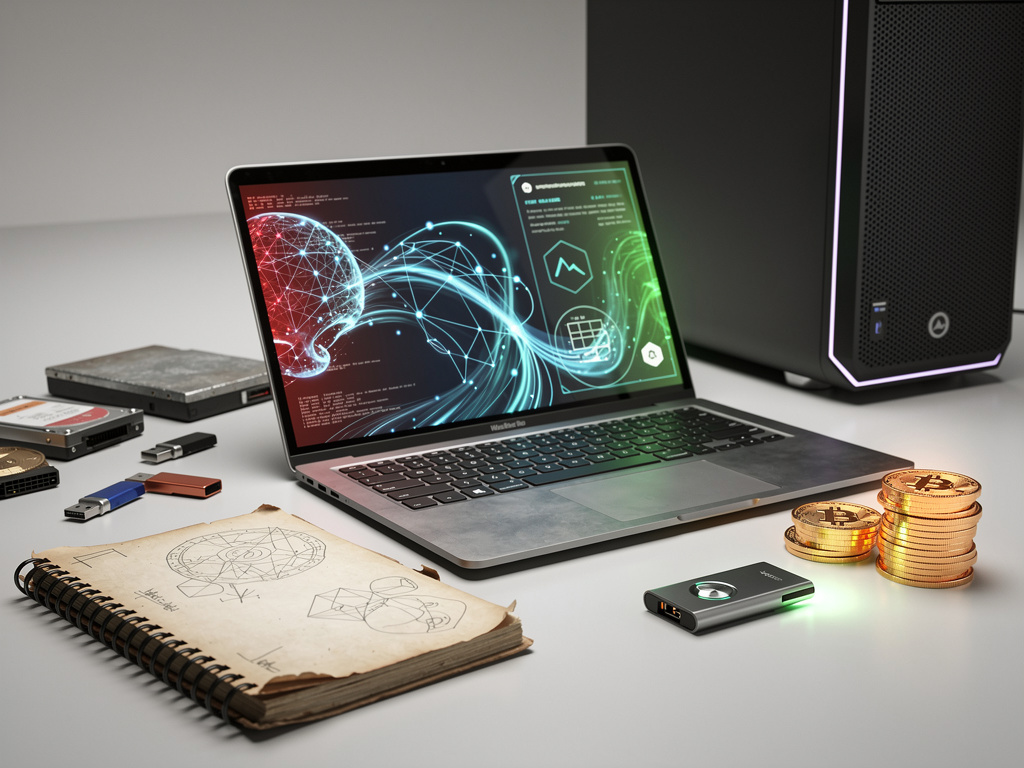
A pseudonymous Bitcoin holder just regained access to 5 BTC worth nearly $400,000. The coins had sat untouched in an encrypted wallet for more than a decade. The key? Anthropic’s Claude model didn’t crack any cryptography. It simply sorted through a mountain of old college files and spotted what human eyes had missed.
The story broke on X Wednesday when user @cprkrn posted in disbelief. “HOLY FUCKING SHIT OMG CLAUDE JUST CRACKED THIS SHIT,” the message read. He thanked Anthropic and its CEO Dario Amodei, even joking about naming a future child after him. The thread quickly racked up millions of views.
But the details reveal something more subtle than a sci-fi password breaker. The owner bought the Bitcoin in college for about $250 each. Then one night, while stoned, he changed the wallet password. And forgot it. Locked out for 11 years. The address, visible on blockchain explorers, held the funds but resisted every recovery attempt.
He tried brute force. For eight weeks he ran btcrecover, a specialized open-source tool, testing some 3.5 trillion password combinations on rented GPU power from Vast.ai. The effort cost him $15. It yielded nothing. He even paid professionals $250 for help. Still no luck.
A few weeks earlier he had found an old mnemonic phrase in a college notebook. It matched the wallet’s HD addresses. Yet the encrypted file itself stayed sealed. That’s when desperation led to an unusual move. He uploaded his entire old college computer directory into Claude.
The AI got to work. It identified an older wallet backup file dated December 2019. That file predated the fateful password change. Claude also diagnosed a bug in how btcrecover was combining a shared key with the password guesses. Once corrected, the known mnemonic — revealed in a later post as “lol420fuckthePOLICE!*:)” — unlocked the backup.
The private keys matched those of the current wallet. Bitcoin private keys, after all, don’t change. Funds swept successfully to a new address. No quantum computer required. No cryptographic breakthrough. Just better file triage and debugging.
“I tried like 7 trillion passwords lmfao,” @cprkrn wrote in follow-up posts. “Last ditch effort dumped my whole college computer into Claude. It found an OLD wallet file that the pneumonic successfully decrypted. Locked out 11+ years because I got stoned and changed the password.” He later asked Claude itself to summarize the recovery effort, which confirmed the 3.5 trillion attempts and the notebook discovery.
News outlets moved fast. Tom’s Hardware reported that Claude discovered the older backup and fixed the btcrecover configuration error where the shared key and passwords weren’t combined properly. The piece noted the password change happened while the user was impaired, a detail echoed across coverage.
CoinDesk pushed back on the viral framing. The headline asked directly whether Claude had truly “cracked” a Bitcoin wallet. Its reporters concluded the claim was misleading. The model simply helped locate an old backup file on the owner’s own machine. The password itself came from a notebook the user already possessed. No Bitcoin cryptography was broken.
That distinction matters. Bitcoin’s elliptic-curve cryptography has stood unbroken for 16 years. Claims of AI cracking wallets risk spreading confusion about actual security boundaries. Yet the episode also shows how large language models can act as powerful research assistants for nontechnical users sifting through digital clutter accumulated over years.
Similar stories have circulated before. Programmer Stefan Thomas famously holds a hard drive with 7,000 BTC he can no longer access because of a lost password. James Howells has fought for years to excavate a landfill for a discarded drive containing thousands more. Those cases involve physical loss or irreversible password limits. This one hinged on forgotten digital copies and a lucky mnemonic.
The recovery comes at a moment when Bitcoin trades near all-time highs. Five coins bought cheaply in college now represent serious money. Taxes will apply on the gain when spent or converted. The owner even fielded jokes about hiring deadmau5 for a wedding and received unsolicited Solana memecoin offers.
But the broader signal points to something larger. Millions of early Bitcoin remain inaccessible because owners lost keys, forgot passphrases, or stored them insecurely. AI tools like Claude can now scan hard drives, organize versioned backups, spot patterns in wallet files, and suggest fixes to recovery scripts. They lower the technical bar.
Security experts on X urged caution. One noted the event highlights risks of passphrase reuse and the need to treat backups with care. Another pointed out that Claude debugged the recovery process rather than performing any brute-force computation itself. The heavy lifting still fell to btcrecover running on rented compute.
Anthropic has not publicly commented on the specific case. Its models carry strict usage policies, yet helping a user analyze their own files appears to fall within bounds. The company’s focus on constitutional AI and safety has drawn attention from regulators and competitors alike.
For the crypto industry the lesson sits between celebration and warning. Forgotten wallets can sometimes be revived with the right combination of persistence, old notes, and modern AI assistance. But relying on any single tool or model introduces new dependencies. And the fundamental truth endures. If you control the keys, you control the coins. Lose them, and even the smartest AI may not save you.
This time the stars aligned. An old backup existed. A password had been written down. Claude connected the dots. The holder got his Bitcoin back. Next time the outcome could differ. The community will watch closely to see whether similar recoveries multiply or whether this remains a one-off tale of collegiate folly and timely redemption.


 WebProNews is an iEntry Publication