
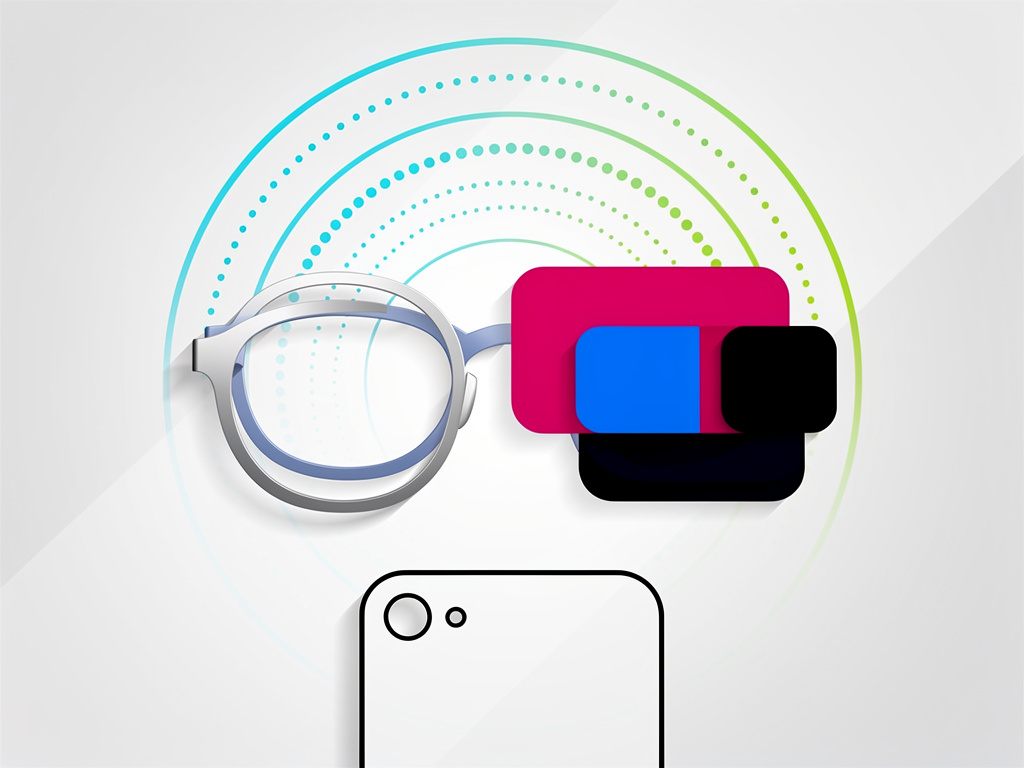
Apple Inc. once turned a category filled with fitness trackers and digital watches into a cultural force. Now the company applies a similar playbook to prescription frames and sunglasses. But this time artificial intelligence sits at the center.
The approach echoes the 2015 debut of the Apple Watch. Back then competitors ranged from Pebble to Fossil. Today the eyewear field pits Meta Platforms Inc.’s Ray-Ban smart glasses against traditional names such as Warby Parker and Ray-Ban itself. The global eyewear market dwarfs watches. Estimates place it between $180 billion and $200 billion. Success here could dwarf the $17 billion annual revenue the Watch eventually generated.
The Verge captured the parallel perfectly. Apple avoids luxury labels like Cartier. It targets mainstream buyers who replace glasses every couple of years. Strong brand recognition, precise industrial design and tight iPhone integration should convert many of them. So should AI tools that interpret the world around the wearer.
Mark Gurman of Bloomberg has tracked the project closely. In one newsletter he explained the company’s thinking. “The company believes its strong brand, industrial design and iPhone integration will lead people seeking new regular glasses to spring for an Apple pair instead,” Gurman wrote. “Apple’s existing ecosystem of over 2 billion active devices, its global retail footprint and the promise of artificial intelligence features that could help people interact with the world around them will help as well.”
But the product itself looks nothing like a miniature Vision Pro. These glasses carry no display. No bulky augmented-reality overlays. Instead they function as an always-on sensor platform. Cameras, microphones and speakers feed data to on-device models and the revamped Siri. Computer vision identifies objects, offers contextual reminders and delivers turn-by-turn directions without forcing the user to stare at a screen.
Recent reporting shows Apple testing at least four frame styles. Large rectangular. Slim rectangular reminiscent of Tim Cook’s own glasses. Larger oval. Smaller oval. Colors under consideration include black, ocean blue and light brown. The camera module adopts an oval shape with distinctive lighting elements. That design choice sets the glasses apart from Meta’s circular lenses. Forbes noted the vertical orientation and surrounding lights create a fresh aesthetic.
Crucially Apple designs the frames in-house. Meta partners with EssilorLuxottica. The decision reflects long-standing company preference for control over materials, fit and finish. It also lets Apple treat the glasses as a true fashion accessory rather than a tech add-on.
Development accelerated in 2025. Engineers ramped up prototype work with suppliers. The original target called for a late-2026 unveiling. Shipments would follow in 2027. Bloomberg first reported those dates alongside news that Apple had dropped plans for a camera-equipped smartwatch. The glasses absorbed resources once aimed at that canceled device.
By April 2026 the timeline had shifted slightly. Unveil could still land in September or October to capture holiday momentum. Actual customer deliveries would stretch into early 2027. Mark Gurman told Tom’s Guide the company wants to blunt Meta’s growing lead. “If you’re Apple, you really want (Apple Glasses) to be introduced before the holiday season, because you don’t want one more cycle for Meta to get momentum selling these glasses, especially given they’re going to be very giftable.”
The glasses form one piece of a larger wearable AI plan. Apple also develops camera-equipped AirPods and a pendant that clips to clothing or hangs as a necklace. All three devices feed information into Apple Intelligence. All rely on a future iPhone for heavy computation. The strategy keeps the glasses lightweight. Battery life stretches across a full day. Users stay in their existing prescription lenses or choose from Apple’s own styles.
Analyst Ming-Chi Kuo projects 3 million to 5 million units in the first full year. That volume would exceed early Apple Watch sales and establish the category. Global smart-glasses shipments could top 10 million in 2027 across all brands. Apple enters late yet arrives with scale advantages few rivals match.
Challenges remain. Privacy questions swirl around always-listening microphones and outward-facing cameras. Regulatory scrutiny could intensify. Battery constraints limit how much processing happens on the glasses themselves. And the revamped Siri must deliver consistent performance. Early demos of the new voice assistant have shown promise but also inconsistency.
Still the bet looks familiar. Apple rarely leads a category. It studies competitors, then refines the formula. Meta proved people would wear camera glasses in public. OpenAI and others demonstrated voice interfaces that understand context. Apple now combines those lessons with its manufacturing expertise, retail network and brand trust.
Production reportedly targets the second quarter of 2027. Internal codenames and supplier signals point to that window. If schedules hold, the glasses could appear alongside new iPhones in fall 2026 announcements before shipping the following spring. The delay from initial 2026 targets reflects the complexity of integrating computer vision, on-device AI and fashion manufacturing at scale.
Success would extend Apple’s grip on personal computing. The iPhone replaced cameras, music players and maps. The Watch turned fitness tracking into a health platform. These glasses could become the default way millions interact with digital assistants while keeping their eyes on the physical world. No more pulling out a phone to check directions or identify a landmark.
Investors have priced in steady growth from services and wearables. A hit in smart glasses would open another multibillion-dollar segment. Failure would hand momentum to Meta and invite questions about Apple’s ability to innovate beyond incremental iPhone upgrades.
Either outcome matters. The eyewear industry has changed little in decades. Frames evolved slowly. Smart features arrived as clunky afterthoughts. Apple arrives with a different posture. It treats glasses as an extension of the person rather than a gadget perched on the face. That distinction may prove decisive.
Recent updates from early June reinforce the focus. Bloomberg’s latest Power On newsletter compared the glasses directly to the Watch’s market disruption. The company seeks to do for eyewear what it accomplished for wrists. Integration with iOS 27 and the improved Siri remains central. Bloomberg noted the late-2027 shipping window in its most recent coverage.
Executives have stayed quiet in public. Tim Cook has hinted at AI wearables without naming glasses. Internal shifts moved staff from Vision Pro refinements to the glasses project. The pivot away from lighter AR headsets toward practical AI spectacles signals clear priorities.
So the stage is set. A company that mastered notifications on the wrist now prepares to layer intelligence onto the one accessory many people never leave home without. The frames look ordinary. The capabilities do not. And if history offers any guide, ordinary-looking products from Apple often reshape entire industries.


 WebProNews is an iEntry Publication