
Consultants once spent hours formatting slides. Founders polished pitch decks late into the night. Marketers iterated on one-pagers until deadlines loomed. Those days are fading.
Anthropic launched Claude Design on April 17, 2026. The tool lets users generate complete, on-brand slideshows through conversation. Powered by Claude Opus 4.7, its most capable vision model, the product targets both designers seeking rapid exploration and non-designers who need professional visuals fast. (Anthropic)
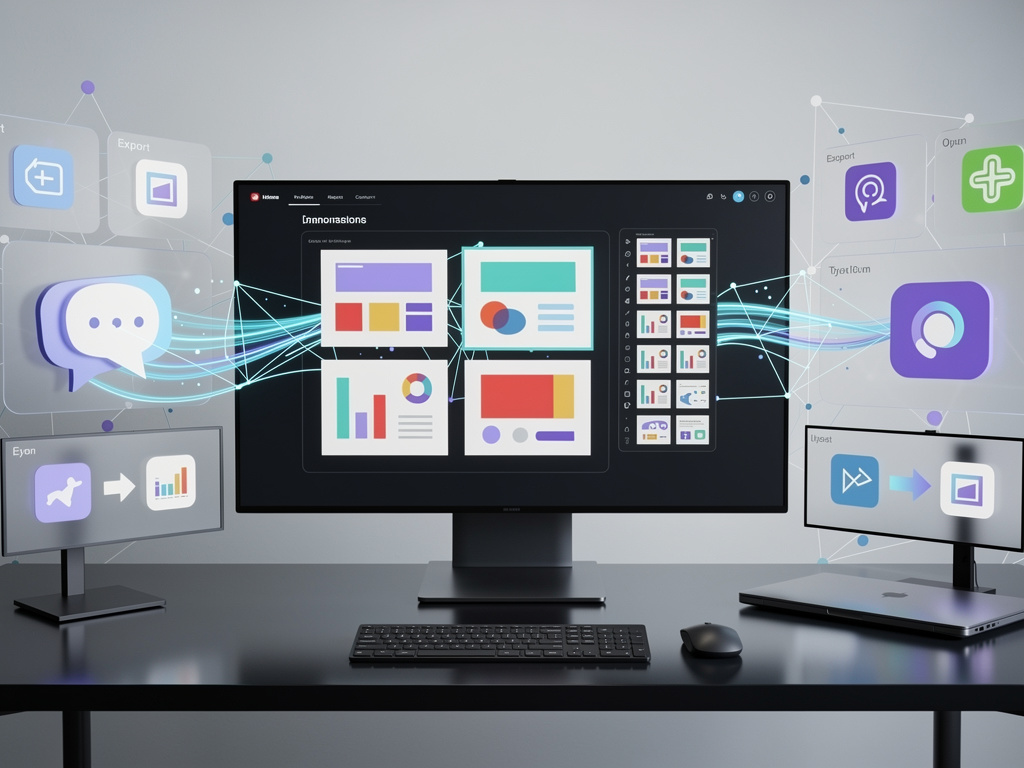
Users describe an idea. Claude produces an initial version. Conversation follows. Inline comments refine layouts. Direct edits adjust text or spacing. Sliders tweak parameters in real time. The system applies a team’s design rules automatically. No more mismatched fonts or off-brand colors. Exports arrive as PPTX, PDF, HTML or direct links to Canva.
One early tester built a full slideshow on the topic of how not to use LLMs in writing. He prepared speaker notes first. Then he created a Design System by uploading examples from his blog and prior work. Claude analyzed them, suggested a color palette, fonts and logo treatments, then let him approve or adjust. The process took initial effort. Results proved reusable.
“Claude Design might be the best presentation tool out there,” wrote Amir Bohlooli in MakeUseOf. Generation finished in under five minutes. Content matched his notes exactly. Visual cohesion stood out. A few misaligned panels appeared, but quick edits fixed them. He exported to PPTX after installing custom fonts to preserve layouts.
Contrast that experience with Google Slides paired with Gemini. The integration handles one slide at a time. It fails to carry themes across an entire deck. NotebookLM produces image-based outputs that lack editability. Claude Design creates native, editable structures that respect existing masters. Professionals who live in PowerPoint noticed.
Anthropic followed with deeper integration. Claude for PowerPoint add-in arrived earlier in 2026. It sits inside Microsoft’s application. The AI reads slide masters, corporate templates, fonts and color schemes before generating or modifying content. Users type a request. Slides appear formatted correctly. No copy-paste between chat and deck. (Microsoft AppSource)
But Claude Design pushes further. It treats slideshows as one part of broader visual creation. Founders turn rough outlines into pitch decks in minutes. Designers generate multiple directions for exploration. Product teams convert static mockups into interactive prototypes with animations, voice or even 3D elements. Marketing groups produce campaign assets without hiring external help. (TechCrunch)
Teams report dramatic time savings. What once required a week of briefs, mockups and review cycles now happens in one conversation. Complex pages that demanded 20 prompts in other tools need only two here. Output stays true to brand guidelines. One partner at Brilliant noted the change. “Our most complex pages, which took 20+ prompts to recreate in other tools, only required 2 prompts in Claude Design.”
Design Systems Anchor Consistency
Success hinges on the Design System feature. Users upload reference images, logos or existing slides. Claude extracts colors, typography and style rules. It can search publicly for brand assets when needed. The resulting system applies across every new project. Multiple systems coexist for different clients or internal teams. Refinement happens through conversation. Feedback loops tighten output quality without starting from scratch each time.
This matters for enterprises. Corporate style guides survive translation into AI instructions. Consultants maintain client-specific looks. The system reduces friction that once broke workflows when moving from chat-based generators to final decks.
Availability remains limited to research preview for paid subscribers. Pro, Max, Team and Enterprise users access it at claude.ai/design. Usage draws from plan limits. Heavy experimentation consumes credits quickly. One tester exhausted his weekly allowance after building the system, generating the deck and making several edits. Small changes become expensive. Many export early then finish manually in PowerPoint or Canva.
Yet the output quality often justifies the cost. Slides look polished. Layouts feel intentional. Visual hierarchy guides the audience. Content density stays balanced. These traits separate Claude Design from generic AI generators that produce crowded text walls or mismatched imagery.
Integration with other Anthropic tools adds power. Users hand off designs to Claude Code with full context. Prototypes move into production faster. The canvas interface splits into chat on the left and live preview on the right. Changes appear immediately. Iteration feels fluid.
Competitors watch closely. Microsoft continues refining its Copilot for PowerPoint. Google advances Gemini inside Slides and Workspace. Canva expands its own AI features. Claude Design positions itself as the starting point. It bridges raw ideas to editable assets. Then hands off to specialized tools for final collaboration.
Early feedback highlights strengths and gaps. Content accuracy impresses. Design suggestions often exceed expectations. Minor alignment errors still appear. Complex animations may need additional prompts. Credit consumption limits experimentation for lighter users. These issues reflect the research preview status. Anthropic iterates quickly based on user input.
Professionals already adapt their habits. They draft speaker notes or outlines before opening the tool. They invest time upfront in Design Systems for repeated use. They prompt simply rather than over-engineering instructions. Clarifying questions from Claude guide the process. The result? Decks that once took days now emerge in minutes. Time shifts from formatting to strategy and rehearsal.
Look at the broader pattern. Anthropic moves Claude beyond text. File generation arrived in 2025 with spreadsheets, documents and initial slide exports. The PowerPoint add-in embedded the model inside familiar software. Claude Design now owns the visual creation layer. Each step reduces friction between thought and deliverable.
Founders pitching investors benefit most immediately. A rough outline becomes a branded deck before the meeting. Account executives update presentations with fresh data in one session. Analysts convert models from Excel into summary slides without reformatting charts manually. The workflow compression changes how teams prepare.
Limitations persist. High-stakes financial presentations still demand human review. Subtle brand nuances may require final polish. Over-reliance risks generic outputs if Design Systems stay underdeveloped. Credit costs add up for frequent users. Yet for many knowledge workers, the productivity gain outweighs these trade-offs.
The tool reflects Anthropic’s focus on practical enterprise applications. Safety and accuracy remain priorities. Vision capabilities in Opus 4.7 enable understanding of uploaded references and generated layouts. Conversation-driven refinement keeps humans in control.
Adoption will reveal more. Consultants test it on client work. Designers explore its limits on complex prototypes. Teams measure time saved against output quality. Early signs suggest a permanent shift in how presentations get made. Hours once lost to alignment and theme application now return to analysis and storytelling.
Claude Design doesn’t replace designers. It amplifies them. It equips non-designers with professional results. The barrier between idea and visual expression drops. What users do with that freedom will define the next wave of business communication.


 WebProNews is an iEntry Publication