
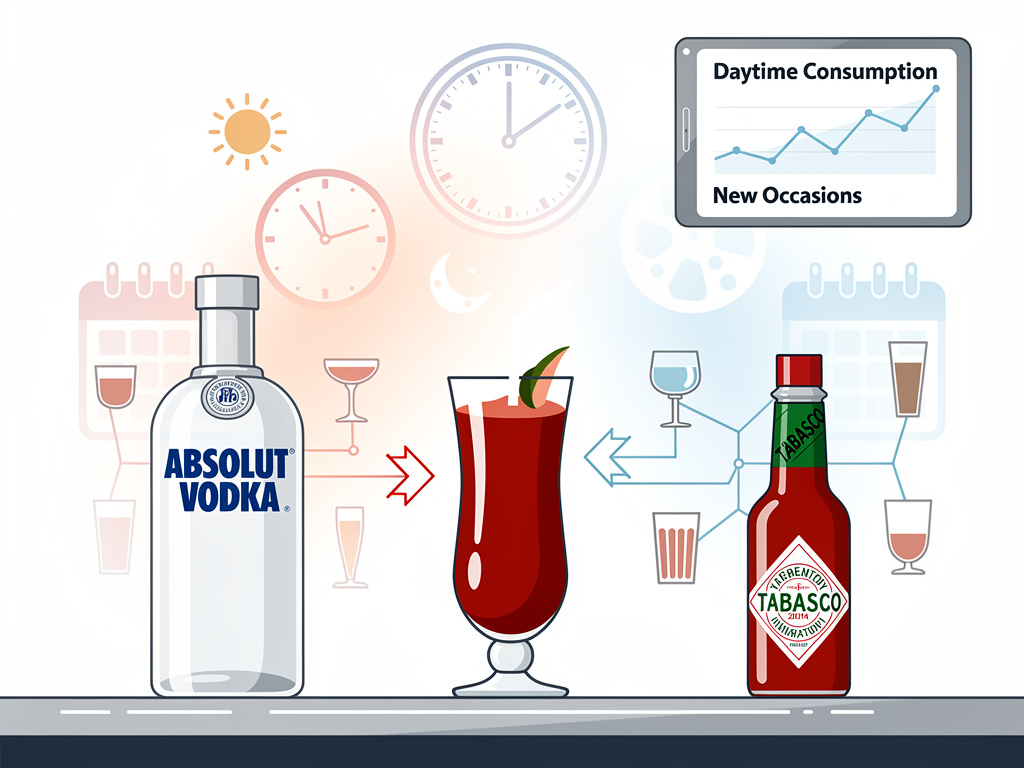
The spirits industry has long operated under a set of unwritten rules about when and how consumers should enjoy their products. Happy hour begins at 5 p.m. Vodka belongs in evening cocktails. Hot sauce stays in the kitchen. Yet two iconic brands—Absolut Vodka and Tabasco—are collaborating to challenge these conventions, betting that the future of alcohol marketing lies in normalizing daytime consumption and unexpected product pairings that blur traditional category boundaries.
According to Business Insider, the partnership between these seemingly disparate brands represents a calculated strategy to capture the growing “day drinking” market segment. The collaboration centers on promoting Bloody Mary cocktails—a drink historically associated with brunch culture—as an acceptable choice throughout the day. This positioning reflects broader shifts in consumer behavior, particularly among younger demographics who view rigid drinking schedules as outdated constructs from previous generations.
The strategic alliance between Absolut, owned by Pernod Ricard, and Tabasco, produced by the McIlhenny Company, demonstrates how legacy brands are adapting to evolving social norms around alcohol consumption. Rather than fighting against the trend toward casual, occasion-less drinking, these companies are leaning into it with marketing campaigns that celebrate spontaneity and reject the formality that once governed spirits consumption. The Bloody Mary serves as the perfect vehicle for this message—a cocktail that has always occupied an ambiguous temporal space, equally at home at a Sunday brunch as it is at a Saturday evening gathering.
The Economics Behind Blurred Drinking Occasions
The push to normalize day drinking isn’t merely about cultural rebellion; it reflects hard economic realities facing the spirits industry. Traditional consumption occasions have become increasingly fragmented as remote work arrangements blur the boundaries between weekdays and weekends, and as younger consumers prioritize experiences over adherence to conventional social schedules. By expanding the acceptable timeframe for vodka consumption beyond evening hours, Absolut potentially increases its addressable market and consumption frequency among existing customers.
Industry analysts have noted that the brunch cocktail category has experienced significant growth over the past decade, with Bloody Marys, mimosas, and other morning-appropriate drinks becoming menu staples at restaurants that previously limited alcohol service to lunch and dinner hours. This expansion of drinking occasions represents billions in potential revenue for spirits manufacturers who can successfully position their products as appropriate for these daypart occasions. The Absolut-Tabasco partnership capitalizes on this trend by providing consumers with a brand-sanctioned permission structure for earlier drinking occasions.
Cross-Category Collaboration as Competitive Advantage
The partnership between Absolut and Tabasco exemplifies a broader trend in consumer packaged goods: brands from different categories joining forces to create marketing synergies that neither could achieve independently. Tabasco brings culinary credibility and a heritage dating back to 1868, while Absolut contributes its position as a premium vodka with a history of bold, artistic marketing campaigns. Together, they create a narrative that positions the Bloody Mary not as a simple cocktail but as a culinary experience that justifies consumption outside traditional drinking windows.
This collaborative approach allows both brands to access each other’s customer bases and distribution channels while sharing marketing costs. For Tabasco, the partnership reinforces its position beyond the condiment aisle and into the bar cart—a higher-margin, more aspirational space. For Absolut, aligning with a product as ubiquitous and trusted as Tabasco provides authenticity and approachability that pure spirits brands sometimes struggle to achieve on their own. The partnership structure also allows for co-branded events, limited-edition products, and social media campaigns that generate consumer engagement beyond what traditional advertising could deliver.
Regulatory and Social Considerations in Promoting Day Drinking
The normalization of day drinking presents complex challenges for brands navigating public health concerns and regulatory scrutiny. While the spirits industry has made strides in promoting responsible consumption, marketing campaigns that explicitly encourage drinking outside traditional evening hours risk criticism from public health advocates and regulatory bodies. The Absolut-Tabasco partnership appears to address this by framing their message around specific occasions—particularly brunch and weekend gatherings—rather than advocating for unrestricted daytime alcohol consumption.
This careful positioning reflects lessons learned from previous marketing missteps in the alcohol industry, where brands faced backlash for campaigns perceived as encouraging excessive or inappropriate drinking. By anchoring their message in the culturally accepted practice of brunch cocktails and emphasizing the Bloody Mary’s reputation as a relatively modest drink compared to spirits served neat or in stronger cocktails, the brands attempt to stay within socially acceptable bounds while still expanding consumption occasions. The strategy acknowledges that modern consumers, particularly millennials and Generation Z, increasingly reject prescriptive rules about when and how to enjoy products, preferring brands that respect their autonomy while providing guidance and inspiration.
The Evolution of Vodka Marketing in a Crowded Market
Absolut’s willingness to partner with Tabasco and embrace day drinking messaging reflects the intense competitive pressures facing vodka brands in an increasingly crowded spirits market. The vodka category has seen explosive growth in premium and super-premium segments, with celebrity-backed brands, craft distilleries, and flavored variants all competing for consumer attention and bar space. In this environment, established brands like Absolut must continually innovate their marketing approaches to maintain relevance and differentiate themselves from newer entrants.
The brand’s history of creative marketing—from its iconic bottle-shaped print advertisements to collaborations with artists and designers—positions it well for unconventional partnerships like the Tabasco alliance. However, the shift toward promoting specific drinking occasions and use cases represents a departure from vodka’s traditional marketing as a versatile, neutral spirit suitable for any cocktail. By tying itself more closely to the Bloody Mary and brunch culture, Absolut risks narrowing its positioning even as it attempts to expand consumption occasions. This tension between specificity and versatility will likely influence how the brand balances this partnership with its broader marketing portfolio.
Consumer Behavior Shifts Driving Brand Strategy
The Absolut-Tabasco collaboration reflects deeper changes in how consumers, particularly younger demographics, approach alcohol consumption. Research indicates that millennials and Generation Z consumers are more likely than previous generations to drink across various dayparts and occasions, viewing alcohol as an accessory to experiences rather than the centerpiece of dedicated drinking occasions. This behavioral shift has profound implications for how spirits brands market their products and define success.
These younger consumers also demonstrate greater interest in cocktails with complex flavor profiles and artisanal ingredients, making the Bloody Mary—with its combination of spirits, spices, vegetables, and garnishes—particularly appealing. The drink’s inherent customizability allows for personalization and experimentation, qualities that resonate with consumers who view food and beverage choices as expressions of individual identity. By positioning themselves at the intersection of this cocktail renaissance and the normalization of flexible drinking occasions, Absolut and Tabasco tap into multiple consumer trends simultaneously, potentially amplifying the partnership’s impact beyond what either trend could deliver independently.
The Future of Occasion-Based Marketing in Spirits
The success or failure of the Absolut-Tabasco partnership will likely influence how other spirits brands approach occasion-based marketing and cross-category collaborations in coming years. If the campaign successfully drives measurable increases in Bloody Mary consumption and Absolut sales during traditionally slower dayparts, it could inspire similar initiatives across the industry. Conversely, if the strategy fails to resonate with consumers or generates negative publicity around day drinking, it may reinforce more conservative marketing approaches focused on evening and weekend occasions.
What seems certain is that the traditional boundaries governing when, where, and how consumers enjoy alcoholic beverages will continue to erode. The question for brands is whether to lead this cultural shift, follow it cautiously, or resist it in favor of more traditional positioning. Absolut and Tabasco have chosen to lead, betting that consumers will reward brands that acknowledge and validate their evolving preferences rather than lecturing them about proper drinking occasions. As remote work, flexible schedules, and experience-driven consumption continue to reshape consumer behavior, the spirits industry faces a fundamental choice: adapt to new consumption patterns or risk obsolescence as more nimble competitors capture emerging opportunities.
The partnership between these two heritage brands—one Swedish, one American; one representing nightlife and sophistication, the other representing Southern tradition and culinary authenticity—illustrates how modern marketing increasingly requires unlikely alliances and willingness to challenge category conventions. Whether this specific collaboration becomes a case study in innovative brand strategy or a cautionary tale about overreaching will depend on execution, consumer reception, and the brands’ ability to balance growth ambitions with social responsibility. What it undeniably represents, however, is the spirits industry’s recognition that the rules governing alcohol consumption are being rewritten, and brands must evolve accordingly or risk being left behind.


 WebProNews is an iEntry Publication