
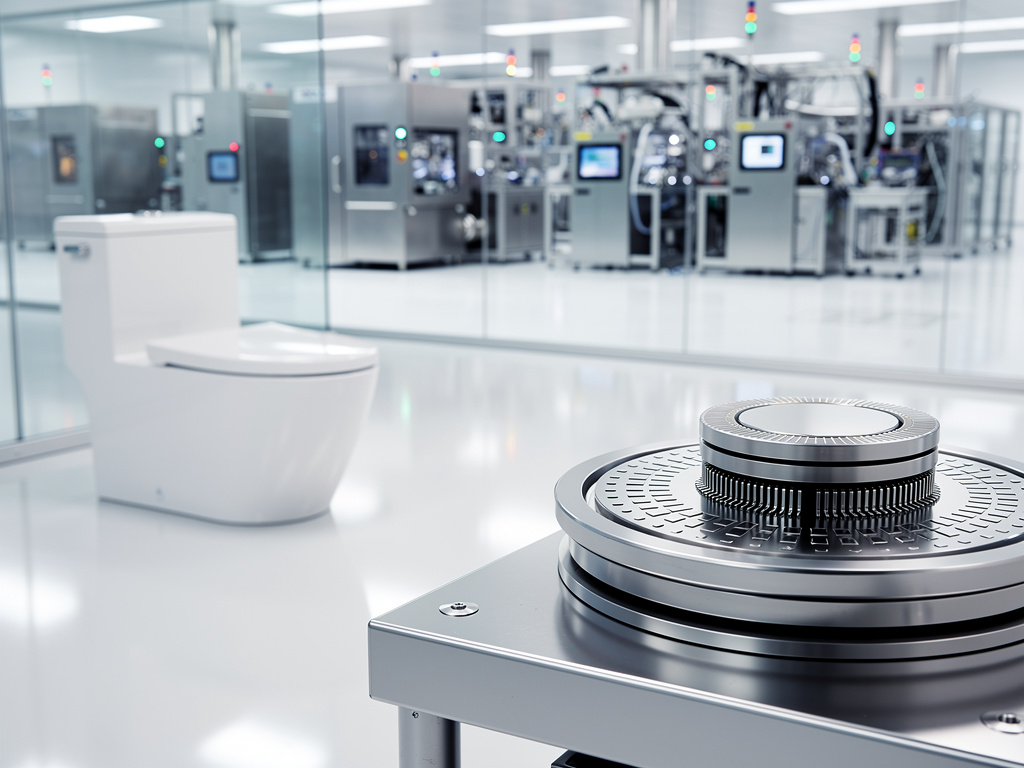
Shares of Toto Ltd. jumped. The Japanese company, long synonymous with high-tech bidets and self-cleaning porcelain, suddenly found itself cast as a player in the artificial intelligence supply chain. Investors piled in. The catalyst had little to do with bathroom innovation. It traced instead to advanced ceramics used in semiconductor manufacturing.
The story sounds absurd on its face. A firm that dominates Japan’s toilet market, with products celebrated for heated seats and water-saving flushes, now draws fresh capital because its material science expertise serves chip fabrication. But numbers back the shift. Sales of Toto’s semiconductor ceramic components more than doubled in recent periods. The Wall Street Journal reported the surge as part of a broader frenzy. Investors hunt every link in the AI infrastructure chain. Traditional manufacturers with tangential exposure suddenly trade like tech stocks.
Toto has produced ceramics for decades. Its expertise in durable, high-precision materials began with bathroom fixtures. Those same qualities matter in chip production. Electrostatic chucks made from ceramic hold silicon wafers steady during etching and deposition. They withstand extreme temperatures, corrosive chemicals, and microscopic contaminants. Demand for such components has soared with the AI buildout. Memory chips and processors require ever more fabrication capacity. Toto’s parts fit right in.
In May the company announced plans to invest $190 million to expand semiconductor production capacity. Shares rose 18 percent that month. They climbed another 11 percent after a subsequent capital expenditure update. Bloomberg noted that chip-related spending could soon account for more than half of Toto’s total capital investments. The Futurism article captured the mood. “The AI bubble has become so surreal that it’s now propping up the toilet industry.” The piece highlighted how material shortages had even forced Toto to pause some smart-toilet orders. Yet the AI angle dominated market attention.
Activist investor Palliser Capital amplified the narrative earlier this year. The UK fund labeled Toto “the most undervalued and overlooked AI memory beneficiary.” Its letter to the board argued that the ceramics business deserved far higher valuation given ties to semiconductor memory expansion. Shares had already gained nearly 40 percent in the first two months of 2026 on similar sentiment. The Financial Times covered the activist stake. Traders responded to concrete revenue signals, not mere hype. Memory fab spending continues to climb as hyperscalers chase greater capacity.
Toto’s dual identity creates an unusual valuation dynamic.
On one side sits the consumer business. Smart toilets represent a growing category. Market forecasts project the global smart toilet sector to expand from roughly $9.75 billion in 2025 toward $15.76 billion by 2030, according to Yahoo Finance reports citing industry data. Features such as health monitoring sensors and AI-driven hygiene analytics draw interest from premium buyers and smart-home developers. Kohler, Lixil, and others compete on voice control, self-cleaning, and data insights. Yet Toto’s bathroom segment faces headwinds. Component shortages disrupted orders this spring. Installation costs and limited consumer awareness slow broader adoption.
The semiconductor side tells a different tale. Here growth feels tied to structural AI demand. Chipmakers race to produce more advanced memory and logic devices. Every new fabrication tool needs reliable wafer-handling components. Toto’s ceramics offer proven performance in harsh environments. The company began developing semiconductor materials in 1988. That long history now looks prescient. Recent figures show semiconductor components already driving more than half of profits at times. The Bloomberg dispatch from early June detailed how AI spending directly lifts sales of these electrostatic chucks and related materials.
And the market reaction reveals something larger. Investors scan far down the supply chain in search of AI exposure. A 175-year-old glassmaker also benefited in the same wave, per the Journal. Corning’s specialized substrates serve similar production needs. Heavy machinery firms and other legacy industrials have seen sporadic pops when analysts connect dots to data centers or chip plants. The pattern suggests selective froth. Not every tangential supplier will sustain elevated multiples once capital expenditure cycles normalize. But for now the bids keep coming.
Skeptics point to classic bubble signs. Valuations detach from near-term earnings. Stories stretch to fit the AI thesis. A toilet company as memory play qualifies. Still, Toto’s case rests on tangible shipments and capacity decisions. The firm isn’t rebranding as an AI pure play. Executives simply follow demand. They allocate more capital where returns appear strongest. That pragmatic approach separates the situation from pure speculation.
So what happens next? Chip demand shows few signs of abating in the immediate term. Hyperscalers and semiconductor foundries continue to announce massive fabs. Ceramic components represent a small but critical slice of that expenditure. Toto could capture additional share if it scales production effectively. At the same time, its core bathroom business retains long-term potential. Aging populations in developed markets value hygiene features. Emerging markets may adopt premium fixtures as incomes rise. The combination creates a hybrid profile rare among listed companies.
Wall Street has seen stranger pairings before. Yet few match the visual contrast of bidet seats and wafer chucks sharing a balance sheet. The episode underscores how thoroughly AI sentiment now colors capital allocation. Even prosaic manufacturers find their narratives rewritten. Toto’s experience won’t be the last of its kind. As long as data center budgets expand, obscure links in the production stack will draw scrutiny and investment. The question remains whether those connections prove durable once the initial surge moderates.
Recent coverage reinforces the trend. A Tom’s Hardware report in February detailed Palliser’s arguments and the early share price lift. Later Bloomberg updates confirmed the capex pivot. Each account adds data points without exaggeration. The ceramics business isn’t hypothetical. It generates real revenue today. That fact separates Toto from many other AI-adjacent stories built on future promises alone.
Industry insiders watch closely. Procurement teams at chip equipment makers now list Toto among vetted ceramic suppliers. Bathroom retailers track whether the AI halo lifts brand perception or distracts from product quality. Investors debate the appropriate multiple for a company whose profits split between porcelain and processors. No consensus has formed. The stock trades on momentum as much as fundamentals.
But one conclusion stands clear. The AI wave has reached into unexpected corners of the industrial economy. A Japanese firm founded over a century ago to improve sanitation now contributes to the computational infrastructure of the future. The juxtaposition feels almost comical. It also illustrates the breadth of today’s technology supply chains. Materials science decisions made decades ago suddenly matter to frontier model training. In that sense Toto embodies a larger truth. Innovation often arrives from places outsiders never consider. And markets reward those discoveries, sometimes dramatically.


 WebProNews is an iEntry Publication