
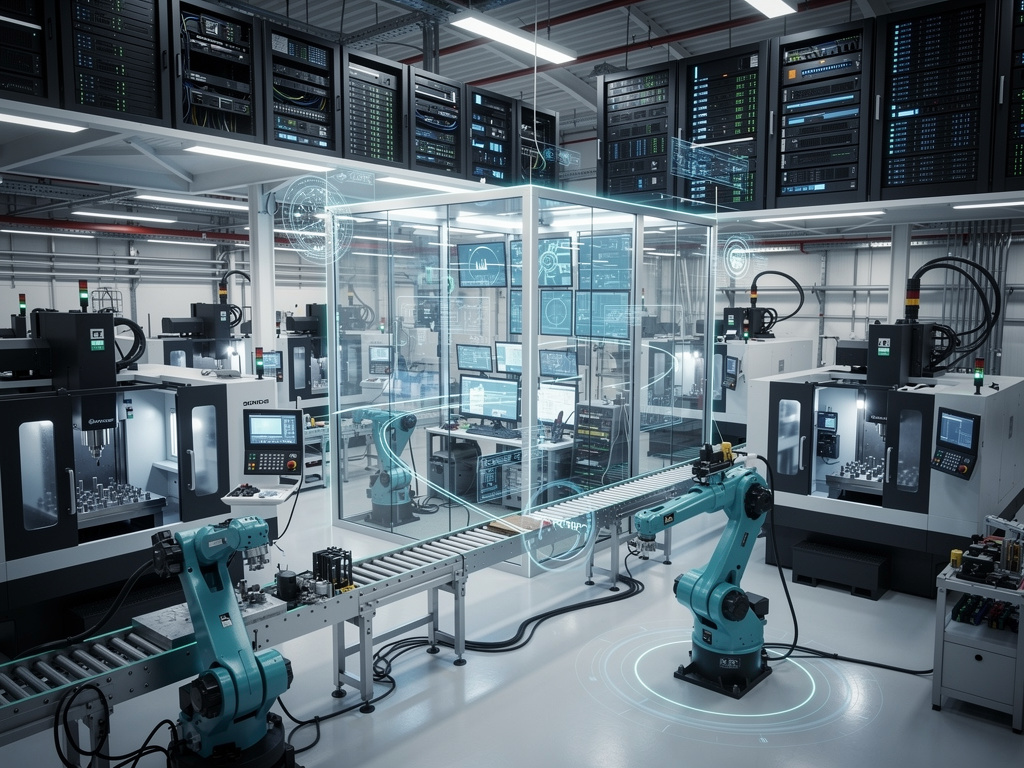
In an era where manufacturing competitiveness hinges on operational agility, a United States-based heavy machinery manufacturer has achieved a remarkable 40% improvement in operational efficiency through the implementation of a unified IT management system. The transformation, executed by eLuminous Technologies as reported by USA Today, represents a significant milestone in the industrial sector’s ongoing digital evolution and offers a blueprint for manufacturers grappling with fragmented technology infrastructures.
The heavy machinery sector, characterized by complex supply chains, extensive equipment networks, and rigorous safety protocols, has historically struggled with disparate IT systems that create operational silos. This particular manufacturer faced challenges common across the industry: disconnected data sources, redundant processes, manual reporting requirements, and limited real-time visibility into production metrics. These inefficiencies not only inflated operational costs but also hindered the company’s ability to respond swiftly to market demands and production disruptions.
The centralized IT management system implemented by eLuminous Technologies consolidated previously fragmented software platforms, databases, and communication channels into a single, integrated framework. This unified approach eliminated data redundancies, streamlined workflows, and provided stakeholders across the organization with real-time access to critical operational information. The 40% efficiency gain materialized through reduced downtime, accelerated decision-making processes, improved resource allocation, and enhanced coordination between manufacturing, supply chain, and maintenance teams.
The Digital Imperative in Heavy Machinery Manufacturing
The manufacturing sector has witnessed an accelerating shift toward digital transformation, driven by competitive pressures and the emergence of Industry 4.0 technologies. Heavy machinery manufacturers, in particular, face unique challenges that make unified IT management systems not merely advantageous but essential. These companies operate complex production facilities with numerous interdependent systems, from computer-aided design platforms and enterprise resource planning software to manufacturing execution systems and predictive maintenance tools.
According to industry analysts, manufacturers that successfully integrate their IT infrastructure can expect substantial returns on investment through improved operational visibility, reduced equipment downtime, and enhanced supply chain coordination. The 40% efficiency improvement achieved by this heavy machinery manufacturer aligns with broader industry trends showing that digital transformation initiatives, when properly executed, can deliver transformative results. These gains typically manifest in multiple areas: faster production cycles, reduced waste, improved quality control, and better utilization of both human and capital resources.
Breaking Down the Implementation Strategy
The successful deployment of a centralized IT management system requires careful planning, phased implementation, and strong change management protocols. eLuminous Technologies approached this project by first conducting a comprehensive assessment of the manufacturer’s existing IT infrastructure, identifying pain points, redundancies, and integration opportunities. This diagnostic phase proved crucial in developing a roadmap that minimized disruption to ongoing operations while maximizing the system’s transformative potential.
The implementation strategy focused on creating a unified data architecture that could serve as a single source of truth across the organization. This involved migrating data from legacy systems, establishing standardized protocols for data entry and management, and implementing robust security measures to protect sensitive operational information. The system was designed with scalability in mind, ensuring that as the manufacturer grows or adds new facilities, the IT infrastructure can expand seamlessly without requiring fundamental restructuring.
One of the most significant aspects of the implementation involved integrating the manufacturer’s production floor systems with its enterprise-level management platforms. This integration enabled real-time monitoring of equipment performance, automated alerts for maintenance requirements, and immediate visibility into production bottlenecks. By connecting previously isolated systems, the manufacturer gained the ability to identify and address operational inefficiencies that had previously gone undetected or required time-consuming manual investigation.
Quantifying the Operational Transformation
The 40% operational efficiency improvement represents a composite metric reflecting gains across multiple dimensions of the manufacturer’s operations. While specific financial figures were not disclosed in the announcement, efficiency improvements of this magnitude typically translate into substantial cost savings and revenue enhancement opportunities. These gains accumulate through reduced labor hours for administrative tasks, decreased equipment downtime, lower inventory carrying costs, and improved on-time delivery performance.
Beyond the headline efficiency number, the unified IT management system delivered measurable improvements in several critical operational areas. Data accessibility improved dramatically, with employees spending significantly less time searching for information or reconciling conflicting data from different systems. Decision-making cycles accelerated as managers gained access to real-time dashboards and analytics tools that provided immediate insights into production status, resource utilization, and supply chain conditions. The system also enhanced collaboration between departments, breaking down information silos that had previously impeded cross-functional coordination.
Lessons for the Manufacturing Sector
The success achieved by this heavy machinery manufacturer offers valuable insights for other industrial companies considering similar digital transformation initiatives. First, the project underscores the importance of selecting implementation partners with deep expertise in both technology and the specific operational challenges of the manufacturing sector. eLuminous Technologies’ experience in enterprise IT systems proved instrumental in navigating the complexities of integrating diverse platforms while maintaining operational continuity.
Second, the case demonstrates that significant efficiency gains require more than simply installing new software. The transformation involved redesigning business processes, retraining employees, and fostering a culture that embraces data-driven decision-making. Organizations that view IT system implementations purely as technical projects, without addressing the human and organizational dimensions, often fail to realize the full potential of their technology investments. The 40% efficiency improvement suggests that this manufacturer successfully managed both the technical and cultural aspects of transformation.
Third, the project highlights the competitive advantages that accrue to manufacturers willing to invest in comprehensive IT infrastructure modernization. In an industry where margins are often tight and competition is intense, a 40% efficiency improvement can represent the difference between market leadership and obsolescence. Companies that continue operating with fragmented, legacy systems face increasing disadvantages as more agile competitors leverage integrated platforms to respond faster to market changes, optimize resource utilization, and deliver superior customer service.
The Broader Industry Context
This implementation occurs against a backdrop of widespread digital transformation across the manufacturing sector. Heavy machinery manufacturers face mounting pressure to modernize their operations in response to evolving customer expectations, supply chain volatility, and the emergence of new competitive threats. The COVID-19 pandemic accelerated many of these trends, exposing vulnerabilities in traditional manufacturing operations and highlighting the advantages of digital, connected systems that enable remote monitoring and management.
The integration of IT systems also positions manufacturers to capitalize on emerging technologies such as artificial intelligence, machine learning, and advanced analytics. A unified data infrastructure serves as the foundation for these next-generation capabilities, enabling predictive maintenance algorithms, automated quality control systems, and optimization engines that continuously improve operational performance. Manufacturers that establish strong IT foundations today position themselves to adopt these advanced technologies more readily than competitors still struggling with fragmented legacy systems.
Strategic Implications for Industry Leaders
For executives in the heavy machinery manufacturing sector, this case study provides a compelling argument for prioritizing IT infrastructure investments. The 40% efficiency improvement demonstrates that unified IT management systems deliver tangible, measurable returns that directly impact the bottom line. These are not incremental improvements but transformative gains that can fundamentally alter a company’s competitive position within its market segment.
The implementation also illustrates the strategic value of partnering with specialized technology providers who understand the unique requirements of industrial operations. Manufacturing IT systems must accommodate complex production processes, integrate with specialized equipment, and meet rigorous reliability and security standards. Generic enterprise software solutions often fall short in these demanding environments, making the selection of implementation partners a critical strategic decision.
Looking forward, the success of this project suggests that unified IT management systems will become table stakes for competitive heavy machinery manufacturers. Companies that delay digital transformation initiatives risk falling behind more agile competitors who leverage integrated systems to operate more efficiently, respond faster to market opportunities, and deliver superior value to customers. The 40% efficiency gain achieved by this manufacturer sets a benchmark that will likely prompt other industry players to accelerate their own digital transformation efforts, creating a competitive dynamic that favors early adopters of comprehensive IT modernization strategies.
As the manufacturing sector continues its evolution toward Industry 4.0 and beyond, the integration of IT systems will remain a critical enabler of operational excellence. The heavy machinery manufacturer’s achievement, facilitated by eLuminous Technologies, demonstrates that significant performance improvements are attainable for organizations willing to invest in comprehensive digital transformation. The 40% efficiency gain serves not as an endpoint but as a foundation for continuous improvement, positioning the manufacturer to capitalize on future technological advances and maintain its competitive edge in an increasingly digital industrial economy.


 WebProNews is an iEntry Publication