
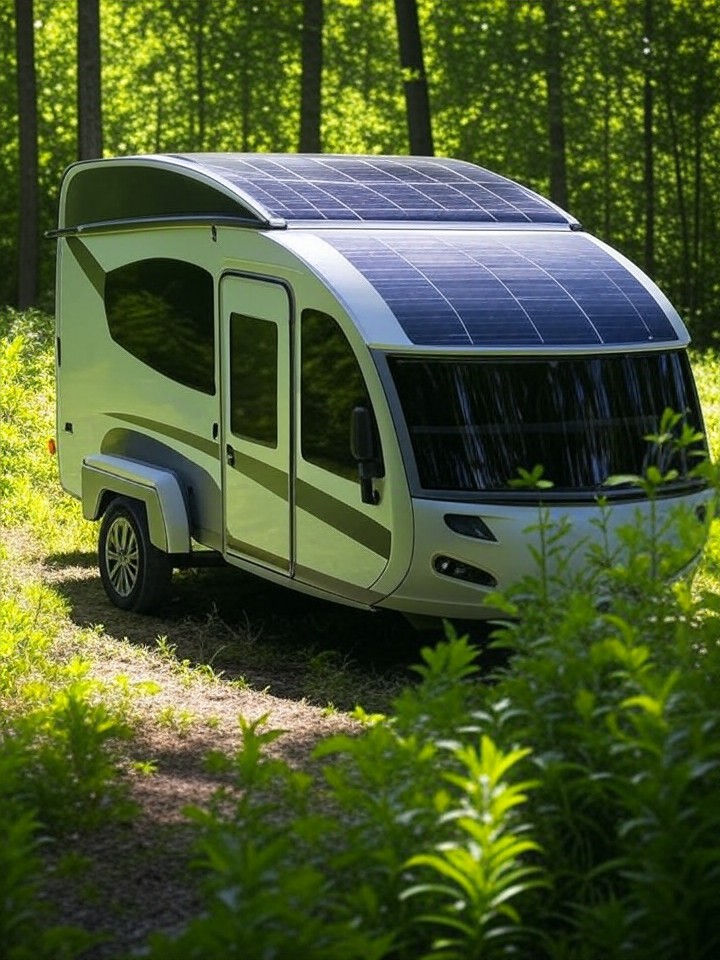
Honda’s Base Station: Pioneering Sustainable Escapes in the RV Realm
Honda Motor Co. has long been synonymous with reliable automobiles, but its latest venture into the recreational vehicle sector marks a bold pivot toward eco-conscious outdoor living. Unveiled in early 2026, the Base Station prototype is a solar-powered camping trailer designed to appeal to electric vehicle owners and adventure seekers alike. This lightweight towable unit integrates modular features, smart technology, and renewable energy sources, positioning Honda as a fresh contender in a market traditionally dominated by specialized RV manufacturers.
Drawing from its heritage in innovative mobility solutions, Honda developed the Base Station through its U.S. research and development centers in Los Angeles and Ohio. The trailer addresses a growing demand for sustainable camping options that minimize environmental impact while maximizing convenience. With roof-integrated solar panels feeding a lithium-ion battery, the Base Station promises off-grid power for essentials like lighting, cooking, and climate control, making it an ideal companion for extended wilderness trips.
Industry observers note that this move aligns with broader trends in automotive electrification and outdoor recreation. As more consumers shift to electric vehicles, the need for compatible accessories that don’t drain battery life becomes critical. Honda’s trailer, towable by compact SUVs like the CR-V, weighs in at a manageable level, ensuring it doesn’t overburden smaller vehicles. Early reports highlight its competitive pricing, though exact figures remain under wraps as the prototype transitions toward potential production.
Modular Design Redefines Versatility
At the heart of the Base Station’s appeal is its modular architecture, allowing users to customize the trailer to fit specific needs. Five large side windows can be swapped out for accessories such as an air conditioner, external shower, or an outdoor kitchenette equipped with running water and an induction cooktop. This flexibility echoes Honda’s history with adaptable vehicles in Japan, like the Vamos Hobio microvan and Acty kei truck conversions, now adapted for the American market.
The interior boasts clever packaging, including a futon-style couch that folds into a queen-sized bed, with optional space for a kids’ bunk. A pop-up roof extends headroom to seven feet, transforming the compact trailer into a spacious haven. Power management is handled intelligently, with solar panels recharging the onboard battery, supplemented by campsite hookups or vehicle integration for EV owners.
For insiders in the automotive and RV industries, this modularity represents a strategic edge. Traditional trailers often require permanent modifications, but Honda’s swappable panels could reduce manufacturing complexity and appeal to a DIY-savvy demographic. Sources from HiConsumption detail how this design democratizes camping, making high-tech features accessible without premium costs.
Solar Integration and Energy Efficiency
Sustainability is more than a buzzword for the Base Station; it’s embedded in its core functionality. The roof-mounted solar panels generate power efficiently, storing energy in a robust lithium battery that powers appliances and devices. This setup is particularly advantageous for EV owners, as it avoids the range penalties associated with towing heavy loads or relying on the vehicle’s battery for campsite needs.
Recent developments in solar technology have enabled such compact integrations, and Honda’s engineers have optimized the system for real-world use. In tests, the trailer maintained power for multi-day outings without external charging, a feat that could disrupt the reliance on generators in remote areas. Industry analysts point out that this aligns with global pushes for renewable energy in mobility, potentially setting a standard for future RV designs.
Posts on X from users like automotive enthusiasts highlight excitement around this innovation, with many praising the trailer’s eco-friendly credentials. One post noted its resemblance to sleek tech gadgets, underscoring the blend of form and function. Meanwhile, Electrek reports that Honda aims to keep the trailer “competitively priced,” targeting a broad audience beyond luxury buyers.
Market Positioning and Competitive Edge
Entering the travel trailer arena, Honda faces established players like Airstream and Winnebago, but its automotive expertise provides unique advantages. The Base Station’s lightweight construction—towable by vehicles as small as compact SUVs—lowers barriers to entry for urban dwellers who might not own heavy-duty trucks. This accessibility could expand the camping demographic, especially among younger, environmentally aware consumers.
Pricing strategy will be key. While prototypes don’t carry official tags, insiders speculate a range that undercuts premium modular trailers while offering superior tech integration. Honda’s brand reliability could also sway buyers wary of lesser-known RV makers. As per U.S. News, the trailer’s high-tech features, including smart controls for energy monitoring, position it as a “futuristic” option in a segment ripe for innovation.
On the competitive front, similar solar-powered trailers exist, but few match Honda’s integration with EVs. For instance, offerings from GoSun, as mentioned in older X posts, focus on off-grid capabilities, but Honda’s version benefits from mass-production scalability. This could lead to economies of scale, driving down costs and accelerating adoption in sustainable travel.
Technological Innovations and User Experience
Delving deeper, the Base Station incorporates smart technology that enhances user experience. An app-based interface allows remote monitoring of battery levels, solar input, and accessory status, borrowing from Honda’s advancements in connected vehicles. This connectivity ensures users can plan trips with confidence, knowing their power needs are met without surprises.
The prototype’s clever packaging extends to storage solutions, with hidden compartments for gear and easy-access panels for maintenance. For families, the optional bunk setup accommodates children comfortably, while the queen bed provides adult-friendly space. The Drive describes it as a “secret project” turned reality, emphasizing its potential for mass production based on consumer feedback.
Industry insiders are buzzing about the implications for EV adoption. Towing has historically been a pain point for electric vehicles due to reduced range, but the Base Station’s self-sufficient power system mitigates this. By generating its own energy, it reduces the load on the towing vehicle, potentially preserving up to 20% more range on long hauls, according to preliminary estimates from automotive forums.
Sustainability in Focus Amid Industry Shifts
Honda’s foray into sustainable camping solutions reflects larger industry shifts toward green technologies. With climate concerns driving consumer choices, the Base Station’s solar reliance positions it as a forward-thinking product. Unlike gas-guzzling RVs, this trailer promotes low-emission adventures, appealing to eco-tourists and off-grid enthusiasts.
Development insights from Design News highlight the engineering prowess behind its pop-up roof and modular panels, which use lightweight materials to keep the overall weight under 2,000 pounds. This not only aids towability but also enhances fuel efficiency for gas vehicles and range for EVs.
X users have shared sentiments echoing this, with posts from tech accounts lauding similar solar trailers for their eco-friendly travel benefits. Honda’s prototype builds on these ideas, incorporating advanced battery tech that could integrate with home solar systems for pre-trip charging.
Potential Challenges and Future Prospects
Despite its promise, the Base Station faces hurdles. Prototypes often evolve before production, and Honda must navigate regulatory approvals for road safety and emissions standards. Durability in harsh weather conditions will be scrutinized, as solar panels and batteries must withstand elements without compromising performance.
Cost remains a wildcard. While positioned as affordable, scaling production to include high-end features like induction cooktops could inflate prices. Competitors might respond with their own innovations, intensifying the race for market share. Honda News emphasizes the goal to “democratize camping,” suggesting a focus on inclusivity over luxury.
Looking ahead, if Honda greenlights production, the Base Station could catalyze a wave of hybrid RV-automotive products. Partnerships with EV makers or accessory brands might emerge, expanding its ecosystem. For now, the prototype generates buzz, with X posts from influencers like HondaPro Jason sharing release details and fostering community excitement.
Economic Implications for the RV Sector
The economic ripple effects of Honda’s entry could be significant. The RV industry, valued at billions, has seen surges in demand post-pandemic, with a pivot toward sustainable options. Honda’s mass-market approach might pressure niche players to innovate or consolidate.
Insiders predict job creation in U.S. manufacturing if production ramps up, leveraging Honda’s existing facilities. Supply chain integrations for solar components could strengthen ties with renewable energy firms, fostering cross-industry growth.
From a consumer perspective, the Base Station lowers the entry point for tech-infused camping. As Mashable notes, it’s a “perfect match for EV owners who love camping,” highlighting its role in bridging automotive and outdoor lifestyles.
Broadening Horizons in Outdoor Mobility
Ultimately, the Base Station exemplifies Honda’s vision for integrated mobility solutions. By blending automotive engineering with recreational needs, it paves the way for more versatile vehicles that extend beyond roads into nature.
Feedback from early previews suggests strong interest, with potential customizations appealing to diverse users—from weekend warriors to full-time nomads. As the prototype evolves, Honda’s commitment to innovation could redefine how we approach sustainable adventures.
In an era where environmental stewardship meets technological advancement, products like the Base Station signal a maturing market ready for change. Honda’s strategic move not only diversifies its portfolio but also inspires competitors to elevate their offerings, benefiting consumers with more choices in eco-friendly travel.


 WebProNews is an iEntry Publication