
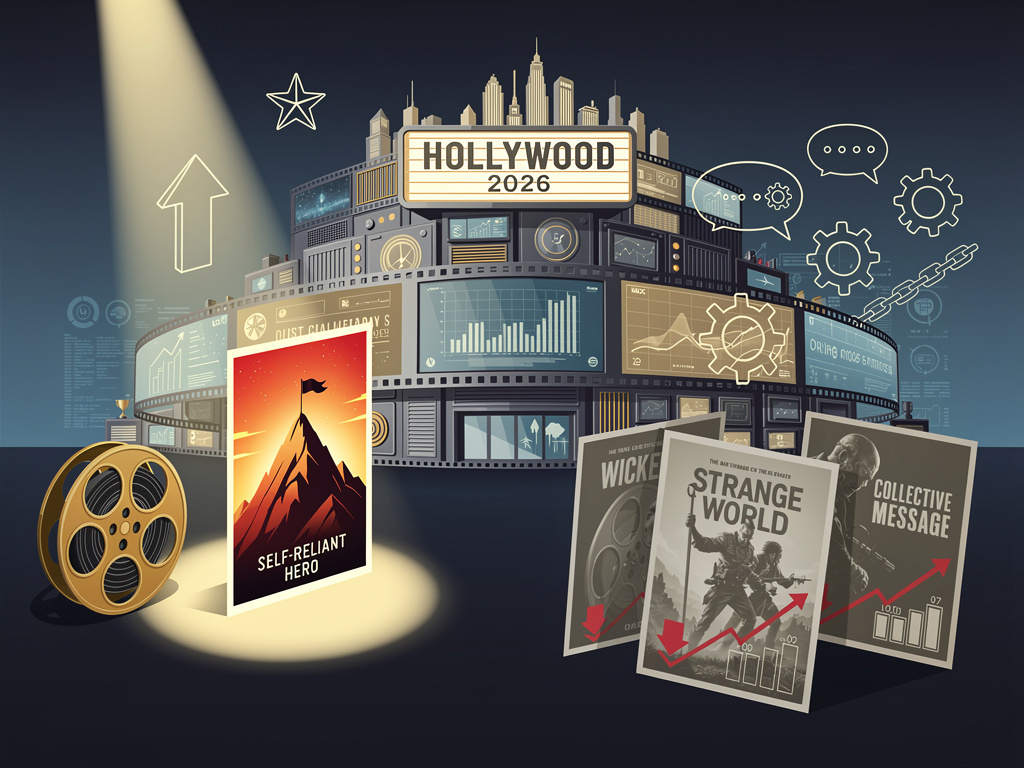
Hollywood’s silver screen has long served as a mirror to American values, celebrating tales of personal grit and triumph over adversity. Yet recent blockbusters increasingly peddle a contrary creed: one that elevates collective conformity over individual aspiration. Libertarian scholar Timothy Sandefur, in his 2026 book You Don’t Own Me, argues this shift reflects a deeper ideological agenda, where studios prioritize messages of sacrifice and societal duty at the expense of the self-reliant heroes that once defined cinematic success.
John Stossel, in a pointed New York Post op-ed, spotlights classics like The Pursuit of Happyness, where a homeless father urges his son, “Don’t let anyone tell you, you can’t do something,” embodying the real-life struggle to seize one’s dreams. Similarly, Rocky Balboa intones, “It’s not about how hard you hit. It’s about how hard you can get hit and keep moving forward.” These narratives, Stossel notes, align with libertarian ideals that unleash human potential through freedom.
Sandefur, drawing from Leslie Gore’s defiant anthem, tells Stossel: “The title comes from the famous song… saying, I’m in charge of my own desires, dreams. I’m responsible for my own self.” He contrasts this with Hollywood’s pivot: “Unfortunately, a lot of people ignore this and say, you’re responsible for other people, or other people must be responsible for you.”
Twisting Oz into Collectivist Allegory
The 1939 Wizard of Oz exalts Dorothy’s inner strength to conquer her goals. Enter 2024’s Wicked, a prequel recasting the green-skinned Wicked Witch as a misunderstood victim seeking societal acceptance over personal achievement. Sandefur critiques: “Her dream isn’t to do anything; it’s for others to accept her… She rejects the wizard’s offer of a seat by his side, instead asking him to help society.” The implication? Curb ambitions for the greater good.
This theme recurs in Wonder Woman 1984 (2020), a box-office disappointment grossing $169 million against a $200 million budget. The villain fulfills personal wishes, endangering the world until Wonder Woman compels mass renunciation. “We should not want things, not desire or dream things, and that will save the world,” Sandefur observes, highlighting how such plots demonize self-interest.
Disney’s 2022 flop Strange World, which lost $197 million, pushes climate orthodoxy via a hero dismantling the society’s vital energy source, Pando. Sandefur derides the oversight: “Living without today’s energy technology… means doing without ambulances… without an airplane to carry people’s organ transplants.”
Remakes That Reject Audience Realities
Elizabeth Banks’s 2019 Charlie’s Angels reboot earned just $73 million worldwide on a $48 million budget, prompting her claim that “men don’t go see women do action movies.” Stossel counters with hits like Kill Bill, Aliens, and Tomb Raider, where female leads thrived. Sandefur attributes failures to “another lame remake that satisfies all the politically correct tests,” not gender dynamics.
Recent data bolsters this. A Reason magazine analysis ties individualism-celebrating films to enduring appeal: “Americans love individualism. So why does Hollywood demonize it?” Stossel echoes in a Union Leader column: “Films that are individualistic tend to be very successful.”
Posts on X from Stossel amplify the critique, noting Wicked‘s victimhood pivot and Wonder Woman 1984‘s dream-surrender moral, with users decrying Hollywood’s “propagandize… about the evils of individualism.”
Box-Office Backlash and Cultural Pushback
2025’s “woke” misfires, cataloged in a WatchMojo article, include sequels and reboots prioritizing messaging over storytelling, alienating viewers. A American Thinker piece warns: “Hollywood is doomed. The ultra-woke ‘One Battle After Another’ shows why,” citing inverted success metrics.
Industry tremors mount into 2026. A WUWF report signals audience empowerment: “In 2026, audiences have more power than they realize to determine the future of… entertainment.” Meanwhile, a Guardian analysis ponders if political shifts spell “the end of the ‘woke’ blockbuster,” with scrutiny on projects like live-action Moana.
Sandefur insists: “My life is mine. I don’t exist to make other people happy… When it comes down to it, my life belongs to me.” Stossel, in a Townhall essay, affirms that individualist ethos fueled America’s greatness.
Studios’ Ideological Echo Chamber
Goldwater Institute reports and Stossel’s X threads reveal Hollywood’s uniformity: scant diversity in political viewpoints. A 2019 Stossel post laments the lack of “diversity of thought,” a void persisting per 2026 commentaries like the Jefferson City News-Tribune.
Audience metrics tell the tale. Individualist hits like Top Gun: Maverick (2022, $1.5 billion) contrast with flops like Lightyear (2022, $226 million loss). Rasmussen Reports syndicates Stossel: “Hollywood wants to propagandize… about the evils of individualism.”
For insiders, the pivot risks obsolescence. As Sandefur told Stossel, authentic self-determination resonates; imposed collectivism repels. Studios ignoring this court financial peril amid streaming fragmentation and rival content creators.
Paths to Cinematic Revival
Emerging independents and platforms bypass studio gatekeepers, thriving on unfiltered ambition tales. X sentiment, per Stossel posts, favors heroes like Rocky over sacrificial figures. A Daily Press column reiterates: “American audiences are in love with heroes who accomplish their dreams.”
2026 forecasts suggest course correction. With box-office recoveries tied to apolitical spectacles, executives face pressure to reclaim individualism’s draw. Sandefur’s book, promoted via NewsBusters, equips stakeholders to discern propaganda from profit drivers.
Ultimately, market forces may compel Hollywood’s recalibration, restoring the dream-pursuing ethos that built its empire.


 WebProNews is an iEntry Publication