
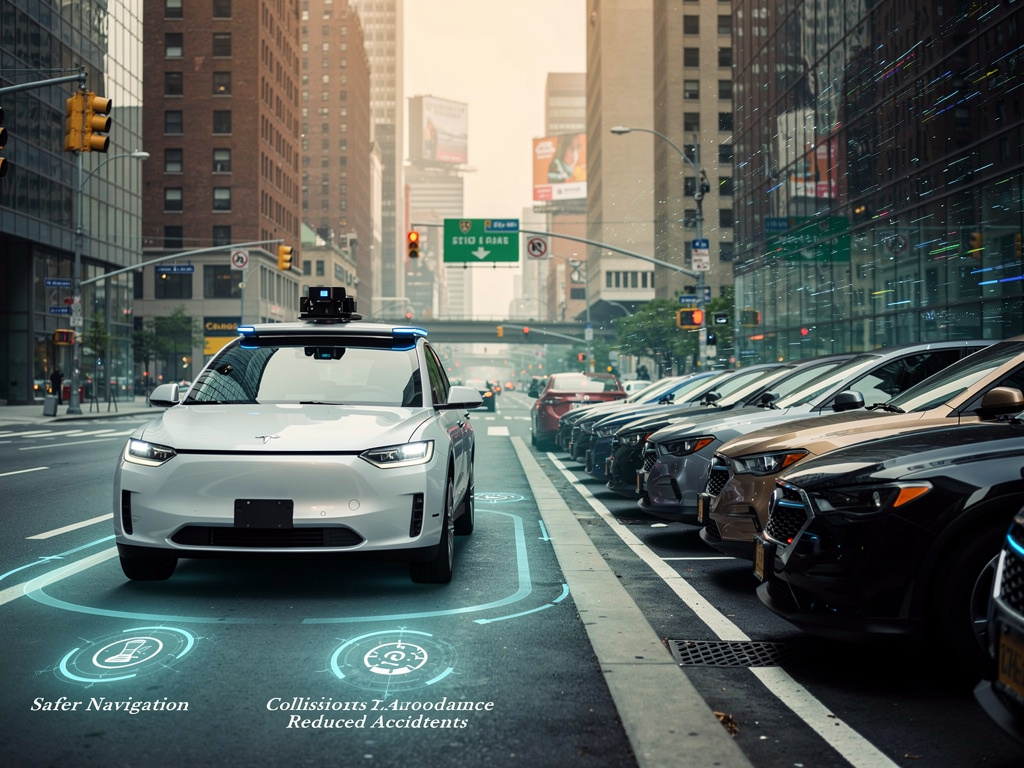
New York Gov. Kathy Hochul’s proposal to unleash driverless rideshare vehicles outside New York City has thrust the state into a national debate over autonomous technology’s promise versus its threat to human workers. Unveiled during her January 2026 State of the State address, the plan expands the state’s autonomous vehicle pilot program to permit limited commercial operations of robo-taxis in upstate areas and suburbs, explicitly excluding the five boroughs. Companies must prove local support and top-tier safety records to qualify, with agencies like the Department of Motor Vehicles and State Police overseeing approvals.
Currently, Alphabet’s Waymo operates eight vehicles in Manhattan and Downtown Brooklyn under a testing permit extended to March 31, each requiring a human safety driver. No passenger pickups are allowed without further city licenses from the Taxi and Limousine Commission. Hochul frames the initiative as a safety booster: “This program will make our roads safer and will improve mobility options for communities outside of New York City,” she said in a statement cited by WIRED.
Waymo’s head of global public policy, Justin Kintz, hailed it as “a transformative moment for New York’s transportation system,” pledging to pair the tech with state efforts on slower speeds and congestion management. The company, which runs commercial driverless fleets in Phoenix, San Francisco, Los Angeles, Austin and Atlanta, claims its vehicles record 12 times fewer injury crashes involving pedestrians than human drivers.
Hochul’s Cautious Blueprint for Driverless Expansion
Gov. Hochul’s office detailed the proposal in her executive budget rollout on January 20, emphasizing limited deployment to test commercial for-hire autonomous passenger vehicles beyond NYC. Applications demand demonstrations of community backing and rigorous safety protocols, though exact vehicle caps remain unspecified. A spokesperson, Sean Butler, insisted, “Governor Hochul will always stand with workers and has no interest in advancing policies that put hard-working New Yorkers’ jobs at risk… Autonomous vehicle pilots are underway in many states, and this proposal is a limited, safety-focused way to test new technology,” per News 12 Brooklyn.
The exclusion of New York City shields its dense, chaotic streets, where current law mandates a hand on the wheel. Legislation like S2688, aimed at driverless frameworks, stalls in the state Senate’s transportation committee. Waymo lobbied over $370,000 last year on transport issues, eyeing New York’s potential as a major market after successes in less congested cities.
Proponents like Chamber of Progress argue autonomous vehicles reduce crashes and enhance access. “Autonomous vehicles can reduce crashes, save lives, and give New Yorkers more reliable ways to get around,” said Northeast Government Relations Director Brianna January, as reported in a Chamber statement.
Drivers’ Fury: Jobs on the Line
Rideshare drivers, numbering over 140,000 licensed in New York, see existential peril. Michele Dottin, an 11-year Ocean Hill, Brooklyn veteran, warned, “There are not too many places where you can be an independent contractor and still maintain a decent livelihood… Putting even one autonomous vehicle out there, those TNC drivers are going to suffer,” according to News 12 Brooklyn.
Pedro Acosta, a 25-year Uber and Lyft driver raising six children including one with disabilities, fears mass unemployment: “There are over 140,000 licensed here in New York, and that means 140,000 families that are going to be without work,” he told NY1. The flexibility of gig work enabled his family care, a lifeline now at risk.
Independent Drivers Guild President Brendan Sexton amplified the alarm: “We are very, very concerned. What we’ve seen in other areas where robo-taxis have launched is a decrease in wages for workers. We’ve also seen serious safety concerns,” citing San Francisco Waymo vehicles blocking streets during a power outage, as noted in News 12 Bronx and NY1.
Safety Shadows from San Francisco
Critics spotlight Waymo mishaps. During a San Francisco blackout, dozens froze, impeding emergency response. New York Taxi Workers Alliance Executive Director Bhairavi Desai declared, “Our streets are not ready for driverless vehicles… these cars have not been tested enough. There’s actually not strong evidence that there are any safer,” per NY1. Autonomous vehicles have hit pedestrians, stalled traffic and invaded police scenes nationwide, opponents claim in an amNewYork op-ed.
Waymo counters with data: its cars navigated 7,000 dark signals safely during the outage and boast superior pedestrian safety stats post-software updates. Yet Harry Campbell of The Driverless Digest acknowledges NYC’s uniqueness—full-time jobs under heavy regulation—suggesting fees on robo-taxis to aid humans, via NY1.
Sexton predicts algorithms will favor AVs, eroding wages: “We’ve seen some incremental loss in wages for drivers… these algorithms are going to push the AV’s more than they’ll push live drivers,” he said to NY1.
Legislative Path and Broader Echoes
The proposal awaits Hochul’s full budget details and legislative buy-in. TechCrunch reports it could unblock stalled bills, positioning New York behind California and Arizona but ahead of Illinois and Massachusetts in commercial AV rules (TechCrunch). Drivers rallied against Waymo testing last year, per X posts from @sentry_ms.
On X, @DebbieDuHaime shared NY1’s job-loss worries, fueling online buzz. Unions push retraining, but mass displacement could drain billions from communities, shifting burdens to taxpayers, as warned in amNewYork.
As pilots loom, New York’s test balances tech giants’ investments against a workforce’s survival, with outcomes rippling to other states.


 WebProNews is an iEntry Publication