
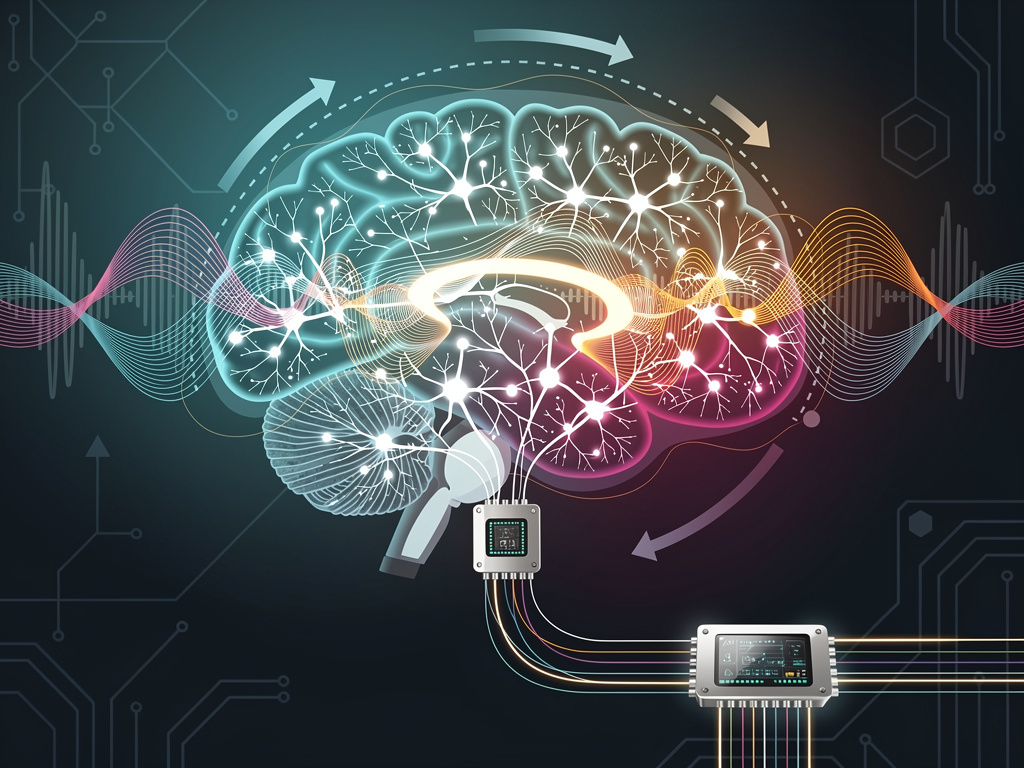
HOUSTON — Patients slipped into unconsciousness on the operating table. Their bodies lay still. Yet deep in their brains, neurons fired with purpose. They caught odd sounds. They sorted nouns from verbs. They even guessed the next word in a story.
That’s the striking picture from a study published this week in Nature. Researchers at Baylor College of Medicine recorded activity from hundreds of individual neurons in the hippocampus while seven epilepsy patients underwent surgery under general anesthesia. The results upend long-held beliefs about what the brain can do without awareness.
The team, led by neurosurgeon Sameer Sheth, used Neuropixels probes — high-density electrodes never before deployed in this memory-critical region during such procedures. First came simple tones. Repetitive beeps, broken now and then by a different pitch. Over 10 minutes the hippocampal neurons grew sharper at spotting those deviations. Learning, it seemed, continued.
Then the researchers played short podcast segments. Something far more complex. And the neurons responded in kind. Specific cells reacted differently to nouns than to verbs or adjectives. Patterns of activity shifted in advance of certain words, as if the brain anticipated what came next. The unconscious hippocampus parsed grammar. It grasped meaning. It predicted.
“Our findings show that the brain is far more active and capable during unconsciousness than previously thought,” said Sheth, professor and Cullen Foundation Endowed Chair of Neurosurgery at Baylor. “Even when patients are fully anesthetized, their brains continue to analyze the world around them.”
The work, detailed in a Baylor College of Medicine news release, builds on earlier evidence that basic sensory areas register simple sounds under anesthesia. This study goes much further. It shows sophisticated linguistic operations in a deep structure tied to memory formation. One that operates at a distance from primary auditory cortex.
New evidence forces a fresh look at the boundary between awareness and cognition.
Performance matched that of awake controls listening to the same material, according to a companion article in Nature. “They were literally predicting what the next word is going to be,” Sheth told the publication. The brain, it turns out, runs predictive coding even when the person has no conscious experience of the story.
Benjamin Hayden, professor of neurosurgery and McNair Scholar at Baylor, put it plainly. “This kind of predictive coding is something we associate with being awake and attentive, yet it’s happening here in an unconscious state.” The observation echoes how large language models forecast the next token. Biological and artificial systems, it seems, share this forward-looking strategy.
First author Kalman Katlowitz, a neurosurgery resident at Baylor, sees practical possibilities. “Can we use these signals to deploy and run a speech prosthetic for some of the parts of the brain that are damaged by stroke or injury?” he asked in the Baylor release. The signals persist when consciousness does not. That fact could matter for brain-computer interfaces aimed at restoring communication.
Yet the findings carry limits. The study used propofol anesthesia. Results may not extend to sleep, coma or other unconscious states. Only the hippocampus was sampled. How other regions behave remains open. And no patient remembered the stories afterward, confirming the separation between processing and explicit recall.
Still, the data add weight to a growing view. Consciousness may not sit inside any single structure. It could arise from coordination across networks. The hippocampus handles complex computation on its own. Broader awareness, perhaps, demands something more.
Reports published in the past 48 hours amplify the study’s reach. A Discover Magazine article highlights how the neurons adapted to sound patterns and categorized parts of speech without any patient awareness. Coverage in GeneOnline notes the work suggests language comprehension and event prediction continue absent conscious awareness.
Sheth himself returns to a bigger question. “This work pushes us to rethink what it means to be conscious. The brain is doing much more behind the scenes than we fully understand.”
Neurosurgeons, anesthesiologists and engineers now face fresh terrain. They must ask what other advanced functions persist when awareness fades. They must consider whether some forms of learning and prediction happen routinely under the knife. And they must explore whether those hidden signals can be harnessed to help patients who have lost speech or memory.
The unconscious brain, this research shows, stays busy. It listens. It learns. It looks ahead. All without a trace of experience we would recognize as our own.


 WebProNews is an iEntry Publication