
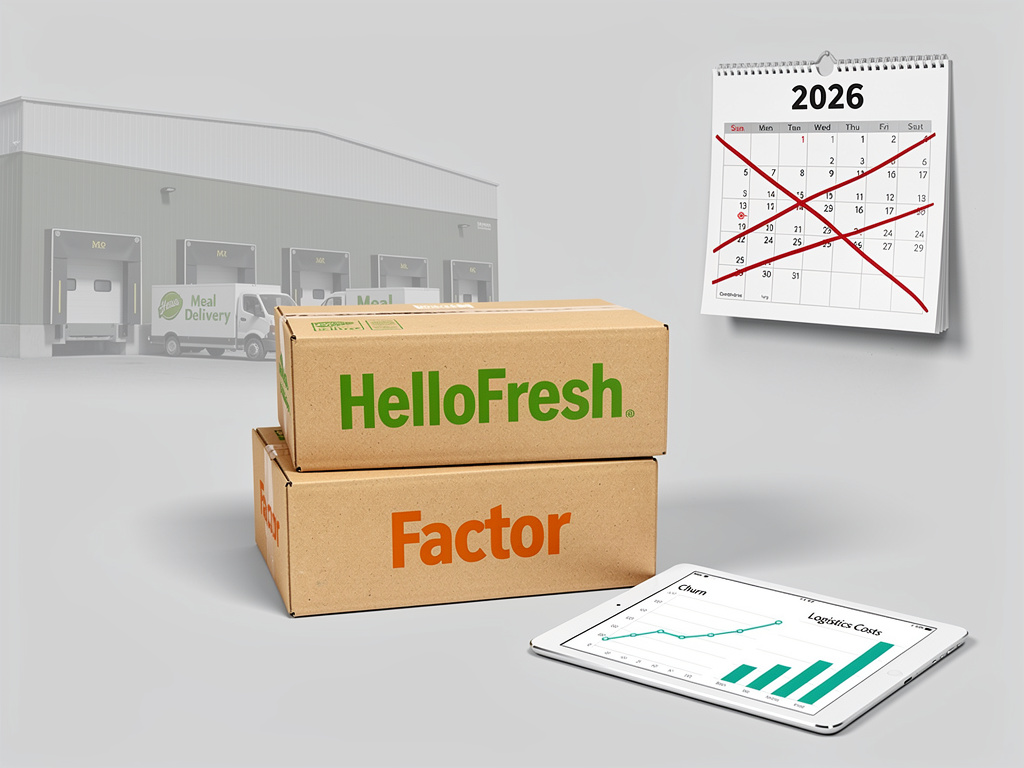
Factor, the prepared meal delivery service that became a staple for busy professionals and health-conscious consumers willing to pay a premium for convenience, will cease operations in 2026. The announcement by parent company HelloFresh marks the end of an era for a brand that at its peak served millions of ready-to-eat meals per week — and raises hard questions about the long-term viability of the meal delivery model that Silicon Valley and Wall Street once bet billions on.
HelloFresh, the Berlin-based meal kit giant that acquired Factor in 2020 for a reported $277 million, confirmed the wind-down in a move that stunned many subscribers and industry watchers alike. The company said it would phase out Factor’s operations by the end of 2026, citing a strategic decision to refocus resources on its core meal kit business and other growth areas. As Wired reported, the shutdown represents a significant contraction in the prepared meal delivery space, which had expanded rapidly during the pandemic years.
A Pandemic Darling That Couldn’t Sustain Its Momentum
Factor, originally launched as Factor 75 in 2013, carved out a distinct niche in the crowded meal delivery market. Unlike traditional meal kit services such as HelloFresh, Blue Apron, or Home Chef — which ship pre-portioned raw ingredients with recipe cards — Factor delivered fully prepared meals that required only reheating. The value proposition was straightforward: restaurant-quality nutrition without the cooking, the cleanup, or the decision fatigue. Meals were designed by dietitians and chefs, with options spanning keto, paleo, high-protein, and plant-based diets.
The pandemic supercharged demand. With restaurants closed and consumers confined to their homes, Factor’s subscriber base exploded. HelloFresh’s acquisition of the brand in November 2020 came at the height of this boom, and the German company invested heavily in scaling Factor’s production and distribution capabilities. By 2022, Factor was one of the fastest-growing brands in HelloFresh’s portfolio, contributing significantly to the parent company’s North American revenue. But as pandemic restrictions lifted and consumers returned to restaurants and grocery stores, the growth trajectory flattened — and then reversed.
The Economics of Prepared Meals Never Quite Added Up
The fundamental challenge facing Factor — and prepared meal delivery services broadly — has always been margin compression. Unlike meal kits, which ship shelf-stable or lightly refrigerated ingredients, fully prepared meals require cold-chain logistics from kitchen to doorstep. Every meal must be cooked in a centralized production facility, rapidly chilled, packed with insulation and ice packs, and shipped via expedited delivery to arrive fresh. The cost structure is punishing: food costs, labor for preparation, packaging materials, and last-mile shipping all eat into already thin margins.
Factor’s pricing reflected these realities. Subscribers typically paid between $11 and $15 per meal depending on plan size, a price point that placed the service in direct competition not just with other delivery brands but with fast-casual restaurants, grocery store prepared foods, and even personal meal prep. As inflation pushed food costs higher through 2022 and 2023, Factor faced the unenviable choice of raising prices on cost-conscious consumers or absorbing margin erosion. According to Wired, the service struggled to maintain its subscriber base as the broader economic environment shifted and consumers became more selective about discretionary food spending.
HelloFresh’s Own Struggles Forced Difficult Choices
Factor’s shutdown cannot be understood in isolation from HelloFresh’s broader financial difficulties. The company, which went public on the Frankfurt Stock Exchange in 2017 and once boasted a market capitalization exceeding €10 billion, has seen its valuation crater in recent years. Revenue growth stalled, customer acquisition costs rose, and churn rates — the perennial nemesis of subscription-based food services — remained stubbornly high. In its most recent earnings reports, HelloFresh disclosed significant losses and announced a series of cost-cutting measures, including layoffs and facility closures.
The decision to wind down Factor fits within this broader retrenchment. HelloFresh has signaled that it intends to concentrate on its namesake meal kit brand, which benefits from a simpler supply chain and a more established global footprint. The company has also been investing in its Youfoodz brand in Australia and exploring retail partnerships. But shedding Factor — which had become one of the most recognized prepared meal brands in the United States — is an acknowledgment that the economics of the prepared meal delivery model could not be made to work at the scale HelloFresh needed.
What Factor’s Demise Signals for the Broader Market
The prepared meal delivery industry, valued at roughly $20 billion globally, has been marked by a pattern of rapid growth followed by painful consolidation. Factor joins a growing list of meal delivery services that have either shut down, been absorbed by larger companies, or dramatically scaled back operations. Freshly, once a major Factor competitor, was acquired by Nestlé in 2020 for $950 million but was quietly wound down by 2023. Snap Kitchen, another prepared meal brand, closed its retail stores and shifted to delivery-only before eventually ceasing operations. The pattern is consistent: high customer acquisition costs, low retention rates, and brutal logistics expenses create a financial treadmill that few companies can sustain.
The survivors in this space tend to be those with diversified revenue streams or structural cost advantages. Companies like Trifecta Nutrition and Methodology continue to operate, often targeting specific dietary niches — bodybuilders, competitive athletes, or medical nutrition — where customers have higher willingness to pay and lower price sensitivity. Grocery chains such as Whole Foods, Trader Joe’s, and even Costco have also expanded their prepared meal offerings, effectively competing with delivery services at a fraction of the cost by eliminating the shipping expense entirely.
The Consumer Response and What Comes Next
For Factor’s remaining subscribers, the news has prompted a scramble for alternatives. Online forums and social media platforms have seen an outpouring of frustration from loyal customers who relied on the service for weekly meal planning. Many cited Factor’s consistency, portion sizing, and nutritional transparency as features they would struggle to replicate elsewhere. On Reddit and X, users have shared lists of alternative services, though many note that no single competitor offers the same combination of variety, dietary customization, and nationwide availability that Factor provided.
The wind-down timeline — extending through 2026 — suggests HelloFresh is attempting to manage the transition carefully, likely honoring existing subscriptions and gradually reducing production capacity rather than executing an abrupt shutdown. This approach mirrors how Nestlé handled the Freshly closure, giving subscribers advance notice and allowing the workforce to transition. Still, the loss of Factor will leave a measurable gap in the market, particularly for consumers in suburban and rural areas where prepared meal options beyond fast food and chain restaurants are limited.
A Reckoning for the Subscription Food Model
Factor’s closure also raises broader questions about the subscription model as applied to food delivery. The meal kit and prepared meal industries were built on the premise that recurring revenue from loyal subscribers would eventually offset high upfront customer acquisition costs. But the data has consistently shown that food subscription services face churn rates far higher than those seen in software, entertainment, or even beauty box subscriptions. Consumers sign up, enjoy the novelty, and then cancel — often within three to six months. The cost of constantly replacing departed subscribers with new ones has proven to be an unsustainable drag on profitability.
HelloFresh itself has acknowledged this dynamic. In recent investor presentations, the company has discussed efforts to improve retention through personalization, flexible subscription options, and expanded menu variety. But these measures have not been sufficient to reverse the broader trend. The meal delivery industry’s original sin — treating a fundamentally variable consumer behavior (what people want to eat on any given night) as a predictable, subscribable service — may be a structural flaw that no amount of operational optimization can overcome.
The Bigger Picture for Food Technology and Delivery
While prepared meal delivery services retrench, other segments of the food technology sector continue to evolve. Ghost kitchens, which produce food exclusively for delivery through platforms like DoorDash and Uber Eats, have absorbed some of the demand that meal delivery services once captured. Grocery delivery through Instacart, Amazon Fresh, and Walmart has also matured, giving consumers another avenue for convenient meal solutions without the commitment of a subscription. And advances in frozen meal quality — driven by brands like Daily Harvest, Tattooed Chef, and even legacy players like Amy’s Kitchen — have blurred the line between fresh-prepared and frozen-prepared meals.
Factor’s story is, in many ways, a cautionary tale about the gap between consumer enthusiasm and business sustainability. The demand for convenient, healthy, ready-to-eat food is real and growing. But meeting that demand profitably — at scale, through a direct-to-consumer subscription model, with cold-chain shipping — has proven to be a challenge that even well-capitalized companies backed by global food conglomerates could not solve. As HelloFresh prepares to close this chapter, the industry will be watching closely to see whether the prepared meal delivery model can be reinvented — or whether it was always destined to be a feature of the pandemic era rather than a permanent fixture of how Americans eat.


 WebProNews is an iEntry Publication