
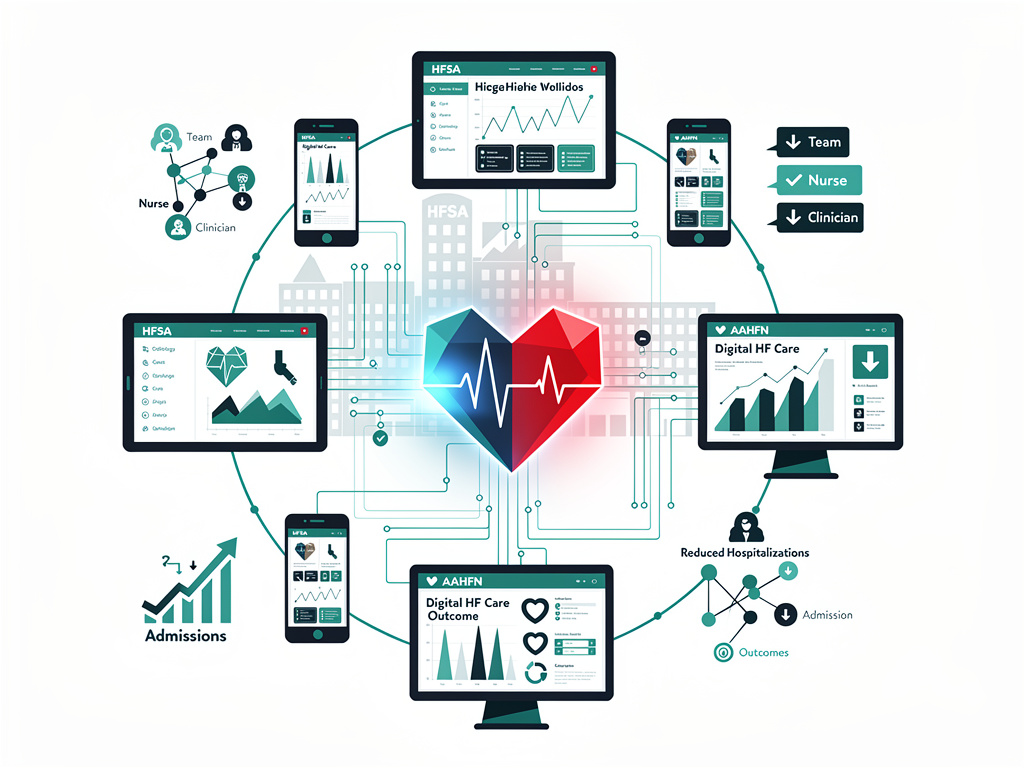
In a pivotal move for cardiology, the Heart Failure Society of America (HFSA) and the American Association of Heart Failure Nurses (AAHFN) released a scientific statement on January 27, 2026, offering clinicians a roadmap to weave digital health tools into routine heart failure management. Titled “Integrated Health Technologies in Heart Failure,” the document shifts focus from standalone gadgets to cohesive systems that turn patient data into prompt clinical decisions, published in the Journal of Cardiac Failure (onlinejcf.com).
“This statement is designed to help clinicians move from simply collecting data to actually using it to guide care,” said co-lead author Mia Cajita, PhD, RN. “An integrated approach where data flows seamlessly, care teams know who is responsible for monitoring and response, and patients receive timely feedback, represents a paradigm shift from device-centered solutions to system-level digital care.” The guidance arrives amid soaring heart failure prevalence, with HFSA’s HF Stats 2025 noting 6.7 million U.S. adults affected and costs projected to climb as prevalence hits 8.7 million by 2030.
Evidence underscores the stakes: Trials like OSICAT show patient adherence above 70% correlates with fewer hospitalizations and deaths. Yet many programs falter without clear workflows, leaving clinicians overwhelmed by alerts and data silos.
From Isolated Devices to Unified Systems
The statement prioritizes “integrated health technologies” (IHT)—coordinated setups linking telemonitoring, mobile apps, implantable devices, and electronic health records (EHRs). Benefits peak for high-risk patients, such as those post-hospitalization or with advanced NYHA class symptoms, where rapid interventions like medication tweaks avert crises. Stable patients see marginal gains, urging targeted deployment.
Interoperability emerges as the linchpin: Seamless data exchange enables EHR dashboards for real-time triage. Interdisciplinary teams—physicians, nurses, pharmacists, social workers—share monitoring duties, optimizing therapies and education. A PR Newswire release highlighted the push beyond devices to “coordinated, team-based, and actionable systems of care” (prnewswire.com).
HFSA President Adam D. DeVore, MD, MHS, summarized top takeaways in a video, emphasizing workflow protocols and accountability to harness tools like remote monitoring systems.
Evidence Backbone and Real-World Hurdles
Reviews of telemonitoring and wearables reveal outcomes hinge on action, not acquisition. The OSICAT trial linked high adherence to reduced events, while rural-focused studies in the Journal of the American Heart Association showed self-care boosts but inconsistent clinical wins due to access barriers (ahajournals.org). AHA statements echo equity concerns, noting digital tools must pair with in-person support for older adults.
Challenges abound: Alert fatigue burdens clinicians, low adherence erodes gains, and disparities sideline underserved groups. Solutions include device-lending, low-tech alternatives, and targeted training. The statement mandates protocols for alert triage and patient feedback to sustain engagement.
Implementation demands embedding IHT into care pathways, with machine learning eyed for future alert prioritization and cost-effectiveness studies to spur reimbursement.
Patient Engagement as the Core Driver
Patients fuel success: Tools must be intuitive, with tech support and feedback loops. Adherence thresholds above 70% predict outcomes, per evidence. Apps like HF Health Storylines and HF Helper, backed by HFSA and AHA, track vitals and symptoms, fostering shared decision-making.
Equity looms large. Rural reviews in JAHA highlight self-efficacy gains but call for broadband and literacy fixes. AHA’s telehealth statement stresses hybrid models to bridge gaps for older HF patients (pubmed.ncbi.nlm.nih.gov).
Interdisciplinary leverage distributes burdens, from nurses triaging to pharmacists adjusting doses, streamlining workflows amid clinician shortages.
Broader Ecosystem and Emerging Trials
Recent trials amplify urgency. DIGIT-HF in NEJM showed digitoxin slashing death or hospitalization risks in HFrEF, complementing digital monitoring (nejm.org). NEJM reviews wearables for HF, hypertension, and AF, noting monitoring promise if actionable.
X discussions, including HFSA posts, buzz with DeVore’s takeaways on practice integration. A Lancet Digital Health series positions digital tools for screening to monitoring, fueled by computing advances.
Future priorities: AI triage, predictive models, and scalability. HFSA’s slide deck distills ten messages for quick reference (hfsa.org), arming insiders to operationalize this shift.
Path Forward for Scalable Impact
Reimbursement hinges on proving value—fewer admissions, better equity. Programs succeeding pair data with responses: medication titration, calls, plan tweaks. As HFSA urges, clinicians must train, protocolize, and collaborate to convert digital promise into reduced mortality and costs.
The statement, available via HFSA resources, equips teams to lead this evolution, potentially reshaping heart failure care from reactive to proactive.


 WebProNews is an iEntry Publication