
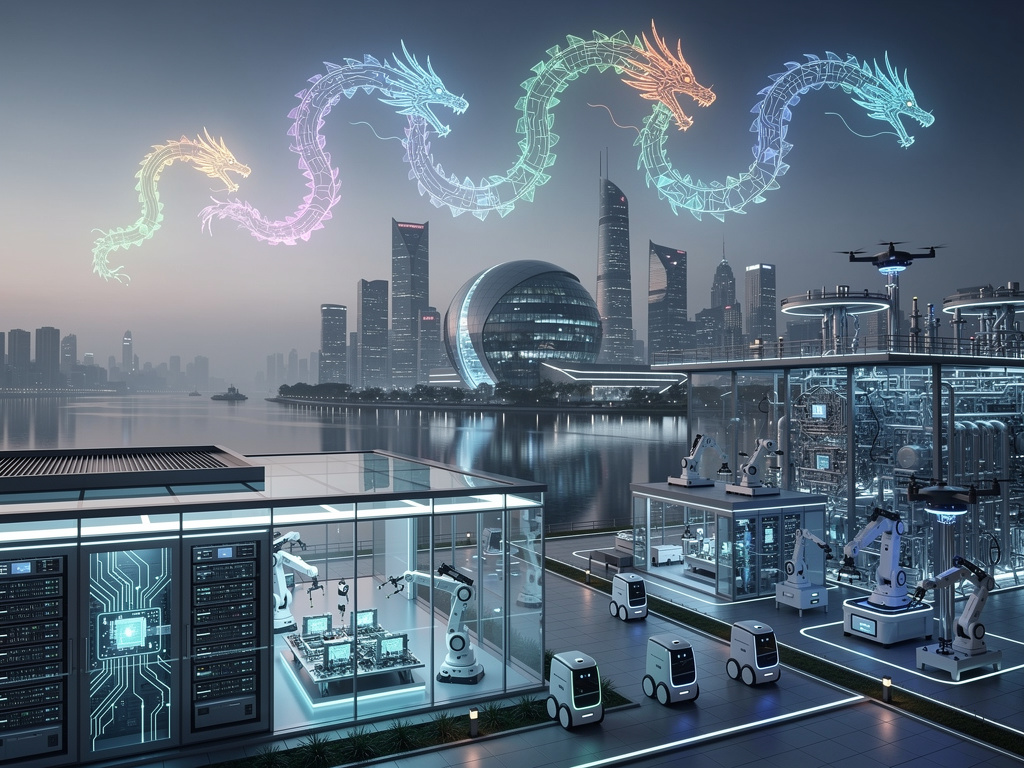
HANGZHOU’S SILICON SURGE: HOW A LAKESIDE CITY BECAME CHINA’S NEW TECH TITAN FACTORY
In the shadow of West Lake’s serene waters, Hangzhou has quietly evolved from a historic tourist destination into a powerhouse of technological innovation, spawning a new generation of billion-dollar companies that are reshaping global industries. Once primarily associated with e-commerce giant Alibaba, the city now hosts a vibrant ecosystem of startups tackling artificial intelligence, robotics, gaming, and beyond. This transformation didn’t happen overnight; it’s the result of strategic investments, talent influx, and a supportive local environment that rivals established hubs like Shenzhen and Beijing.
Recent developments underscore Hangzhou’s ascent. Just this week, reports emerged of China launching three venture capital funds totaling around $21 billion to bolster “hard technology” sectors, with Hangzhou poised to benefit significantly given its concentration of cutting-edge firms. These funds, aimed at semiconductors, quantum computing, biomedicine, and aerospace, reflect Beijing’s push for technological self-reliance amid international tensions. Startups in Hangzhou are already drawing global investor attention, as evidenced by increased wagers on Chinese AI firms to diversify away from perceived bubbles in Western markets.
The city’s startup scene has produced what locals call the “Six Little Dragons”—a cadre of high-potential companies in diverse fields. These include AI leaders like DeepSeek, robotics innovator Unitree, and gaming powerhouse Game Science, each valued in the billions and attracting international acclaim. For instance, DeepSeek has made waves with its advanced language models, while Unitree’s affordable humanoid robots are scaling production rapidly. This cluster effect is drawing comparisons to Silicon Valley’s early days, but with a distinctly Chinese flavor of rapid iteration and government-backed scaling.
The Roots of Innovation in Alibaba’s Backyard
Hangzhou’s tech story begins with Alibaba, founded by Jack Ma in 1999 in a modest apartment. The company’s success not only put the city on the map but also created a ripple effect, spawning alumni who launched their own ventures. Today, Alibaba’s presence continues to anchor the ecosystem, providing infrastructure like cloud services that startups leverage for growth. According to a report from CNBC, this foundation has enabled the rise of challengers in AI and robotics, turning Hangzhou into a breeding ground for unicorns.
Beyond Alibaba, educational institutions play a pivotal role. Westlake University, modeled after elite Western schools, is attracting top talent in neurotech and spatial computing. The university’s research output is fueling startups, with collaborations that accelerate commercialization. Posts on X highlight this synergy, noting how Hangzhou’s blend of academic prowess and entrepreneurial spirit is fostering companies like DeepSeek, which is pushing boundaries in AGI research.
Government policies have supercharged this growth. Zhejiang Province, where Hangzhou serves as capital, offers incentives such as tax breaks and streamlined regulations for tech firms. A recent article in the South China Morning Post explores whether Hangzhou will rival or collaborate with Shenzhen, suggesting a complementary dynamic where Hangzhou focuses on software and AI, while Shenzhen excels in hardware.
Emerging Giants and Their Global Impact
Among the standout “Six Little Dragons,” Unitree Robotics exemplifies Hangzhou’s robotics prowess. The company is producing affordable robot dogs and humanoids, with applications in logistics and consumer markets. Recent X posts praise Unitree for its scalability, drawing parallels to Boston Dynamics but at a fraction of the cost. Similarly, Game Science’s hit title “Black Myth: Wukong” has garnered global attention, boosting China’s gaming industry and positioning Hangzhou as a creative tech center.
AI is another pillar, with firms like Zhipu AI and DeepSeek leading the charge. A list from Failory ranks Zhipu among China’s top 100 startups to watch in 2026, highlighting its role in social commerce and intelligent systems. Investors are flocking to these companies, as noted in a Reuters piece on global bets shifting toward Chinese AI amid U.S. market concerns.
Neurotech and spatial computing are nascent but promising. Startups in these areas are benefiting from Hangzhou’s innovation hubs, where cross-pollination between disciplines occurs. For example, spatial computing firms are integrating AI with virtual reality, creating tools for education and enterprise. CGTN’s coverage in this report attributes the city’s rise to its ability to blend historical charm with modern tech infrastructure, attracting a diverse talent pool.
Investment Flows and State Support
The launch of China’s new venture capital funds, as detailed in a Reuters article from December 26, 2025, marks a significant boost. These funds, exceeding 50 billion yuan, target “hard tech” to achieve self-reliance, with Hangzhou’s startups like those in biomedicine and aerospace standing to gain. This “patient capital” approach allows for long-term R&D without immediate profitability pressures.
Local districts within Hangzhou, such as Yuhang, are hotspots for high-tech enterprises. X posts describe Yuhang as having over 3,200 national high-tech firms, nurturing pioneers in robotics and AI. The ecosystem includes incubators and angel funds, fostering a cycle of innovation. Failory’s top 50 startups list for 2024 underscores this density, featuring companies like Hikvision in surveillance tech and Cainiao in logistics.
Comparisons to other Chinese cities reveal Hangzhou’s unique edge. While Shenzhen boasts hardware giants like Huawei, Hangzhou excels in software and creative tech. The South China Morning Post article referenced earlier posits a potential alliance, where synergies could amplify China’s overall tech dominance. Recent news from Seeking Alpha echoes this, noting the funds’ focus on startups that align with national priorities.
Challenges Amid Rapid Growth
Despite the momentum, Hangzhou faces hurdles. Talent competition is fierce, with high living costs potentially deterring young professionals. Geopolitical tensions, particularly U.S.-China tech rivalries, could limit access to global markets and components. X sentiment reflects optimism but also cautions about over-reliance on state funding, which might stifle true innovation.
Infrastructure strains are another issue. Rapid urbanization has led to traffic and housing pressures, though initiatives like low-altitude economies—drones and urban air mobility—are addressing logistics. A post on X from Chinese Short Dialogue highlights Hangzhou’s “smart factories” powered by AI, part of broader efforts to integrate tech into daily operations.
Regulatory environments pose risks too. As startups scale, navigating China’s data privacy laws and international compliance becomes critical. Yet, the city’s adaptive policies, as covered in ehangzhou.gov.cn’s piece, emphasize sustainable growth, positioning Hangzhou as a model for balanced development.
Talent Magnets and Cultural Appeal
Hangzhou’s allure extends beyond business. Its picturesque setting, with West Lake and tea plantations, attracts global talent seeking work-life balance. X users like Jen Zhu describe it as “stunning,” home to emerging leaders in gaming and robotics. This cultural draw differentiates it from more industrial hubs, fostering creativity.
Educational partnerships amplify this. Collaborations with institutions like Zhejiang University bring in scholars from Oxford and beyond, as noted in X posts about Xiaoshan’s innovation zones. These ties create a pipeline of skilled workers, essential for fields like neurotech.
The diaspora effect is notable too. Alibaba alumni, often called “Ali people,” form a network that invests in and mentors new ventures. PitchBook’s unicorn tracker lists several Hangzhou firms among recent billion-dollar entrants, attributing success to this interconnected community.
Strategic Alliances and Future Trajectories
Looking ahead, Hangzhou’s startups are forging international partnerships. For instance, robotics firms are collaborating with global players in supply chains, mitigating trade barriers. Reuters’ coverage on investor shifts highlights how Chinese AI is becoming a diversification play for funds wary of Wall Street bubbles.
Government blueprints, like the 15th Five-Year Plan mentioned in CGTN’s top business stories, prioritize tech innovation, with Hangzhou central to these goals. This includes low-orbit satellites and advanced manufacturing, expanding the city’s reach.
X posts from users like S.L. Kanthan reference Wall Street Journal articles praising Hangzhou’s AI mecca status, signaling growing Western recognition. As one post puts it, “Hangzhou supremacy” in robotics, cloud, and gaming is redefining China’s tech narrative.
Ecosystem Evolution and Broader Implications
The integration of tech with traditional industries is transformative. In Hangzhou, e-commerce roots are evolving into AI-driven platforms, with companies like Ant Group leading digital payments. X discussions point to NetEase and Geely as examples of diversified innovation, from gaming to electric vehicles.
Challenges like intellectual property protection remain, but Hangzhou’s courts are streamlining IP disputes, encouraging foreign investment. Kaohoon International’s report on the new funds emphasizes their role in fueling this growth, projecting a surge in hard-tech unicorns.
Ultimately, Hangzhou’s model could inspire other cities worldwide. Its blend of state support, private enterprise, and natural appeal creates a resilient hub. As global investors eye opportunities, the city’s trajectory suggests it’s not just competing with Shenzhen but carving a unique niche in the global tech arena.
WebProNews details in this article how these initiatives aim for self-reliance, with Hangzhou at the forefront. X posts echo this, with users noting the city’s role in low-altitude economies and smart infrastructure.
Sustaining Momentum in a Competitive Arena
To maintain its edge, Hangzhou is investing in green tech and sustainability. Startups are developing eco-friendly robotics and AI for energy management, aligning with national carbon goals. This forward-thinking approach mitigates environmental concerns from rapid industrialization.
Talent retention strategies include lifestyle perks, from cultural festivals to tech conferences. X buzz around events like those in Tongzhou highlights community-driven innovation hubs, blending computing power with social spaces.
In the broader context, Hangzhou’s rise reflects China’s strategic pivot toward high-value tech. With billion-dollar firms emerging regularly, the city is not just a hotbed—it’s a blueprint for future innovation centers. As one X user quipped, it’s “the new SF,” home to world-leading companies that are redefining possibilities.


 WebProNews is an iEntry Publication