
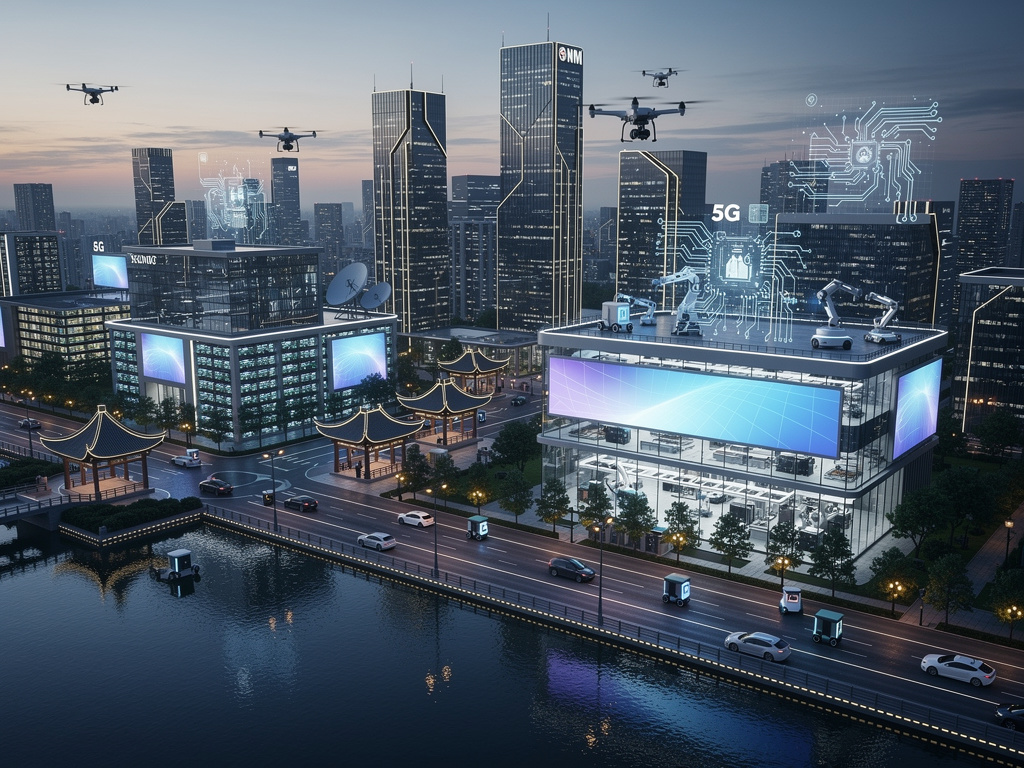
Hangzhou, the picturesque capital of China’s Zhejiang province, has long been celebrated for its serene West Lake and silk heritage. But in recent years, it has quietly morphed into a powerhouse of technological innovation, rivaling established hubs like Beijing and Shenzhen. As we enter 2026, the city is buzzing with activity from startups pushing boundaries in artificial intelligence, robotics, and other cutting-edge fields. This shift isn’t accidental; it’s the result of strategic government investments, a legacy of e-commerce giants, and a fertile environment for entrepreneurial talent.
What sets Hangzhou apart is its unique blend of historical charm and modern ambition. Once primarily known as the birthplace of Alibaba Group, the city now hosts a new generation of companies dubbed the “Six Little Dragons.” These include trailblazers in AI like DeepSeek, robotics firms such as Unitree Robotics, and gaming innovators behind hits like Black Myth: Wukong. According to recent reports, Hangzhou’s startup ecosystem has attracted billions in venture capital, fueling growth in sectors that promise to redefine global industries.
This transformation is drawing international attention. Industry observers note that Hangzhou’s rise coincides with China’s broader push to dominate “hard technology” – areas like advanced manufacturing, semiconductors, and biotechnology. With the national government launching dedicated funds for these domains, the city is positioned as a key player in Beijing’s strategy to bolster self-reliance amid geopolitical tensions.
The Legacy of Alibaba and Its Ripple Effects
Alibaba’s influence cannot be overstated. Founded in Hangzhou by Jack Ma in 1999, the company not only put the city on the global map but also created a talent pool of engineers, executives, and investors. Many alumni have spun off their own ventures, contributing to what some call the “Alibaba effect.” For instance, Ant Group, an Alibaba affiliate behind the ubiquitous Alipay payment system, continues to anchor the fintech scene here.
Recent data highlights this momentum. A list of top startups from Failory identifies 70 promising Hangzhou-based companies, ranging from fintech to robotics. Unitree Robotics, for example, is scaling production of affordable humanoid robots and robot dogs, positioning itself as a leader in accessible automation. This ecosystem is further enriched by institutions like Westlake University, which aims to become China’s answer to Caltech, focusing on AI and deep tech research.
Social media buzz on platforms like X underscores this enthusiasm. Posts from users describe Hangzhou as “the new San Francisco,” citing its concentration of talent and innovation. One prominent thread highlights how the city’s historical role as a cultural capital during the Southern Song dynasty has evolved into a modern hub for scholar-entrepreneurs, fostering companies like DeepSeek, which recently touted new AI training methods for greater efficiency.
Government Support Fuels Hard Tech Ambitions
China’s central government has poured resources into Hangzhou, recognizing its potential. In late 2025, state media announced the launch of three venture capital funds totaling billions to invest in hard technology, as reported by Reuters. These funds target areas like AI, robotics, and neurotech, with Hangzhou benefiting from an estimated $21 billion in allocations.
This influx is part of a national drive to counter economic headwinds and global competition. Analysts point to Hangzhou’s “Future Sci-tech City” and “Dream Town” as incubators where startups thrive. These zones offer subsidies, tax breaks, and access to state-of-the-art labs, attracting founders from across China and abroad. A video feature from CNBC explores how the city is shaping the next wave of challengers, collectively known as the Six Little Dragons, in fields from spatial computing to gaming.
However, this growth isn’t without challenges. As global expansion ramps up in sectors like electric vehicles, Hangzhou startups face a “survival test” amid slowing domestic markets, according to recent CNBC analysis on China’s EV industry. Yet, the city’s resilient business environment, bolstered by government backing, helps mitigate these risks.
Spotlight on Emerging Sectors and Key Players
Diving deeper into specific sectors, AI stands out as a cornerstone of Hangzhou’s tech surge. Companies like Zhipu AI, featured in broader China startup rankings from Failory’s China list, are pushing boundaries in machine learning. DeepSeek, one of the Six Little Dragons, has made headlines with innovations in AI training efficiency, as detailed in a Moneycontrol report. This focus on efficiency is crucial as China seeks to optimize resources in the face of U.S. export controls on advanced chips.
Robotics is another hot area. Unitree Robotics exemplifies this, with its scalable robot solutions gaining traction globally. X posts from travelers and tech enthusiasts praise Hangzhou’s blend of innovation and livability, often sharing videos of Unitree’s robot dogs in action. Gaming, too, is booming, with studios like Game Science leveraging local talent to create culturally resonant titles that compete on the world stage.
Neurotech and spatial computing round out the mix, with startups exploring brain-computer interfaces and virtual reality applications. These align with national priorities, as evidenced by government funds targeting such “hard tech” domains. A WebProNews article details how Hangzhou’s evolution from a tourist destination to an innovation hub is driven by this strategic focus, positioning it as a rival to Silicon Valley.
Challenges and Resilience in a Competitive Arena
Despite the optimism, Hangzhou’s startup scene grapples with broader economic pressures. In 2025, several tech ventures across China shuttered, as noted in a Times of India roundup, highlighting funding crunches and market saturation. Hangzhou hasn’t been immune, but its government-supported model provides a buffer.
Industry insiders point to the need for diversification. While AI and robotics dominate, there’s growing interest in sustainable tech and biotech integrations, such as AI-driven drug discovery. Trends for 2026, as outlined in a Guardian piece, include a focus on data centers and AI advancements, areas where Hangzhou is investing heavily.
Sentiment on X reflects cautious optimism. Users discuss Hangzhou’s role in China’s digital convergence, with posts emphasizing its startup hubs and the pulse of innovation in places like Dream Town. This social chatter, combined with official reports, paints a picture of a city adapting to global shifts while nurturing homegrown talent.
Global Implications and Future Trajectories
Hangzhou’s ascent has ripple effects beyond China. As startups like those in the Six Little Dragons expand internationally, they challenge Western dominance in tech. For instance, Unitree’s robotics could disrupt manufacturing supply chains, while DeepSeek’s AI models offer cost-effective alternatives to Western counterparts.
Comparisons to other Chinese hubs are inevitable. While Shenzhen excels in hardware, Hangzhou shines in software and AI, as per rankings from Seedtable. This specialization fosters a complementary national ecosystem, with Hangzhou attracting talent seeking a balanced lifestyle amid innovation.
Looking ahead, experts anticipate continued growth, driven by policies like the hard tech funds. A Moneycontrol guide on 2025 trends notes AI’s dominance, a narrative extending into 2026 with Hangzhou at the forefront. The city’s ability to blend tradition with technology – from smart factories to low-altitude economies like drone tech – positions it uniquely.
Voices from the Ground and Strategic Insights
Entrepreneurs in Hangzhou often cite the supportive ecosystem as a key draw. “It’s not just about funding; it’s the network,” one founder shared in an X thread, echoing sentiments from alumni of Alibaba and Ant Group. This network effect accelerates ideation to execution, with incubators facilitating rapid prototyping.
Critically, the city’s focus on “low-altitude economy” – encompassing drones and urban air mobility – is emerging as a niche strength. Posts on X highlight how Hangzhou’s tech firms are pioneering this, integrating with AI for applications in logistics and surveillance.
For industry insiders, the takeaway is clear: Hangzhou represents China’s adaptive strategy in tech. By leveraging government resources, historical advantages, and entrepreneurial spirit, it’s not just catching up but setting new benchmarks. As 2026 unfolds, watching this city’s trajectory will offer valuable lessons on innovation in a multipolar world.
Navigating Uncertainties in a Dynamic Environment
Yet, uncertainties loom. Geopolitical tensions could restrict access to foreign markets or technologies, forcing startups to innovate domestically. Recent analyses, including those from CNBC on EV slowdowns, suggest price wars and overcapacity might spill into other sectors.
Resilience comes from diversification. Hangzhou’s emphasis on education, with institutions like Westlake University producing top talent, ensures a steady pipeline. X discussions often compare it favorably to Beijing’s research-heavy Zhongguancun or Shanghai’s financial tech scene, noting its edge in livability.
Ultimately, Hangzhou’s story is one of evolution. From e-commerce roots to hard tech frontiers, it’s a testament to strategic foresight. As global tech dynamics shift, this eastern Chinese city is poised to influence the next era of innovation, drawing investors and innovators alike to its vibrant shores.


 WebProNews is an iEntry Publication