
Developers working on the open-source operating system inspired by BeOS have delivered another milestone. Haiku OS now supports basic symmetric multiprocessing on 64-bit ARM processors. The advance comes in virtualized environments for now. Yet it signals steady movement toward broader hardware compatibility.
Phoronix reported the update just hours after the project’s April 2026 activity summary appeared. The article notes that the SMP work allows multiple cores and threads to function inside QEMU. This follows March breakthroughs that first brought the system to a graphical desktop in the same emulator.
The contributor known as smrobtzz drove much of the recent effort. In the project’s March report, project lead waddlesplash wrote, “The biggest news this month is probably all the work that’s been done on support for ARM64, largely thanks to contributors smrobtzz and SED4906!” That post on haiku-os.org lists specific fixes. They included adjustments for building on macOS ARM64 machines, an Apple S5L UART driver, kernel base address corrections, frame pointer handling, proper physical memory mapping, and initial userland foundations.
SED4906 supplied tweaks to bootloader page mapping and page-size checks in the runtime loader. Those pieces combined to let Haiku reach the desktop. Tracker, the Deskbar, a clock, and the input server all appeared. No kernel panics or faults interrupted the process in early tests.
By early April, smrobtzz shared further details in the community forum. The port handled up to eight CPU cores through SMP. Standard QEMU devices worked. Virtio SCSI storage, virtio networking, and xHCI USB functioned as expected. “The port is mostly stable,” the developer posted on the thread at discuss.haiku-os.org.
Some rough edges remained. A kernel crash and double-free issues still required attention. Boot storage options proved limited. USB storage succeeded while virtio-blk and NVMe presented problems. Display relied on the ramfb framebuffer because virtio-gpu-pci lacked certain boot-time indicators and resolution switching.
Yet stability improved quickly. After rebuilding base packages and updating the build-packages repository, nightly ARM64 images began booting to the desktop more reliably. One tester confirmed that revision hrev59665 reached the graphical interface without trouble. Nightly images are now available for download and testing at the project’s server.
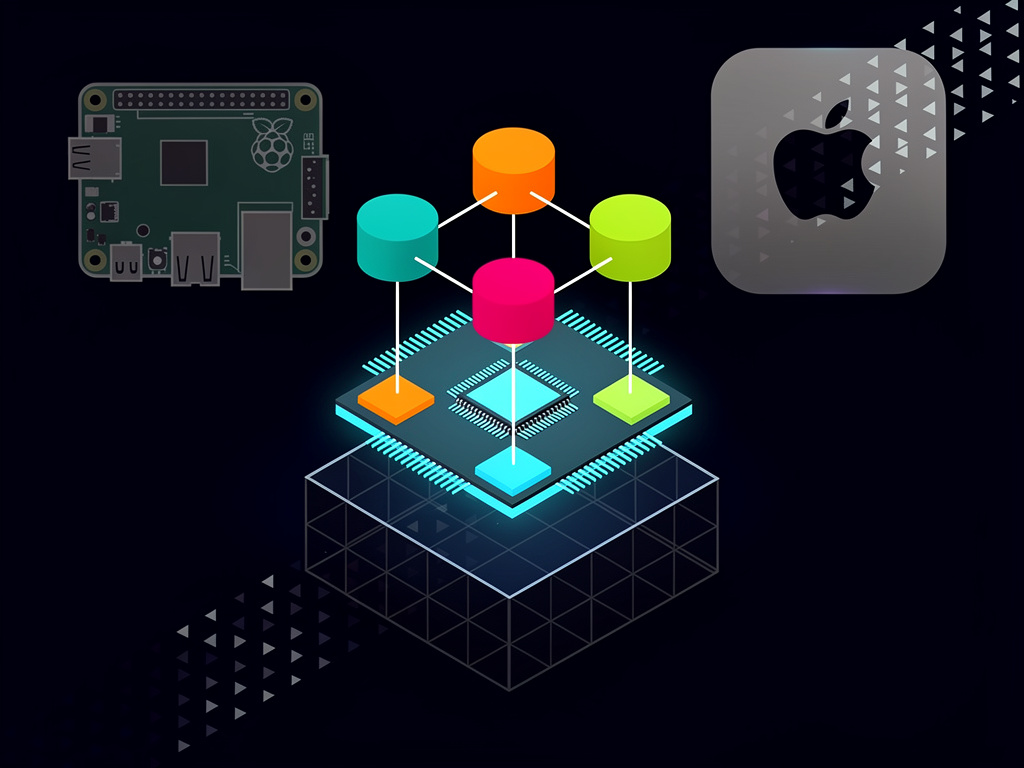
Interest in the port stretches back years. Earlier efforts dated to 2018 and 2021 focused on bootstrapping and compiler toolchains. The current push targets real hardware. Raspberry Pi 5 sits high on the list. Long-term ambitions include running on Apple M1 and M2 MacBooks. Smrobtzz has mentioned that goal explicitly in forum updates.
Haiku’s appeal lies in its design. The system remains pervasively multithreaded. It delivers low latency and efficient resource use. Those traits could translate well to ARM-based single-board computers and laptops that emphasize power efficiency. Success on ARM64 would open new device categories for a project that has long centered on x86_64.
Progress has not stopped at the processor port. The April report, referenced in the latest Phoronix coverage, also covered Bluetooth refinements, MMC/SDHCI power management fixes, and the import of a WiFi driver from FreeBSD. Media mixer code received refactoring so it starts only when an application requests audio output. The change trims boot time and trims unnecessary CPU cycles. Automatic shutdown of the mixer when audio stops remains unfinished.
Command-line tooling saw attention too. Improvements landed in ltrace, though the tool still crashes under some tracing scenarios and cannot yet ship for everyday use. These smaller fixes fill out the monthly picture. They show a project balancing ambitious architecture work with practical desktop and developer experience tasks.
Haiku remains far from a full ARM64 release. The architecture sits at Tier 2 status. x86_64 continues as the primary focus for the upcoming beta 6. ARM64 images carry an unsupported label and target development only. Real hardware support stays early. Drivers, power management, and peripheral integration all demand more code.
Still, the pace feels encouraging. From minimal kernel boots to a functional desktop with four-core and eight-core SMP in a matter of weeks. Community members have begun experimenting with the images on Macs using UTM and on standard QEMU setups. Some have started exploring package bootstrapping to enable development directly on the ARM64 port.
One forum participant asked about creating a full hacking environment. The response pointed to HaikuPorts archives as a starting point while acknowledging that many packages still need rebuilding for the new architecture. That work will take time. But the foundation now exists.
Observers outside the immediate community have taken notice. Linuxiac covered the March desktop milestone. OSnews highlighted the shift from small incremental changes to a major architectural step. Reddit threads in r/linux and r/haikuOS shared screenshots and speculation about Raspberry Pi potential.
The project’s own port status page lists QEMU EFI support at moderate maturity and Raspberry Pi 4 and later at lower readiness. Those percentages will shift as contributors add device trees, interrupt controllers, clock and power domain drivers, and graphics support.
And the SMP achievement matters. Symmetric multiprocessing lets the kernel schedule threads across cores without artificial limits. Timer interrupts and inter-CPU interrupts now fire correctly on all processors in the four-core QEMU test. That capability forms a prerequisite for any serious performance on multi-core ARM boards.
Challenges remain technical and organizational. The small developer pool means progress can feel uneven. Much of the ARM64 lift fell on two people. Sustaining momentum will require more hands. The project continues to welcome contributions. Its build system already supports cross-compilation for ARMv8 from x86_64 or native macOS ARM64 hosts.
Haiku’s path to wider adoption has always combined technical excellence with patience. The BeOS heritage brings a clean, responsive feel that some users still prefer decades later. Extending that experience to inexpensive, power-efficient ARM hardware could attract new audiences. Hobbyists. Educators. Developers seeking an alternative that avoids the complexity of mainstream Unix-like systems.
For now the story stays focused on virtual machines. QEMU provides a safe, reproducible test bed. It also allows rapid iteration. Once the virtual port stabilizes further, attention will turn to physical boards. Device tree bindings, bootloader integration via EDK II EFI, and hardware-specific drivers will dominate the next phase.
The latest reports suggest that phase has begun. Raspberry Pi 5 appears repeatedly in forum discussions as a concrete target. Apple silicon support would bring Haiku to high-performance laptops with excellent battery life. Each step builds on the last.
smrobtzz continues posting updates. The community thread grows with questions, test results, and offers of help. Nightly images improve week by week. The April activity summary points to continued refinement in May. Bluetooth, storage, and media subsystems all stand to benefit.
Haiku has never chased mass market scale. Its goals center on correctness, responsiveness, and joy of use. The ARM64 port, now with working SMP, aligns with those aims. It expands the platforms where those qualities can shine. The work won’t transform the computing world overnight. But for those who follow the project, each functional core on a new architecture feels like tangible progress.


 WebProNews is an iEntry Publication