
Developers working on the open-source operating system inspired by BeOS delivered another month of steady advances in May 2026. From desktop application repairs to kernel-level performance gains, the changes reflect a project determined to reach its next major milestone. The latest activity report, authored by waddlesplash and published on the official site, catalogs commits from hrev59672 through hrev59753.
Tracker saw multiple fixes. jscipione corrected regressions that prevented proper scroll position restoration when moving between directories. File drops onto other files started working again. Drag-and-drop of icons onto views with mismatched sizes now behaves correctly. The Trash icon reappeared in file panels on the Desktop. Even the visual style of dragged bitmaps received attention. These adjustments address long-standing annoyances for users who rely on the file manager every day.
HaikuDepot gained stability too. apl resolved a crash triggered by opening certain package files. He refactored views that display “Not available” messages for reviews and began overhauling package selection logic. Keyboard navigation improved. Such refinements matter for an operating system whose package manager serves as the primary gateway to new software.
Other applications received polish. humdinger simplified the label for deleting old update states in SoftwareUpdater. He made the Trash directory name appear translated when that option is active. nipos stopped WebPositive from opening an unwanted homepage tab when launched from a URL click elsewhere. Zardshard eliminated a crash in Icon-O-Matic. ShowImage no longer suffers toolbar cutoff in fullscreen. ActivityMonitor window size limits were corrected.
StyledEdit looks better now. humdinger adjusted its color choices and selector appearance. He split the single Font menu into separate Font and Style menus. The change helps users with large font collections avoid cluttered interfaces. nephele updated WebPositive’s default search links for Google and DuckDuckGo to versions that exclude AI-generated content. Button appearance on high-resolution displays also improved. Long history items in TextSearch no longer expand menus beyond screen width.
Command-line utilities stayed current. PulkoMandy refreshed the USB IDs database and expanded decoding support for additional CDC descriptor types inside listusb. Small steps. Yet they keep the system aligned with modern hardware identification needs.
The Kits layer saw targeted repairs. X512 corrected several mouse-tracking bugs in BListView that caused incorrect selection behavior. waddlesplash restored functionality to BTab::SetEnabled when tabs were not yet attached to a view. A memory leak in the Package Kit’s job handling disappeared. madmax fixed string escaping in the BMessage-to-driver_settings converter. Wireless network names containing spaces or special characters can now be saved and automatically connected at boot. Some autoconnect problems remain. But one persistent source of user frustration has been removed.
Server components also advanced. waddlesplash reworked screen configuration save and restore logic inside app_server. Resolutions changed by applications now reset properly when those programs exit or are terminated. KevinAdams05 removed the nonfunctional “Save as PDF” default printer. The feature belongs in a separate PDF Writer package instead.
File systems became more reliable. nathan242 ensured that node monitor notifications fire correctly when files are truncated using O_TRUNC. This affects BFS and several others. jessicah prevented a crash that occurred when attempting to create a volume without indexes.
Driver work continued despite some components remaining disabled by default. PulkoMandy fixed an I2C driver crash on specific hardware and made further progress on the MMC driver, improving initialization. shivamsinghydv expanded parsing of device information messages in the Bluetooth server. nathan242 ported the realtekwifi8187 driver from FreeBSD, adding support for older Realtek USB WiFi adapters. smrobtzz modified intel_extreme to optionally disable framebuffer tiling in hopes of clearing up garbled output on certain systems. The same contributor fixed a race condition in the ACPI driver that had caused battery reporting and shutdown failures on various machines.
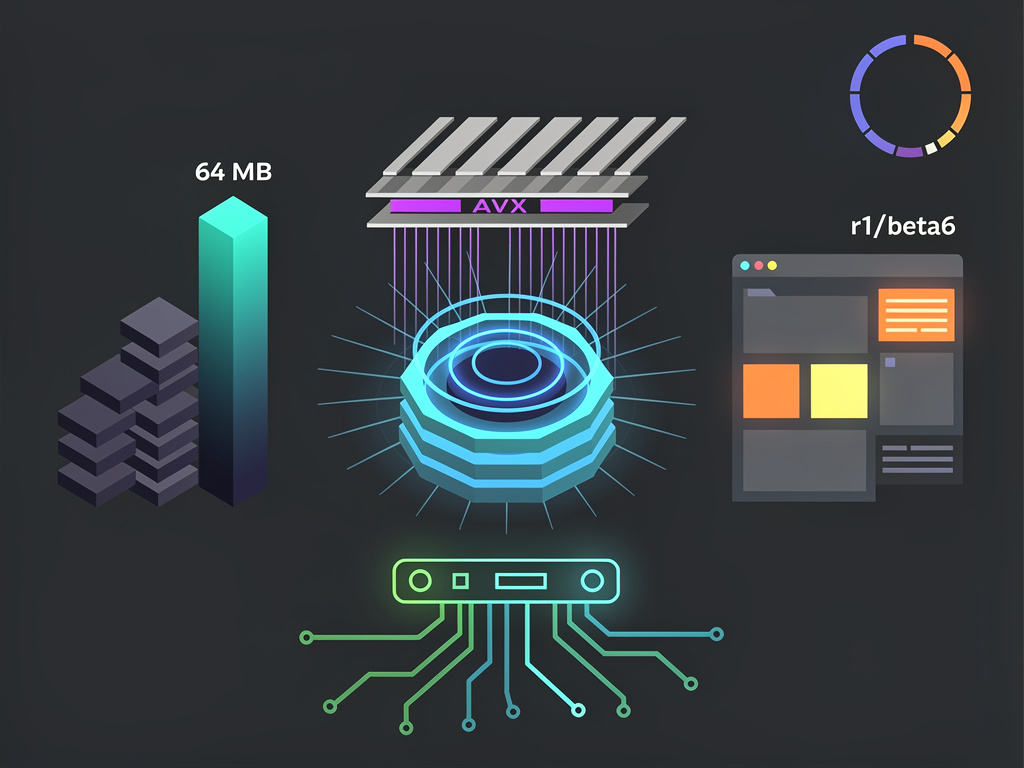
Kernel and libroot changes stand out for their depth. waddlesplash and trungnt2910 updated FPU handling to enable AVX-512 on processors that support the instruction set. The Phoronix article from June 2026 highlighted this development alongside other hardware improvements. ypsvlq raised the maximum user stack size to 64 MB, a requirement for the Zig compiler. PulkoMandy increased PTHREAD_KEYS_MAX to 512 to satisfy demands from the Rust compiler.
Additional kernel fixes addressed stability and correctness. nathan242 corrected the driver_settings loader to accept zero-length files without error. He also fixed an ancient bug where renamed partitions continued to display old names in multiple places. waddlesplash cleaned up nonstandard headers, fixed SIZE_MAX type, added assertions to prevent negative CPU pin counters, and inserted a NULL check that stopped a rare kernel crash.
Virtual memory page logic assertions no longer trigger kernel debugger entries under high load. KDL initialization was improved for cases where some CPUs remain stuck in spin loops. The obsolete last-caller spinlock debug system was removed. User timer locking received a complete overhaul. Granular locks, stronger assertions, and better performance resulted. x86 per-CPU timer handling was simplified by removing unnecessary register reads. Some timer reset bypass checks were re-enabled.
The build system now accommodates GCC 16 on the host, thanks to SED4906. waddlesplash corrected a missing parameter for GCC 2 and adjusted options so it compiles on newer systems. Documentation benefited from PulkoMandy’s typo fixes and expanded SD/MMC driver explanations. madmax clarified the return values documented for BListView::CurrentSelection. cafeina added entries covering the USB Kit and selected Network Kit classes to the Haiku Book.
Ports to new architectures moved forward in limited ways. smrobtzz supplied basic boot fixes for Raspberry Pi 5, though much work remains. CPU startup logic for SMP saw multiple enhancements.
Progress toward the elusive r1/beta6 release continues. Only a small number of regressions remain. Most WebPositive issues have been addressed. The report expresses hope for additional movement in June. Yet the project has traveled this road before. Each month brings fixes. The final stretch demands careful validation.
Contributors receive regular thanks. Donors who fund waddlesplash’s contract work make sustained development possible. The May report, available at haiku-os.org, lists dozens of individuals by name. Their combined efforts keep an independent desktop operating system alive.
Haiku’s path has never been straightforward. Inspired by a commercial product discontinued decades ago, the project maintains binary compatibility goals while rebuilding nearly everything from scratch. Modern compilers, new instruction sets, and fresh hardware support all require constant attention. AVX-512 activation signals that the kernel can now take advantage of capabilities once considered exotic. Stack size increases accommodate contemporary language toolchains. WiFi driver ports from FreeBSD expand hardware choices without reinventing the wheel.
Challenges persist. Some autoconnect bugs linger. Certain drivers stay disabled pending further testing. ARM and RISC-V ports show promise but demand more effort before they become practical. The bus factor remains a topic of quiet concern among observers, even as Google Summer of Code participation brings in new contributors. Haiku announced it will mentor three students in the 2026 program, according to the project’s May 1 news post.
Still, the operating system runs. It boots on real hardware. Applications launch. Networks connect. Users who value its responsive feel and clean design continue to test nightly builds. For them, these monthly reports represent tangible signs of life. Each fixed regression, each performance tweak, each documentation improvement narrows the gap between vision and reality.
The coming weeks will reveal whether beta6 arrives soon. Regressions have dwindled. WebPositive stability has improved. If the pattern holds, another report will arrive in July detailing the final push. Until then, the code speaks for itself. One commit at a time.


 WebProNews is an iEntry Publication