
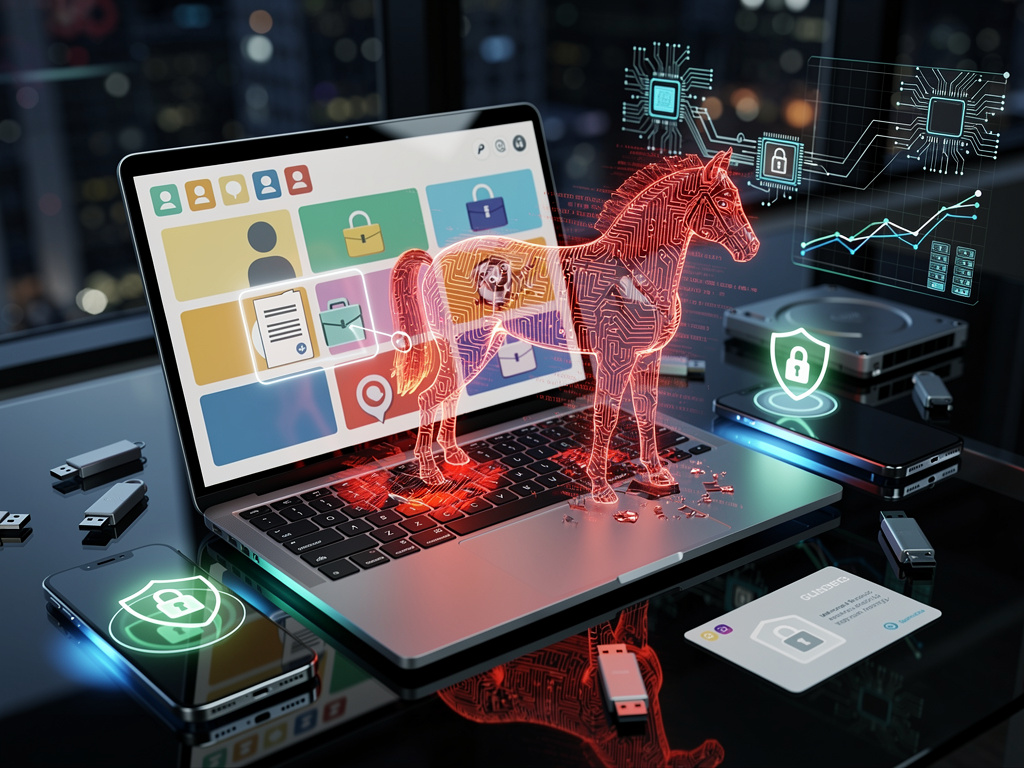
LinkedIn’s Shadow Network: The Rising Threat of Malware in Professional Messaging
In the ever-evolving world of cybersecurity, professional networking platforms like LinkedIn have become unexpected battlegrounds for sophisticated cyber threats. Recent reports reveal a disturbing trend where hackers are exploiting private messages on the platform to distribute remote access trojans (RATs) through a technique known as DLL sideloading. This method allows malicious actors to bypass traditional security measures, infecting systems with malware that can steal sensitive data or grant unauthorized control. As businesses increasingly rely on LinkedIn for recruitment, networking, and collaboration, these attacks highlight vulnerabilities in what many consider a trusted space for professional interactions.
The campaign, detailed in a recent analysis by cybersecurity researchers, involves attackers initiating contact via seemingly legitimate connection requests or direct messages. Once engaged, they send files that appear innocuous—often disguised as job offers, business proposals, or shared documents. However, these files exploit DLL sideloading, a process where legitimate Windows dynamic link libraries (DLLs) are manipulated to load malicious code. This isn’t a new tactic, but its application on LinkedIn marks a shift toward targeting high-value professionals in sectors like finance, technology, and government.
According to The Hacker News, the malware deployed in these attacks is designed for stealth, often evading antivirus detection by mimicking standard system processes. Victims might notice unusual system behavior only after the infection has taken hold, such as unauthorized data exfiltration or persistent backdoor access. The implications are severe, potentially leading to corporate espionage, financial theft, or even broader network compromises.
Unpacking the DLL Sideloading Technique
DLL sideloading exploits the way Windows loads libraries for executable files. Attackers craft a legitimate-looking executable that, when run, searches for a specific DLL in its directory. By placing a malicious DLL with the same name alongside it, they trick the system into loading the harmful code instead. This method is particularly effective because it leverages trusted system mechanics, making it hard for security tools to flag without deep behavioral analysis.
In the context of LinkedIn, perpetrators often pose as recruiters or industry peers, building rapport before sending the tainted file. Posts on X (formerly Twitter) from cybersecurity experts, including accounts like The Cyber Security Hub, have highlighted real-time instances of these attacks, with users reporting suspicious messages containing prompts to download files for “job applications” or “confidential briefings.” These social media alerts underscore the rapid spread of awareness, but also the challenge in containing such threats on a platform with over a billion users.
Further insights from web sources indicate that this isn’t an isolated incident. For instance, TechRadar reported on similar phishing schemes infiltrating LinkedIn comments, where scammers post fake policy warnings to lure users into clicking malicious links. While comments differ from private messages, the pattern of abusing platform features for deception is consistent, suggesting a broader strategy by threat actors to exploit LinkedIn’s social dynamics.
The Role of Social Engineering in Amplifying Risks
Social engineering remains the linchpin of these operations. Hackers craft messages that tap into users’ professional ambitions, such as urgent job opportunities or exclusive industry insights. This psychological manipulation is amplified by LinkedIn’s design, which encourages quick responses and file sharing to foster connections. Industry insiders note that the platform’s emphasis on building networks can inadvertently lower users’ guards, making them more susceptible to opening attachments from unfamiliar contacts.
Recent news from Cybernews details how scammers use fake warnings about account restrictions or policy violations to create urgency, pushing users toward malicious actions. In private messaging scenarios, this evolves into personalized lures, where attackers research targets’ profiles to tailor their approaches—mentioning specific skills, past employers, or mutual connections to build credibility.
X posts from figures like Shah Sheikh emphasize the sophistication, with mentions of RAT malware capable of keylogging, screen capturing, and even webcam activation. These capabilities turn infected devices into surveillance tools, posing risks not just to individuals but to entire organizations if corporate accounts are compromised. The convergence of social engineering with technical exploits like DLL sideloading creates a potent threat vector that’s difficult to mitigate through awareness alone.
Evolving Attack Vectors and Historical Parallels
Looking back, LinkedIn has faced malware distribution issues before. A 2019 report from Avast described espionage groups using malicious attachments in messages to deploy malware families. Fast-forward to 2026, and the tactics have refined, incorporating AI-driven personalization to make phishing attempts more convincing. Web searches reveal that North Korean hackers, as covered in WebProNews, are ramping up similar operations, targeting finance and crypto sectors via platforms like LinkedIn.
This escalation aligns with broader cybersecurity concerns outlined in PCMag, where experts predict AI-powered scams will dominate 2026 threats. On LinkedIn, AI could automate message crafting, analyzing public profiles to generate hyper-targeted content that evades spam filters. Historical data from X, such as a 2021 post by The Hacker News about “more_eggs” backdoor trojans via job offers, shows patterns repeating with greater intensity.
Moreover, Vice has documented how hackers pivot from emails to social platforms, using comments and now messages to spread malware. This shift exploits the trust inherent in professional networks, where users are less likely to scrutinize interactions compared to unsolicited emails.
Corporate Vulnerabilities and Sector-Specific Impacts
For businesses, the stakes are high. LinkedIn is a hub for executive networking, making it a prime target for attacks aiming at sensitive corporate data. Security leaders, as quoted in Security Magazine, express concerns over the broader implications, including account hijackings that could lead to supply chain attacks. Imagine a compromised HR professional’s account being used to send malware-laden “resumes” to an entire company network.
Sectors like finance and cryptocurrency are particularly vulnerable, as evidenced by X discussions around North Korean operations stealing billions through such tactics. A post from ZachXBT on X warns of LinkedIn’s role in crypto thefts, where weak detection allows malware to proliferate. This ties into reports from BleepingComputer, which details convincing reply tactics that abuse LinkedIn’s features, extending to private messages.
The impact extends to critical infrastructure. If attackers gain access via a LinkedIn-compromised device, they could pivot to disrupting sectors like healthcare or transportation, though current evidence points more toward data theft than outright sabotage. Industry insiders must consider how remote work amplifies these risks, with employees using personal devices for professional networking.
Defensive Strategies for Professionals and Organizations
To counter these threats, experts recommend multi-layered defenses. First, enable two-factor authentication on LinkedIn and associated accounts, and scrutinize all unsolicited messages, especially those with attachments. Tools like advanced endpoint detection and response (EDR) systems can identify DLL sideloading by monitoring anomalous library loads.
Organizations should integrate LinkedIn awareness into cybersecurity training, simulating phishing scenarios specific to the platform. As noted in Malwarebytes, fake restriction warnings are common lures, so verifying any claims directly through official channels is crucial. On X, users like Arnav Sharma advise watching for odd text or unsolicited file prompts in messages.
Furthermore, leveraging AI for defense—such as machine learning models that analyze message patterns—could tip the balance. Web sources like BleepingComputer‘s general coverage emphasize staying updated on threats, while historical X posts from TechCrunch about past LinkedIn data breaches remind us of the platform’s vulnerabilities.
Emerging Trends and Future Safeguards
As we move deeper into 2026, the integration of AI in both attacks and defenses will likely intensify. Hackers may use generative AI to create deepfake profiles or messages that perfectly mimic real users, complicating detection. Countermeasures could include platform-level AI filters, though LinkedIn’s parent company, Microsoft, has yet to announce specific enhancements.
Collaboration between platforms, cybersecurity firms, and governments is essential. Reports from X, including those from Confidence Staveley, highlight real-world losses from LinkedIn-initiated scams, underscoring the need for proactive measures. By fostering a culture of verification—double-checking links, avoiding rushed downloads, and reporting suspicious activity—users can reduce risks.
Ultimately, while LinkedIn remains invaluable for professional growth, these incidents serve as a stark reminder of the dual-edged nature of digital connectivity. Staying vigilant, informed by sources like The Hacker News and community alerts on X, will be key to navigating this shadowed side of networking without falling prey to increasingly cunning adversaries.


 WebProNews is an iEntry Publication