
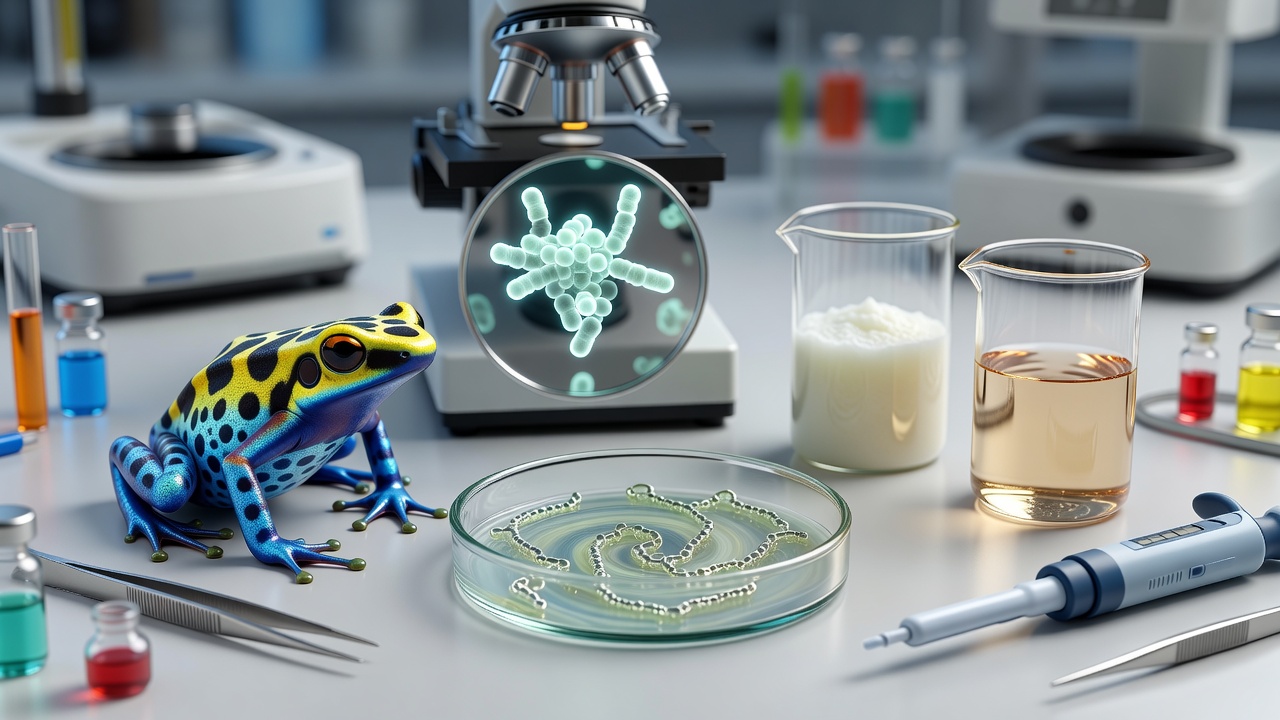
A recent scientific discovery has brought fresh attention to the complex relationship between gut bacteria and human health. Researchers examining the microbiome of an unusual South American frog have identified a bacterial strain with properties that could influence treatments for metabolic disorders. The study, published through The Focal Points, describes how this microbe produces compounds that affect fat metabolism and glucose regulation in laboratory models.
The bacterium in question comes from the gut of the dyeing poison dart frog, a colorful amphibian native to the rainforests of Brazil, French Guiana, and Suriname. Scientists collected samples from wild specimens and isolated a previously uncharacterized strain of *Enterococcus*. What makes this particular microbe stand out is its ability to generate specific secondary metabolites that interact with mammalian biological pathways. When introduced to mice fed high-fat diets, the bacteria appeared to reduce weight gain and improve insulin sensitivity compared to control groups.
This finding adds to a growing body of evidence showing that microbial communities play active roles in regulating host metabolism. For decades, medical researchers focused primarily on human cells when studying conditions like obesity and type 2 diabetes. The emergence of microbiome science has shifted that perspective, revealing that trillions of bacteria living in our digestive tracts influence everything from nutrient absorption to inflammatory responses. The frog-derived strain offers a new example of how nature has evolved sophisticated chemical solutions to environmental challenges.
The research team first became interested in poison dart frogs because of their unique survival strategies. These amphibians secrete powerful toxins through their skin to deter predators, but they also maintain distinctive gut microbial populations that may help process their specialized diets. The frogs consume mostly ants and mites that contain alkaloids, and their internal bacteria appear to assist in breaking down these compounds. During the analysis, investigators noticed that certain bacterial isolates produced molecules structurally similar to compounds known to activate bile acid receptors in mammals.
Further testing showed that the *Enterococcus* strain secretes a class of cyclic peptides that can bind to the farnesoid X receptor, a protein involved in bile acid signaling and lipid metabolism. When mice received oral doses of either the live bacteria or purified extracts, they exhibited measurable changes in gene expression related to fat storage and sugar processing. Liver tissue samples revealed decreased accumulation of triglycerides, while blood tests indicated lower fasting glucose levels. The effects were dose-dependent and appeared reversible when treatment stopped.
These observations align with previous work on other microbial metabolites that influence metabolic health. Short-chain fatty acids produced by certain gut bacteria have long been associated with improved metabolic outcomes. More recently, scientists have identified specific strains that generate molecules capable of mimicking human hormones or blocking inflammatory pathways. The frog-associated bacterium seems to fall into this category of specialized microbes that produce targeted bioactive compounds rather than simply aiding digestion.
The discovery process involved multiple stages of verification. After initial isolation, researchers sequenced the bacterial genome to identify potential biosynthetic gene clusters responsible for metabolite production. They then cultured the organism under various conditions to maximize yield of the active compounds. Mass spectrometry and nuclear magnetic resonance spectroscopy helped determine the chemical structures, while synthetic versions were created to confirm biological activity independent of the living bacteria.
Animal studies formed the core of the functional validation. Researchers divided mice into groups receiving either standard chow or high-fat diets, then supplemented some subgroups with the bacterial strain. Over twelve weeks, they monitored body composition, glucose tolerance, and inflammatory markers. The mice that received the frog-derived bacteria showed approximately 18 percent less weight gain on the high-fat diet compared to untreated controls. Their adipose tissue displayed reduced macrophage infiltration, suggesting lower chronic inflammation.
Beyond the metabolic effects, the bacteria demonstrated good safety characteristics in preliminary assessments. No significant immune reactions occurred in the test animals, and the strain did not appear to colonize permanently in the mammalian gut. Instead, it functioned more like a transient passenger that delivered its chemical payload before being cleared from the system. This transient nature could prove advantageous for therapeutic applications, as it might allow for controlled dosing without permanent alteration of the host microbiome.
The findings connect to broader patterns observed across different animal species. Many organisms have developed specialized relationships with their gut microbes to handle challenging diets or environmental conditions. In the case of poison dart frogs, the bacteria may help neutralize dietary toxins while simultaneously producing compounds that regulate the frog’s own metabolism. When these same bacterial products interact with mammalian systems, they appear to trigger similar regulatory pathways despite the evolutionary distance between amphibians and mammals.
Scientists caution that considerable work remains before any potential medical applications could emerge. The current study represents an early-stage investigation focused on characterizing the bacterial strain and its primary effects in laboratory animals. Human trials would require extensive safety testing, dose optimization, and careful evaluation of long-term consequences. Questions about stability, manufacturing scalability, and potential interactions with existing medications must be addressed thoroughly.
The research also highlights the value of exploring biodiversity for biomedical insights. Tropical rainforests contain countless species with unique adaptations that remain poorly understood. The dyeing poison dart frog represents just one example of how examining unusual organisms can uncover biological mechanisms with unexpected relevance to human health. Similar approaches have previously yielded important discoveries, from antibiotics derived from soil bacteria to pain medications inspired by cone snail venom.
Funding for the project came from multiple sources, including government grants focused on microbiome research and private foundations interested in metabolic diseases. The collaborative effort involved microbiologists, biochemists, and endocrinologists working across several institutions. Their combined expertise allowed for comprehensive analysis that spanned from field collection to molecular mechanism studies.
Public interest in microbiome-based therapies has increased substantially in recent years. Consumers already purchase probiotic supplements and fermented foods in large quantities, hoping to improve their digestive health and overall wellbeing. The possibility that specific bacterial strains might directly influence weight management or blood sugar control has generated particular excitement. However, experts emphasize the need for rigorous scientific validation before making any therapeutic claims.
The bacterial strain’s discovery adds another piece to the complex puzzle of metabolic regulation. Obesity and diabetes continue to present major challenges for healthcare systems worldwide, with current treatments often falling short of providing sustainable solutions. New approaches that target underlying biological mechanisms rather than simply addressing symptoms could offer meaningful advances. While the frog-derived bacterium is unlikely to become a standalone cure, it may contribute to a more nuanced understanding of how microbial chemistry influences human physiology.
Future research directions include investigating whether related bacterial strains exist in other amphibian species or even in different ecological niches. Scientists also plan to examine the precise molecular interactions between the bacterial metabolites and their mammalian targets. Advanced imaging techniques and organoid models may help clarify these mechanisms without requiring large numbers of experimental animals.
The study serves as a reminder that unexpected sources can sometimes provide valuable biological tools. By examining the gut contents of a brightly colored rainforest frog, researchers have uncovered a microbe with intriguing properties. The work demonstrates how basic scientific curiosity about the natural world can lead to findings with potential practical significance. As analytical methods continue to improve, similar discoveries seem likely to emerge from other overlooked corners of the biological kingdom.
Understanding the full implications of this research will require sustained effort from the scientific community. Each new microbial metabolite identified expands our knowledge of possible chemical interactions within living systems. The *Enterococcus* strain from the dyeing poison dart frog represents one such addition to that growing catalog. Its ability to modulate metabolic parameters in laboratory models suggests that further exploration of amphibian microbiomes could prove scientifically rewarding.
The path from laboratory observation to clinical application typically spans many years. This particular discovery will need to undergo additional validation studies, mechanistic refinement, and safety assessments before any human testing could begin. Even then, development into a viable therapeutic would face the standard challenges of pharmaceutical research, including formulation, delivery optimization, and regulatory approval. Nevertheless, the initial results provide a compelling rationale for continued investigation.
This line of inquiry also encourages broader thinking about how humans interact with their environment. The preservation of biodiversity takes on added significance when considering that countless species may harbor biological solutions to current medical problems. The loss of rainforest habitats could mean the permanent disappearance of unique microbial strains before their properties are ever documented. In this context, scientific exploration serves both to expand knowledge and to highlight the practical value of conservation efforts.
As the research progresses, scientists will likely examine whether the bacterial compounds can be synthesized efficiently or if live bacterial preparations offer advantages. They will also investigate potential synergies with existing diabetes medications or lifestyle interventions. The goal remains developing approaches that address metabolic dysfunction through multiple complementary mechanisms rather than relying on single-target treatments.
The identification of this frog-associated bacterium illustrates the unexpected connections that sometimes emerge in biological research. A colorful amphibian from South American rainforests has provided researchers with a microbial strain that influences mammalian metabolism in measurable ways. While much work lies ahead, the discovery contributes to our understanding of nature’s chemical diversity and its potential relevance to human health challenges. Through careful, systematic study, such findings may eventually translate into new options for managing metabolic conditions that affect millions of people globally.


 WebProNews is an iEntry Publication