
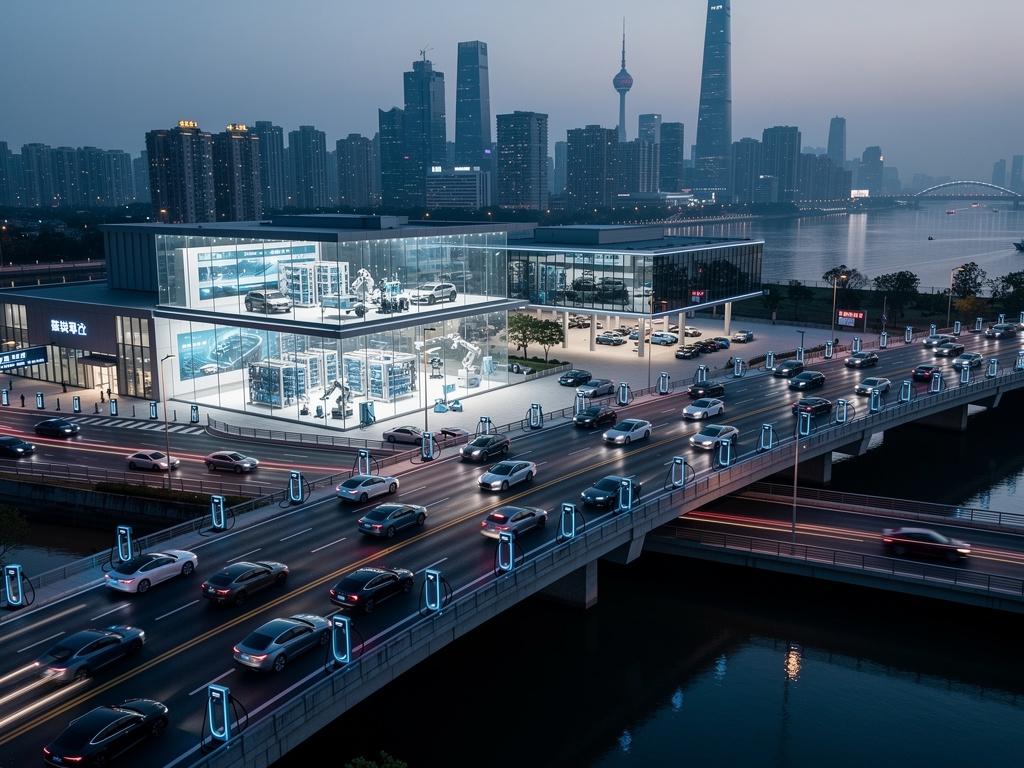
Guangzhou’s Electric Surge: Inside China’s Accelerating EV Revolution
In the bustling streets of Guangzhou, a city pulsing with innovation, China’s electric vehicle sector is not just evolving—it’s exploding. Recent test drives of cutting-edge models reveal a market where technology meets affordability, drawing global attention. As automakers like BYD and Geely push boundaries, the scene in this southern metropolis offers a glimpse into the future of mobility. Drawing from on-the-ground experiences and industry reports, this surge is reshaping how the world thinks about electric transportation.
One standout example comes from a recent video exploration by MSN, where journalists took to the roads in Guangzhou to test new EV prototypes. The footage highlights sleek designs with advanced battery systems that promise longer ranges and faster charging times. These vehicles aren’t just concepts; they’re hitting showrooms, backed by government incentives that make them accessible to everyday consumers.
Beyond the test drives, data from the International Energy Agency underscores the momentum. In their Global EV Outlook 2025, analysts project that electrified vehicles will account for over 50% of sales in China this year, a milestone driven by cities like Guangzhou. This isn’t mere hype—it’s a calculated shift fueled by policy and innovation, positioning China as a leader in sustainable transport.
Rapid Model Rollouts and Market Dominance
Chinese manufacturers are outpacing global competitors in sheer volume and speed. According to a report from Rest of World, BYD secured approvals for 38 new models in a single year, dwarfing Tesla’s three. This agility stems from streamlined regulations and a robust supply chain, allowing firms to iterate quickly on designs that incorporate the latest in autonomous driving and energy efficiency.
In Guangzhou, the auto show earlier this year served as a launchpad for these innovations. Coverage from Car Design News detailed unveils of production-ready EVs with features like in-wheel motors, which eliminate traditional drivetrains for better performance. These advancements aren’t isolated; they’re part of a broader push where local brands are eclipsing joint ventures with foreign automakers.
The competitive edge is evident in pricing strategies. As noted in Autoweek, affordable long-range options are flooding the market, supported by aggressive subsidies. Guangzhou’s government recently rolled out a $43 million incentive program to boost year-end sales, as highlighted in posts on X from industry watchers, signaling a concerted effort to maintain dominance amid economic pressures.
Exports are another critical facet. While domestic sales soar, Chinese firms are shipping gasoline vehicles abroad, but EVs remain the star. A Reuters investigation reveals how legacy automakers are offloading fossil-fuel cars in emerging markets, yet the EV focus in hubs like Guangzhou ensures that electric models lead the export charge, challenging Western brands on their home turf.
Technological leaps are redefining vehicle capabilities. Take the Dongfeng eπ 007, approved for mass production with four in-wheel hub motors, as discussed in various X updates. This setup boosts efficiency by 30% and enhances regenerative braking, eliminating traditional brakes in some scenarios. Such innovations, born in Guangzhou’s R&D centers, are setting new benchmarks for the industry.
Battery technology is at the heart of this revolution. With hundreds of thousands of used batteries entering the market, recycling efforts are ramping up. MIT Technology Review explores how Beijing is formalizing a system to handle this influx, turning potential waste into a resource for new energy storage solutions.
Infrastructure and Urban Integration
Guangzhou’s infrastructure supports this EV boom remarkably. The city boasts over 12,000 electric buses and 10,000 electric taxis, as shared by The Earthshot Prize on X, creating a blueprint for urban sustainability. Repurposed batteries are even storing clean energy, reducing pollution in a metropolis of 24 million.
This integration extends to emerging tech like autonomous vehicles. XPeng, a Guangzhou-based firm, recently secured an L3 road-test license, per updates from Gasgoo Auto News on X. This allows testing on expressways, paving the way for Level 4 autonomy by early 2026. Such developments are not just technical feats; they’re transforming daily commutes and logistics.
Joint ventures are feeling the strain. At the Guangzhou Auto Show, Chinese tech overshadowed foreign partners, with imported sales down 32%, according to CarNewsChina. Brands like Toyota are now incorporating Chinese engines, as noted in X posts by users like Young Otutu, highlighting a shift where local innovation drives global partnerships.
The rise of new players adds to the dynamism. GAC Motor’s four in-wheel motor breakthrough, detailed in X content from William Huo, makes vehicles lighter and safer. This isn’t limited to passenger cars; hybrid engineering vehicles for urban use, like those from China Special Vehicle on X, show how EV tech permeates various sectors.
Government policies are the invisible hand guiding this progress. Subsidies and approvals accelerate adoption, but challenges like battery recycling demand attention. The MIT Technology Review piece emphasizes the gray market’s role, urging a more structured approach to sustain growth.
On the global stage, China’s EV strategy influences trade dynamics. While the U.S. and Europe grapple with tariffs, Guangzhou’s output—fueled by firms like BYD—continues to expand. The Electric Car Scheme blog lists top models like the BYD Seal and NIO ET7 as frontrunners for 2026, available through innovative financing that cuts costs by up to 50%.
Challenges Amidst the Acceleration
Yet, this rapid expansion isn’t without hurdles. Overcrowding in the market leads to brutal price wars, as Autoweek reports, threatening smaller players. In Guangzhou, where innovation thrives, consolidation may be on the horizon as giants like BYD dominate.
Environmental considerations are paramount. The flood of batteries requires robust recycling, and while Beijing scrambles, informal economies fill gaps. Insights from the MIT Technology Review illustrate the scale: hundreds of thousands of units annually, demanding innovation in material recovery.
Social impacts are also emerging. Shenzhen, nearby Guangzhou, has become the EV capital, producing nearly three-quarters of the world’s electric cars, per The World from PRX. This hub fosters jobs but raises questions about labor and supply chain ethics.
Looking ahead, autonomous integrations promise more. X posts from Sydney EV highlight the Dongfeng model’s no-brake design, relying on regen tech—a bold step that could redefine safety standards. In Guangzhou, trials of driverless delivery vans and sanitation robots, as covered in another The World from PRX story, show transportation’s future unfolding now.
Export strategies reveal a dual approach. Reuters notes the saturation of gasoline cars in foreign markets, but EVs from Guangzhou are the real disruptors, offering superior tech at lower prices. This undercuts established players, forcing adaptations like Mercedes’ partnership with Geely for EV engines.
Industry insiders see this as a tipping point. Mario Nawfal’s X post projects over 12 million EV sales in China for 2025, outpacing gas vehicles. Such figures, echoed in the IEA’s outlook, suggest a permanent shift, with Guangzhou at the epicenter.
Innovations Shaping Tomorrow’s Roads
Diving deeper into specific models, the top Chinese EVs of 2025, as reviewed in AutoChina Blog, include standouts like those from NIO and XPeng, boasting ranges over 500 miles and AI-driven interfaces. These compare favorably to Tesla and Volkswagen, often at half the price.
GAC’s dealer network overhaul, announced via AutoNews_Asia on X, plans 600 new showrooms by 2027 to combat upstarts like Xiaomi. This retail evolution in Guangzhou emphasizes customer experience, blending physical and digital sales.
Hybrid technologies bridge gaps. The Dongan Auto Engine and BAW joint lab, per Gasgoo, has produced over 50,000 units since 2021, focusing on off-road and NEV advancements—crucial for diverse terrains beyond urban Guangzhou.
Zoya’s X thread on the Shanghai Auto Show, though not Guangzhou-specific, reflects broader Chinese innovation with flying cars and AI ecosystems, influencing expectations for local shows. While Western brands lag, China’s mass production, even using unconventional materials like table salt in batteries as William Huo notes, accelerates progress.
Policy interplay with tech is key. Guangzhou’s subsidies, detailed in EV’s X post, target brands like XPeng and NIO, boosting adoption amid a competitive field.
Finally, as China’s EV sector matures, Guangzhou exemplifies the blend of ambition and execution. From test drives showcasing seamless performance to systemic shifts in recycling and autonomy, the city’s role is pivotal. Industry observers, drawing from sources like Car Magazine’s coverage of the auto show, note that change is not coming—it’s already here, redefining global mobility standards.


 WebProNews is an iEntry Publication