
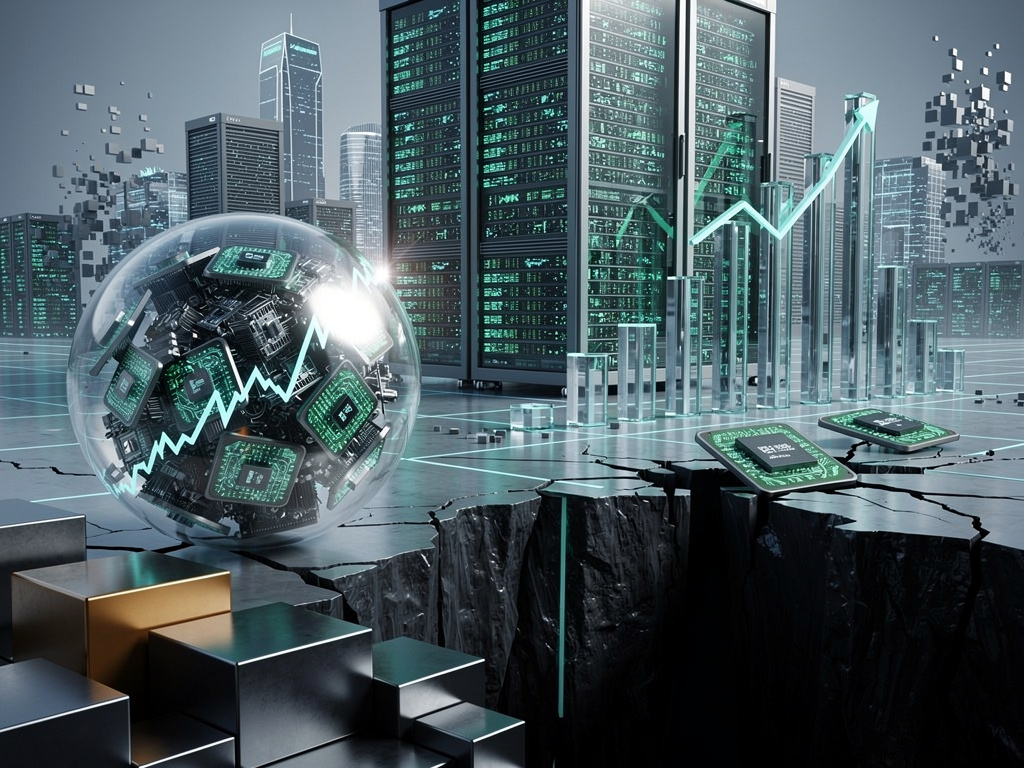
The AI Mirage: Jeremy Grantham’s Stark Warning on Tech’s Impending Reckoning
In the high-stakes world of global investing, few voices carry the weight of Jeremy Grantham, the co-founder of GMO, a Boston-based asset management firm renowned for its contrarian bets. Grantham, who has accurately foreseen market downturns from the Japanese equity bubble of the late 1980s to the dot-com crash of 2000 and the housing meltdown leading to the 2008 financial crisis, is once again raising alarms. This time, his focus is on the artificial intelligence frenzy that has propelled tech stocks to dizzying heights, particularly those of chipmaker Nvidia Corp. In a recent interview, Grantham didn’t mince words: the AI boom is a classic bubble, and its inevitable burst could drag the broader stock market into a painful correction, potentially as soon as 2026.
Grantham’s prognosis stems from a deep analysis of historical market patterns, where euphoria around transformative technologies often leads to overvaluation and subsequent crashes. He draws parallels between the current AI surge and past manias, such as the railroad boom of the 19th century or the internet hype at the turn of the millennium. “AI is indeed a classic market bubble,” Grantham stated in a podcast appearance on Bloomberg, emphasizing that while the technology holds genuine promise, the investor enthusiasm has far outpaced realistic valuations. Nvidia, the poster child of this boom, has seen its shares skyrocket amid demand for its graphics processing units essential for AI training, but Grantham warns that such rapid ascents rarely end well.
The veteran investor’s latest warnings build on his earlier predictions. Back in 2024, he flagged the emergence of a “superbubble” across multiple asset classes, including stocks inflated by AI hype. In an article from Markets Insider, Grantham predicted steep declines as this bubble deflates. Fast-forward to early 2026, and his views have only sharpened. With the S&P 500 trading at historically high multiples and tech giants dominating market capitalization, Grantham argues that the conditions are ripe for a reversal. He points to metrics like price-to-earnings ratios that echo the peaks seen before previous crashes, suggesting that a 50% drop in major indices isn’t out of the question.
Echoes of Historical Bubbles in Modern Tech Mania
Grantham’s critique isn’t isolated; it’s echoed by a chorus of economists and analysts who see troubling signs in the AI investment wave. For instance, a report in The Washington Post highlights how the current boom triggers déjà vu for those who predicted past crashes, with massive capital inflows into AI infrastructure reminiscent of the dot-com era’s fiber-optic overbuild. Tech companies are funneling billions into data centers and specialized chips, often financed by debt, raising red flags about sustainability. Nvidia, in particular, has benefited enormously, but as posts on X (formerly Twitter) from investors like unusual_whales note, Grantham’s warnings about an AI bubble bursting and taking stocks down have been circulating since 2024, gaining traction amid volatile market sessions.
Yet, not everyone agrees with Grantham’s dire outlook. Optimists point to continued executive commitment to AI investments. An analysis from The Motley Fool argues that the bubble may not pop in 2026, citing surveys showing corporate leaders planning heavy spending on AI technologies this year. This perspective holds that unlike past bubbles, AI’s practical applications in areas like healthcare, automation, and data analysis provide a firmer foundation, potentially averting a total collapse. Nvidia’s revenue streams, bolstered by its dominance in AI hardware, could sustain growth even if enthusiasm wanes slightly.
Grantham counters such optimism by delving into the mechanics of bubble formation. He explains that bubbles often start with legitimate innovation but inflate through speculative fervor. In his Bloomberg podcast, he likened AI to railroads, which revolutionized transportation but led to overinvestment and bankruptcies. Similarly, the dot-com bubble promised a new digital economy, only to see valuations plummet when profits failed to materialize. For AI, Grantham sees the same pattern: hype around generative models and machine learning has driven stock prices, but real-world profitability lags. Recent X posts from accounts like Acquirer’s Multiple® discuss Grantham’s views on how AI stocks could repeat these historical pitfalls, underscoring sentiment among value investors who prioritize fundamentals over momentum.
Nvidia’s Precarious Perch Amid Bubble Fears
At the epicenter of this debate stands Nvidia, whose market value has ballooned to trillions, making it one of the world’s most valuable companies. Grantham has specifically called out Nvidia as emblematic of the bubble, warning that its stock could face a severe correction. In a video interview on Bloomberg, accessible via this link, Grantham describes a “familiar ending” where overvalued tech darlings crash hard. Historical data supports this: Nvidia’s shares have dropped by at least 27% in four of the last seven years, as noted in a recent Nasdaq article, highlighting the volatility inherent in high-growth tech stocks.
Broader market implications are profound. If the AI bubble bursts, it could cascade into a recession, Grantham posits. He referenced in Markets Insider that when stocks reach such expensive levels, painful downturns follow reliably. This view aligns with concerns in a NPR piece about tech firms’ reliance on debt for AI expansions, potentially leading to a bust if revenues don’t keep pace. On X, users like Daly Asset Management have amplified warnings from Grantham alongside figures like Ray Dalio and Michael Burry, who liquidated positions amid fears of a 50% market collapse, painting a picture of systemic risk.
Grantham’s own investment philosophy, detailed in his new book “The Making of a Permabear: The Perils of Long-Term Investing in a Short-Term World,” emphasizes value investing over chasing trends. He argues that most investing “premiums” boil down to value, and AI’s promise won’t spare it from a shakeout. This contrarian stance has served him well, but it also invites criticism from those who see AI as a paradigm shift rather than a fleeting fad. Still, with recession indicators flashing—such as inverted yield curves and slowing growth—Grantham’s predictions gain credence.
Investor Strategies in the Shadow of Uncertainty
For industry insiders, navigating this potential storm requires a nuanced approach. Grantham advises diversification away from overvalued tech sectors, favoring undervalued assets like emerging markets or commodities. In his Bloomberg discussions, he stresses the importance of long-term perspective, warning against the perils of short-term speculation. This resonates with advice in a The Guardian article, which outlines five key steps to shield finances from an AI-driven crash, including reviewing pension exposures to tech-heavy funds.
Skeptics, however, highlight counterarguments. The Motley Fool piece suggests that sustained AI adoption could defy bubble predictions, with executives’ investment plans indicating resilience. Moreover, not all AI-related stocks are equally vulnerable; some, like those in software rather than hardware, might weather a downturn better. X posts from Lumida Wealth Management reference Grantham’s recent interviews, noting his permabear reputation but acknowledging his track record in spotting excesses.
Grantham’s warnings also touch on macroeconomic factors. He predicts that a bursting AI bubble could exacerbate recession risks, especially if combined with geopolitical tensions or inflation pressures. In an older Markets Insider article from 2024, he stated that stocks’ outlook is as poor as ever, with the initial AI bubble set to burst. Updating this to 2026, recent developments—like softening AI revenue forecasts from some firms—lend weight to his thesis.
Beyond the Hype: Assessing AI’s True Value
Delving deeper, Grantham’s analysis reveals the disconnect between AI’s hype and its economic impact. While innovations like large language models have captured imaginations, widespread profitability remains elusive. He points out in his podcast that bubbles often deflate when the gap between expectations and reality becomes untenable. This is echoed in Nasdaq predictions about stocks like Oracle potentially collapsing if the bubble pops, due to heavy debt loads in AI infrastructure.
Investor sentiment on platforms like X reflects a divided field. Posts from Barchart warn that the AI surge has created a “bubble within a bubble,” with stocks priced to perfection, rendering historical comparisons meaningless. Others, like 13Radar, argue that the real risk lies in overinvestment, drawing parallels to past eras.
Grantham isn’t calling for the end of AI; rather, he’s advocating for sober valuations. His permabear lens, honed over decades, sees opportunity in post-bubble environments where true value emerges. For insiders, this means preparing portfolios for volatility, perhaps by hedging with options or shifting to defensive sectors.
The Road Ahead: Lessons from a Veteran Forecaster
As 2026 unfolds, market watchers will closely monitor indicators like Nvidia’s earnings reports and broader tech spending. Grantham’s track record demands attention, even if his predictions don’t always time perfectly. In the Bloomberg video, he reiterates that bubbles burst with familiar patterns, often leading to sharp corrections.
Critics might dismiss him as a perennial pessimist, but his successes speak volumes. The Washington Post report notes economists’ growing concerns, with the investment boom evoking memories of past crashes.
Ultimately, Grantham’s message is one of caution in an era of exuberance. By heeding historical lessons and focusing on fundamentals, investors can navigate the potential fallout. Whether the AI mirage dissipates into a full-blown crash or evolves into sustained growth remains to be seen, but Grantham’s voice serves as a critical counterpoint in the ongoing debate.


 WebProNews is an iEntry Publication