
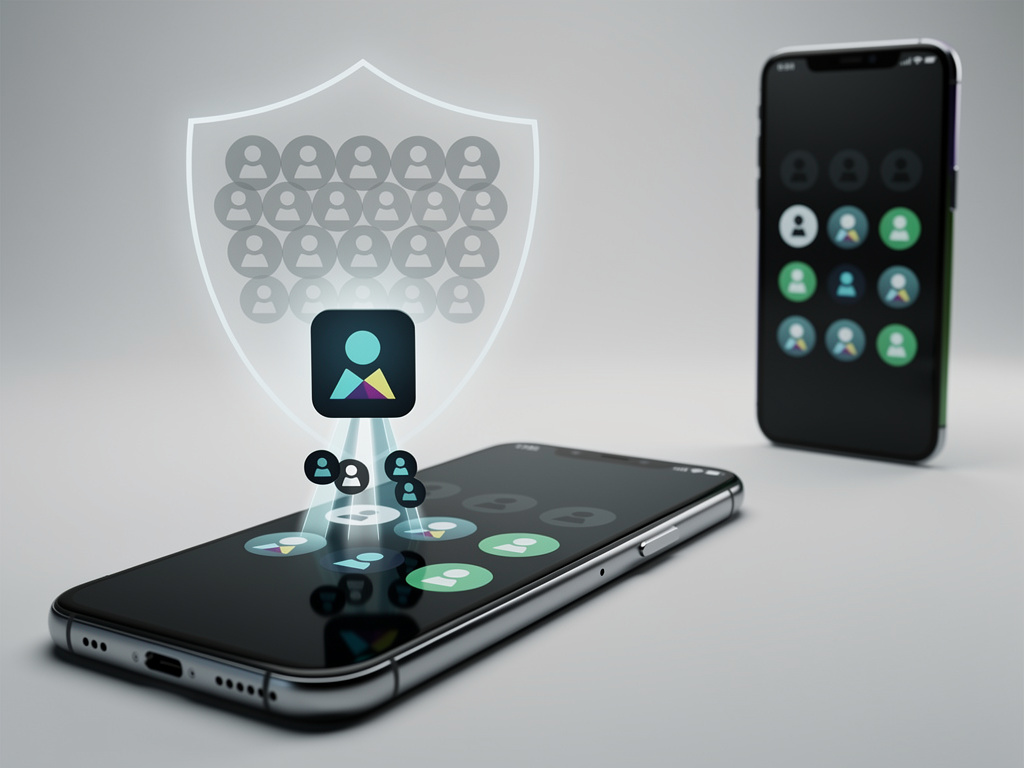
For more than a decade, the deal was simple and ugly. Want to share a single contact with an app? Hand over your entire address book. Every name, every number, every email — all of it, surrendered in bulk because the operating system offered no middle ground. With Android 17, Google is dismantling that bargain.
The change is called the contact picker, and it works exactly the way most people assumed their phone already worked. When an app requests access to contacts, Android 17 will present a system-controlled interface that lets users select only the specific contacts they want to share. One contact. Five contacts. Whatever the moment requires. The app never sees the rest.
It sounds almost embarrassingly overdue.
As Digital Trends reported, the new contact picker is part of a broader privacy overhaul arriving with Android 17, expected to roll out later in 2025. The feature mirrors a pattern Google has been following for several years — gradually replacing coarse, all-or-nothing permissions with granular controls that give users real choices. Photo access got a similar treatment in Android 14, when Google introduced a photo picker that let users share selected images rather than granting blanket access to their entire media library. The contact picker extends that same philosophy to what is arguably the most sensitive data category on any phone: the people you know.
The technical mechanics matter here. Under the current system — which has persisted through Android 16 and every version before it — when a user grants the READ_CONTACTS permission, the requesting app gains unrestricted access to the device’s entire contacts database. That includes names, phone numbers, email addresses, physical addresses, and often metadata like contact photos and organization details. Developers who needed access to just one contact had no system-level way to request only that one contact. The permission was binary. All or nothing.
Google’s new API changes the interaction model fundamentally. The contact picker is a system UI component, meaning it runs outside the app’s process. The app sends a request, the system displays the picker, the user makes selections, and only the selected data passes back to the app. The requesting app never touches the broader database. It never even knows how many contacts exist beyond the ones shared.
This isn’t just a convenience feature. It’s an architectural shift in how Android handles interpersonal data.
Consider the scale of the problem. Hundreds of thousands of apps on the Google Play Store request contact permissions. Messaging apps, social networks, fitness platforms, food delivery services, CRM tools, dating apps — the list spans nearly every category. Many of these apps have legitimate reasons to access a contact or two. A messaging app might need to find friends who also use the service. A business app might need to pull in a client’s phone number. But the permission system forced users to expose everything, creating enormous data collection opportunities that extended far beyond the app’s stated purpose.
And the consequences have been real. In 2019, Facebook faced intense scrutiny after it was revealed that the company had harvested contact information from 1.5 million users’ email accounts, ostensibly to verify identities. Contact data has been at the center of numerous privacy scandals involving social networking apps that uploaded entire address books to their servers, built shadow profiles of non-users, and sold or leaked data to third parties. The Cambridge Analytica episode, while primarily about Facebook profile data, underscored how interconnected personal information — including contact graphs — could be weaponized at scale.
Apple moved on this problem earlier. iOS has offered a contact picker API for years, and in iOS 18, Apple further tightened controls by allowing users to share only selected contacts when apps request access. Google’s implementation in Android 17 follows a similar design philosophy, though the specifics of the API differ. The convergence is notable. Both platforms are arriving at the same conclusion: bulk contact access is an anachronism that doesn’t belong in modern mobile operating systems.
For developers, the transition will require work. Apps that currently rely on READ_CONTACTS to scan a user’s full address book — whether for friend-finding features, contact syncing, or data enrichment — will need to adapt. Google hasn’t announced whether the old permission will be deprecated immediately or phased out gradually, but the direction is unmistakable. Apps that can’t justify full contact access will be expected to use the picker. Those that genuinely need broader access — like contact management apps or dialers — may still be able to request the traditional permission, likely with additional justification required during Play Store review.
The timing aligns with a global regulatory tightening around contact data specifically. The European Union’s Digital Markets Act imposes obligations on gatekeeper platforms to limit data combination across services, and contact information is explicitly in scope. India’s Digital Personal Data Protection Act, enacted in 2023, classifies contact details as personal data requiring explicit consent for each processing purpose. Brazil’s LGPD, South Korea’s PIPA, and California’s CCPA all impose constraints that make bulk contact harvesting legally fraught. Google’s contact picker doesn’t just serve user preferences. It creates a technical enforcement mechanism that aligns with where regulation is heading worldwide.
There’s a business dimension too. Apps that built growth strategies around address book uploads — the viral “invite your friends” loops that powered the early growth of services like WhatsApp, Viber, and countless social apps — will find that playbook harder to execute. When a user can share only the three contacts they actually want to invite, the app loses visibility into the other 500 people in that user’s phone. The network mapping that fueled aggressive growth tactics becomes structurally impossible, at least through this vector.
Some developers will welcome the change. Building trust with users has become a competitive advantage, and apps that never wanted full contact access but were forced to request it by the permission model’s limitations can now offer a cleaner, less invasive experience. A restaurant reservation app that just needs to let you pick which friend to share a booking with no longer has to display a scary “access all contacts” permission dialog. The friction drops. User trust goes up.
But not everyone will be happy. Data brokers and analytics firms that purchased or ingested bulk contact data from app partners face a supply constriction. The shadow profile industry — where companies build dossiers on people who never signed up for a service, based solely on appearing in other users’ contact lists — takes a direct hit. That’s by design.
Google previewed Android 17 at its developer conference, and the contact picker was one of several privacy features highlighted. Others include expanded on-device processing for sensitive data, tighter restrictions on background location access, and new transparency requirements for apps that collect biometric information. Together, these changes suggest Google is making a calculated bet that privacy controls are no longer a drag on the platform’s appeal to developers but rather a prerequisite for maintaining user trust — and, by extension, the advertising business that funds everything else.
The contact picker also addresses a subtler problem: permission fatigue. Studies have repeatedly shown that users often grant permissions reflexively, either because they don’t understand the implications or because they feel they have no real choice if they want to use the app. A 2023 study published in the Proceedings on Privacy Enhancing Technologies found that the majority of users who granted contact permissions did not realize they were sharing their entire address book. They assumed — reasonably — that they’d be asked to pick specific contacts. Android 17 finally makes reality match that assumption.
So what happens next? Google will likely push developers toward the new API through a combination of carrots and sticks. Play Store policy updates could require apps to use the contact picker unless they demonstrate a legitimate need for full access. Android’s permission system could begin surfacing warnings to users when apps request the old-style bulk permission. And competitive pressure from iOS, which already offers comparable controls, gives Google additional motivation to enforce adoption quickly.
The broader trend is unmistakable. Mobile operating systems are moving from a model where apps were trusted by default and users bore the burden of managing risk, to one where the OS itself enforces data minimization principles at the API level. The contact picker is one piece of that shift. Photo pickers, scoped storage, approximate location permissions, one-time permission grants — each of these features, introduced over successive Android versions, chips away at the old model where installing an app meant surrendering broad access to your device and your data.
For the billions of Android users worldwide, the contact picker in Android 17 will likely go unnoticed at first. It’ll just feel like the phone is working the way it should have worked all along. A small selection screen. A tap on a name. Done.
That quiet simplicity is precisely the point.


 WebProNews is an iEntry Publication