
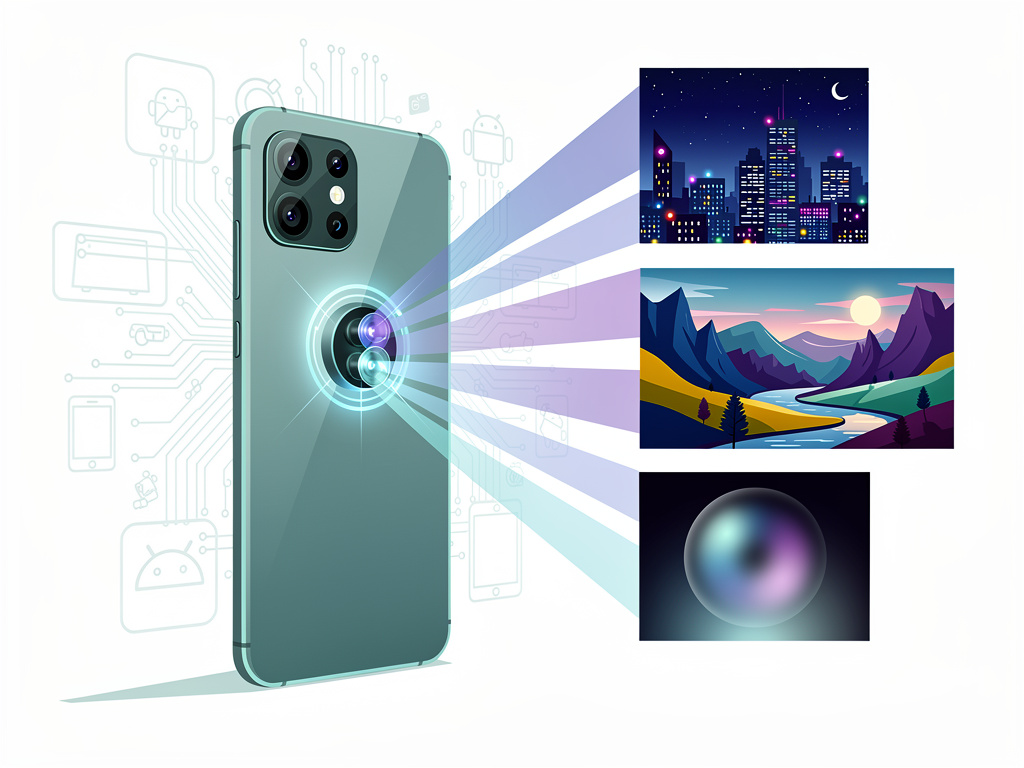
For years, Android users have lived with a dirty secret that most of them didn’t even know about. When you open Instagram, Snapchat, or WhatsApp and snap a photo, the image quality is noticeably worse than what your phone’s native camera app produces. Not slightly worse. Dramatically worse.
The reason is almost absurdly simple: most third-party apps don’t actually take a photo through your camera’s hardware pipeline. They take a screenshot of your camera’s viewfinder. It’s the digital equivalent of photographing a photograph, and it has persisted as a fundamental weakness of the Android platform for over a decade.
Google is finally doing something about it.
The Camera Extension That Could End Android’s Image Quality Gap
According to MakeUseOf, Google has been building out a solution called Camera Extensions within its CameraX library — a set of tools that allows third-party apps to tap directly into the advanced image processing capabilities built into a phone’s native camera. Think night mode, HDR, bokeh effects, and the computational photography tricks that companies like Samsung, Google, and OnePlus spend hundreds of millions of dollars developing. Until now, those capabilities were largely locked away from any app that wasn’t the phone’s default camera.
The problem has its roots in Android’s open nature. Unlike Apple, which controls both the hardware and software on every iPhone, Android runs across thousands of different devices from dozens of manufacturers. Each manufacturer builds its own camera hardware, writes its own image signal processor (ISP) tuning, and develops proprietary computational photography algorithms. When Snapchat or Instagram wants to capture an image, these apps face a fragmented mess of camera implementations. The path of least resistance? Just grab what’s on the screen.
Apple doesn’t have this problem. Because iOS is a closed system with a single hardware target, third-party apps on iPhones have long been able to access the device’s full camera processing pipeline. The result is that an Instagram photo taken on an iPhone looks nearly identical to one taken with the native Camera app. On Android, the gap has been embarrassing.
Google’s CameraX library has existed for a while, but Camera Extensions represent a meaningful expansion. The feature essentially creates a standardized bridge between third-party applications and the proprietary camera processing that lives on each device. When a developer integrates Camera Extensions, their app can request the phone’s native night mode processing, its HDR engine, or its portrait bokeh calculations — without needing to build separate integrations for every Android phone on the market.
This matters enormously for the average consumer, even if they never hear the term “Camera Extensions” in their life. Social media is where most smartphone photos end up. Not in a gallery app. Not printed and framed. Posted to Instagram Stories, sent through WhatsApp, shared on Snapchat. If the camera quality in those apps is subpar, it doesn’t matter how many megapixels your $1,200 flagship phone boasts. The experience falls flat.
Why This Took So Long — and Why Manufacturers Had to Get on Board
The technical challenge here isn’t trivial. For Camera Extensions to work properly, phone manufacturers need to actively participate by exposing their proprietary processing capabilities through the CameraX interface. Google can build the framework, but Samsung has to make its nightography algorithms accessible through it. OnePlus has to do the same with its Hasselblad color tuning. Every OEM has to opt in.
And that’s exactly what’s been happening, albeit slowly. Google has been working with major Android OEMs to ensure their devices support Camera Extensions. Samsung, a critical partner given its dominant market share in Android phones, has been among the manufacturers integrating the feature into newer Galaxy devices. But adoption isn’t universal yet. Older devices may never get support, and smaller manufacturers may lag behind.
There’s also the developer side of the equation. Apps like Snapchat and Instagram need to actually implement CameraX and Camera Extensions in their codebases. Snapchat, to its credit, has been working more closely with Android in recent years after years of treating the platform as an afterthought. Instagram has similarly made improvements. But broad adoption across the thousands of camera-dependent apps on the Play Store will take time.
The Android camera quality issue has been a recurring topic of discussion among tech enthusiasts and industry analysts for years. It has arguably been one of the strongest arguments in favor of the iPhone for social-media-heavy users — particularly younger demographics who live inside Snapchat and TikTok. Google clearly recognizes this. The company has been investing heavily in computational photography through its Pixel lineup, and ensuring those investments translate across all apps — not just the Pixel Camera — is a strategic priority.
Recent developments in the broader Android camera space add context. Google’s Pixel phones have consistently punched above their weight in camera quality thanks to software processing, and the company’s latest Pixel 9 series doubled down on AI-powered photo features. Samsung’s Galaxy S25 series, released earlier this year, also emphasized camera AI capabilities. The irony has always been that these impressive on-device capabilities disappeared the moment you opened a third-party app.
So what does the timeline look like? Google hasn’t given a definitive date for when Camera Extensions will be broadly available across most Android devices and apps. The rollout is incremental. New phones shipping with updated CameraX support, developers gradually integrating the API, and OEMs continuing to expose their processing features through the standardized interface. It’s not a flip-the-switch moment. More like a slow tide.
What This Means for the Android-iPhone Camera Debate
For years, the conversation around smartphone cameras has focused on hardware specs: sensor size, megapixel count, aperture width, optical zoom range. But the real differentiator has increasingly been software — and more specifically, where that software processing is accessible. A phone can have the best camera hardware in the world, but if the processing pipeline is only available in one app, most users will never experience its full potential.
Camera Extensions won’t eliminate every difference between Android and iOS camera experiences overnight. Apple’s tight hardware-software integration still gives it inherent advantages in consistency and optimization. But Google’s approach addresses the most visible symptom of Android’s fragmentation problem in a way that could meaningfully close the gap.
And for the hundreds of millions of Android users who’ve wondered why their expensive phone takes great photos in the camera app but terrible ones on Snapchat — the answer is finally changing.
The fix is overdue by at least five years. But it’s coming. And when it’s fully deployed, it will quietly eliminate one of the most persistent and frustrating quality-of-life issues on the world’s most popular mobile operating system. No fanfare needed. Just better photos where people actually take them.


 WebProNews is an iEntry Publication