
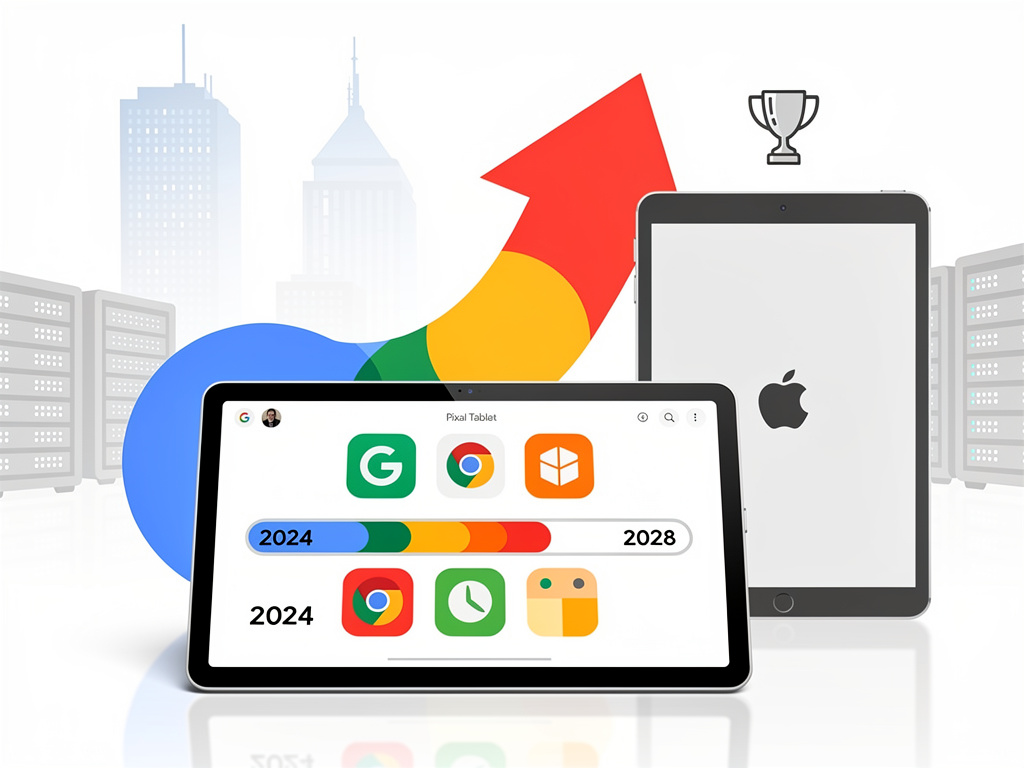
In a move that underscores Google’s renewed commitment to hardware longevity and competitive positioning in the tablet market, the tech giant has extended software support for its Pixel Tablet through 2028, a decision that reverberates far beyond simple maintenance updates. This extension, originally reported by Android Central, represents a strategic pivot that places Google’s tablet offering on par with Apple’s industry-leading support standards and signals the company’s determination to establish credibility in a market segment it has historically struggled to dominate.
The announcement comes at a critical juncture for Google’s hardware division, which has faced scrutiny over product longevity and the company’s commitment to maintaining devices beyond their initial launch cycles. By guaranteeing software updates until 2028, Google is effectively promising five years of support from the Pixel Tablet’s 2023 launch date—a commitment that matches the company’s flagship Pixel smartphone lineup and demonstrates that tablets are no longer treated as secondary products in Mountain View’s hardware ecosystem.
This extended support timeline fundamentally alters the value proposition for enterprise customers and individual consumers alike, who have traditionally viewed Android tablets as disposable commodities with limited lifespans. The decision positions the Pixel Tablet as a legitimate long-term investment, particularly for businesses evaluating fleet deployments where total cost of ownership calculations extend across multi-year planning horizons. Industry analysts have noted that extended support commitments often correlate with stronger residual values in secondary markets, potentially creating a more sustainable device ecosystem.
The Competitive Dynamics Reshaping Tablet Support Standards
Google’s move arrives as the tablet market undergoes significant transformation, with manufacturers increasingly competing on software longevity rather than solely on hardware specifications. Apple has long maintained an advantage in this arena, with iPad devices regularly receiving iOS updates for five to six years after their initial release. Samsung, Google’s primary Android competitor in the premium tablet space, recently announced extended support commitments for its Galaxy Tab series, creating competitive pressure that likely influenced Google’s decision-making calculus.
The extended support commitment for the Pixel Tablet encompasses both Android OS version updates and critical security patches, ensuring that devices remain protected against emerging vulnerabilities throughout their operational lifespan. This dual-track approach addresses both consumer desires for new features and enterprise requirements for security compliance, positioning the Pixel Tablet as viable for regulated industries where device security certifications carry significant weight. Financial services firms, healthcare organizations, and government agencies—sectors that have traditionally favored iOS devices due to Apple’s reputation for sustained support—may now view Google’s tablet offering as a credible alternative.
The timing of this announcement also coincides with broader industry discussions about electronic waste and device sustainability. Regulatory frameworks in the European Union and other jurisdictions are increasingly mandating longer support periods for consumer electronics, and Google’s proactive extension positions the company ahead of potential legislative requirements. This forward-thinking approach not only mitigates regulatory risk but also enhances Google’s environmental credentials, a consideration that weighs heavily in corporate procurement decisions and brand perception among environmentally conscious consumers.
Technical Infrastructure and the Economics of Extended Support
Delivering on a five-year support commitment requires substantial technical infrastructure and resource allocation that extends far beyond simple software maintenance. Google must maintain compatibility testing frameworks, security patch development pipelines, and quality assurance processes for the Pixel Tablet’s specific hardware configuration through 2028, even as the company’s engineering resources shift toward newer product generations. This commitment represents a significant operational expense that must be justified through improved customer retention, enhanced brand reputation, and increased lifetime customer value.
The Pixel Tablet’s architecture, built on Google’s Tensor G2 chipset, provides the company with certain advantages in delivering long-term support. By controlling both the silicon design and software stack, Google can optimize update delivery and ensure that performance degradation—a common complaint with aging Android devices—remains minimal throughout the support period. This vertical integration mirrors Apple’s successful strategy and represents Google’s evolving approach to hardware development, where long-term supportability factors into initial design decisions rather than being treated as an afterthought.
From a business perspective, extended support commitments create opportunities for recurring revenue through services and accessories. Customers who maintain devices for longer periods represent sustained engagement opportunities for Google’s subscription services, including Google One storage plans, YouTube Premium, and productivity tools. The company’s unique dock accessory for the Pixel Tablet, which transforms the device into a smart home hub, creates additional use cases that benefit from extended software support, as smart home integrations and voice assistant capabilities continue evolving over multi-year timeframes.
Market Positioning and the Battle for Tablet Relevance
The tablet market has experienced cyclical interest since Apple’s iPad revolutionized the category in 2010, with Android manufacturers struggling to establish sustainable market positions against Apple’s dominance. Google’s own tablet history reflects this turbulence, with the company discontinuing its Pixel Slate in 2019 and largely retreating from the category before re-entering with the current Pixel Tablet. The extended support commitment suggests that Google views this latest attempt as a long-term strategic initiative rather than an experimental product line subject to abrupt cancellation.
Consumer confidence has historically been a significant barrier to Android tablet adoption, with potential buyers questioning whether manufacturers would maintain software support and whether app developers would optimize experiences for larger-screen Android devices. By guaranteeing support through 2028, Google addresses the first concern directly and signals to developers that the platform merits investment in tablet-optimized applications. This creates a positive feedback loop where increased consumer adoption drives developer interest, which in turn enhances the platform’s value proposition and drives further adoption.
The Pixel Tablet’s positioning as both a standalone tablet and a smart home hub through its charging dock accessory differentiates it from traditional tablet offerings and creates unique support considerations. Smart home ecosystems evolve rapidly, with new protocols, device categories, and integration standards emerging regularly. Google’s extended support commitment ensures that the Pixel Tablet can accommodate these developments, maintaining relevance as a smart home control center even as the broader ecosystem advances. This dual-purpose functionality may prove crucial in justifying the device’s existence in a market where smartphones increasingly handle tasks that once required dedicated tablets.
Enterprise Implications and Fleet Management Considerations
For enterprise customers evaluating tablet deployments, Google’s support extension fundamentally alters the total cost of ownership calculations that drive procurement decisions. Organizations can now confidently deploy Pixel Tablets knowing that security patches and OS updates will remain available throughout typical hardware refresh cycles, which commonly span four to five years in corporate environments. This predictability enables more accurate budgeting and reduces the risk of premature hardware obsolescence that can derail digital transformation initiatives and strain IT budgets.
The enterprise market represents a significant growth opportunity for Google’s hardware division, particularly in sectors where Android’s flexibility and integration with Google Workspace productivity tools provide competitive advantages. Educational institutions, which have embraced Chromebooks in large numbers, may view the Pixel Tablet as a complementary device for specific use cases where touchscreen interaction or portability takes precedence over traditional laptop form factors. The extended support commitment aligns with educational procurement cycles and budget constraints, making the Pixel Tablet a more attractive option for resource-constrained school districts.
Mobile device management capabilities and enterprise security features become increasingly important as support timelines extend, and Google has enhanced Android’s enterprise functionality significantly in recent years. The Pixel Tablet benefits from these platform-level improvements, including zero-touch enrollment, managed configurations, and granular policy controls that IT administrators require for fleet deployments. By committing to support through 2028, Google ensures that these enterprise features will continue evolving and that organizations won’t face forced migrations to newer hardware before their planned refresh cycles conclude.
The Broader Implications for Google’s Hardware Strategy
This support extension reflects broader strategic shifts within Google’s hardware organization, which has matured from a primarily experimental division into a business unit expected to deliver sustainable growth and meaningful revenue contributions. The company’s hardware chief, Rick Osterloh, has emphasized quality and longevity in recent product launches, and the Pixel Tablet’s extended support aligns with this philosophy. By demonstrating commitment to existing customers rather than solely focusing on new product launches, Google builds trust that has historically been a weakness relative to competitors like Apple and Samsung.
The decision also has implications for Google’s other hardware products, potentially establishing a precedent for support timelines across the Pixel ecosystem. Customers who purchase Pixel Tablets with confidence in long-term support may extend that trust to Pixel smartphones, Nest smart home devices, and other Google-branded hardware, creating ecosystem lock-in effects that drive customer lifetime value. This interconnected approach mirrors strategies successfully employed by Apple and increasingly by Samsung, where device ecosystems create switching costs and encourage brand loyalty across product categories.
Looking forward, the Pixel Tablet’s extended support commitment may influence competitive dynamics across the Android ecosystem, pressuring other manufacturers to match or exceed Google’s five-year timeline. This competitive escalation would benefit consumers broadly while potentially disadvantaging smaller manufacturers who lack the resources to maintain extended support infrastructure. The result could be further market consolidation in the Android tablet space, with premium segments dominated by manufacturers capable of delivering Apple-comparable support commitments while budget segments remain fragmented and characterized by shorter device lifespans.
As the tablet market continues evolving and blurring boundaries between tablets, laptops, and smart home devices, Google’s commitment to supporting the Pixel Tablet through 2028 represents more than a simple software maintenance promise. It signals the company’s determination to establish credibility in a competitive market, addresses long-standing concerns about Android device longevity, and creates a foundation for building sustainable customer relationships that extend across product generations. Whether this commitment translates into meaningful market share gains and enterprise adoption remains to be seen, but Google has definitively answered questions about its long-term intentions for the Pixel Tablet and, by extension, its broader hardware ambitions.


 WebProNews is an iEntry Publication