
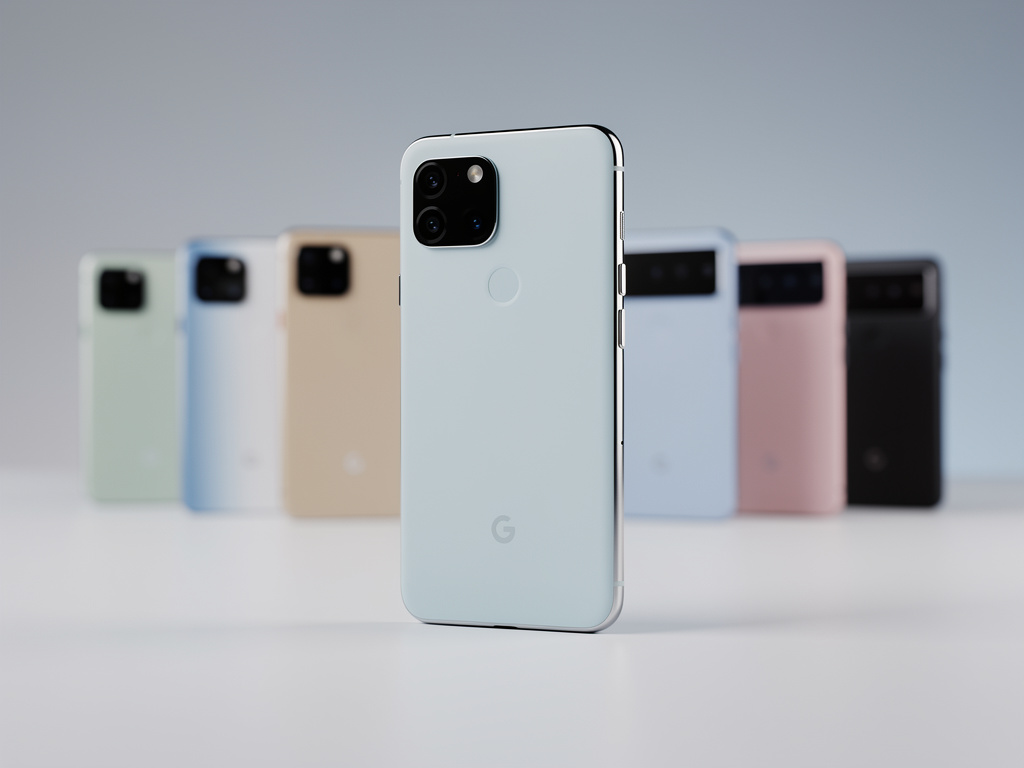
In a move that caught industry observers off guard, Google has confirmed the existence of its Pixel 10a smartphone through an understated update to its official website, eschewing the typical fanfare that accompanies major product announcements. According to Digital Trends, the tech giant’s subdued approach marks a departure from conventional launch strategies, signaling either supreme confidence in the product’s market reception or a calculated attempt to manage expectations in an increasingly competitive mid-range segment.
The Pixel 10a represents Google’s continued commitment to democratizing flagship experiences for budget-conscious consumers, a strategy that has yielded mixed results since the A-series debuted in 2019. This latest iteration arrives at a critical juncture for the company, as it attempts to carve out meaningful market share against entrenched competitors like Samsung, Apple, and a resurgent OnePlus. The device’s quiet unveiling suggests Google may be testing new waters in product marketing, potentially recognizing that traditional launch events have diminishing returns in an era of information saturation.
What makes this announcement particularly noteworthy is the timing. The smartphone industry has witnessed a significant contraction in recent quarters, with global shipments declining as consumers hold onto devices longer and become more selective about upgrades. Google’s decision to proceed with the Pixel 10a launch, despite these headwinds, indicates the company views the mid-range segment as essential to its hardware ambitions and long-term ecosystem strategy.
Engineering Compromises and Strategic Trade-offs
The Pixel 10a’s specifications reveal a carefully calibrated balance between cost management and feature preservation. While Google has not released complete technical specifications, industry sources suggest the device will incorporate many of the computational photography capabilities that have become synonymous with the Pixel brand. This approach mirrors the company’s historical strategy of leveraging software optimization to compensate for hardware limitations, a methodology that has proven particularly effective in the camera department.
The device is expected to feature Google’s Tensor G4 processor, albeit potentially in a binned or slightly underclocked variant to manage thermal performance and cost. This represents a significant advantage over competitors who must rely on Qualcomm’s Snapdragon offerings, where the price differential between flagship and mid-range chips can substantially impact bill-of-materials costs. By controlling its own silicon, Google maintains greater flexibility in how it positions the Pixel 10a against both premium and budget alternatives.
Display technology represents another area where Google must walk a fine line. While flagship devices increasingly feature LTPO OLED panels with adaptive refresh rates reaching 120Hz, the Pixel 10a will likely employ a more conventional OLED screen, possibly with a fixed 90Hz refresh rate. This compromise allows Google to maintain visual fluidity without incurring the cost premium associated with more advanced display technology. The decision reflects broader industry trends, where manufacturers must identify which features genuinely influence purchase decisions versus those that serve primarily as specification sheet fodder.
Market Positioning in a Crowded Field
The mid-range smartphone segment has become increasingly sophisticated, with devices offering capabilities that would have been considered flagship-tier just three years ago. Samsung’s Galaxy A series has established itself as a formidable competitor, leveraging the company’s vertical integration and massive scale to deliver impressive value propositions. Meanwhile, Chinese manufacturers like Xiaomi and Realme have aggressively pursued market share through razor-thin margins and feature-packed offerings that challenge traditional pricing hierarchies.
Google’s challenge lies in differentiating the Pixel 10a beyond mere specifications. The company has historically emphasized its clean Android experience, guaranteed software updates, and computational photography as key selling points. However, as competitors improve their software experiences and extend update commitments, these advantages become less pronounced. The Pixel 10a must therefore deliver tangible benefits that resonate with consumers who are increasingly sophisticated in their understanding of smartphone technology.
Pricing strategy will prove crucial to the device’s success. Previous A-series devices have typically launched at price points between $449 and $499, positioning them as premium mid-range offerings rather than true budget devices. This positioning has limited their appeal in price-sensitive markets while failing to capture consumers willing to stretch their budgets for flagship experiences. Google must carefully consider whether to maintain this pricing structure or adopt a more aggressive approach that could expand its addressable market but potentially cannibalize Pixel 10 sales.
Software Integration and Ecosystem Play
Beyond hardware specifications, the Pixel 10a serves as a vehicle for Google’s broader ecosystem ambitions. The device will ship with Android 15, providing users with the latest operating system features and security enhancements. More significantly, it represents an opportunity for Google to showcase its artificial intelligence capabilities, including on-device machine learning features that leverage the Tensor processor’s neural processing capabilities.
Google’s integration of AI-powered features has accelerated dramatically in recent years, with capabilities like Magic Eraser, Real Tone, and improved voice recognition becoming standard across the Pixel lineup. The Pixel 10a’s ability to deliver these experiences at a lower price point could prove instrumental in driving adoption of Google’s AI services, creating a virtuous cycle where increased usage generates data that further improves the underlying models. This strategy aligns with Google’s historical approach of subsidizing hardware to capture software and services revenue.
The device also plays a critical role in Google’s efforts to compete with Apple’s ecosystem lock-in. By offering a compelling entry point into the Pixel family, Google can potentially capture users who might otherwise gravitate toward the iPhone SE or older iPhone models. Once within the ecosystem, users become more likely to adopt complementary products like Pixel Buds, Pixel Watch, and various Google services, increasing lifetime customer value and creating switching costs that discourage migration to competing platforms.
Manufacturing and Supply Chain Considerations
The Pixel 10a’s production strategy reflects lessons learned from previous generations and the broader industry’s evolution. Google has reportedly diversified its manufacturing partnerships, reducing dependence on any single contract manufacturer and building redundancy into its supply chain. This approach, while potentially increasing per-unit costs, provides greater resilience against disruptions and improves negotiating leverage with suppliers.
Component sourcing represents another critical consideration. The global semiconductor shortage that plagued the industry from 2020 through 2023 has largely abated, but supply chain volatility remains a concern. Google’s decision to design its own processors provides some insulation from Qualcomm’s supply constraints, though the company remains dependent on TSMC for chip fabrication. This relationship, while generally stable, carries geopolitical risks given Taiwan’s strategic importance and ongoing tensions with China.
The device’s bill of materials likely reflects careful optimization to maintain acceptable margins while hitting target price points. Industry analysts estimate that mid-range smartphones typically carry gross margins between 20-30%, significantly lower than the 40-50% margins on flagship devices. Google must therefore achieve substantial scale to justify the Pixel 10a’s development and marketing costs, making the device’s commercial success critical to the program’s continuation.
Retail Strategy and Distribution Challenges
Google’s retail presence remains limited compared to competitors like Samsung and Apple, who benefit from extensive carrier partnerships and dedicated retail locations. The Pixel 10a’s success will depend partly on Google’s ability to secure prominent placement in carrier stores and online marketplaces. Previous Pixel devices have struggled with visibility, often relegated to secondary positions behind devices from manufacturers with stronger carrier relationships or more aggressive marketing budgets.
The company has made progress in expanding distribution, with Pixel devices now available through all major U.S. carriers and numerous international markets. However, the brand still lacks the recognition and retail footprint of established players. The Pixel 10a’s quiet launch may actually work to Google’s advantage in this context, allowing the company to build inventory and secure retail partnerships before generating significant consumer demand through targeted marketing campaigns.
E-commerce represents another critical channel, particularly for a device positioned as offering exceptional value. Google’s own online store provides complete control over the customer experience and eliminates retailer margins, but lacks the traffic and discovery mechanisms of platforms like Amazon. Balancing direct sales with third-party retail partnerships will require careful management to avoid channel conflict while maximizing reach.
The Broader Implications for Google’s Hardware Ambitions
The Pixel 10a’s launch occurs against the backdrop of Google’s evolving hardware strategy. The company has significantly expanded its product portfolio in recent years, introducing tablets, smartwatches, and earbuds alongside its smartphone lineup. This diversification reflects recognition that sustainable hardware businesses require multiple revenue streams and opportunities for cross-selling and ecosystem integration.
However, Google’s hardware division remains a relatively small part of its overall business, with the company’s financial performance overwhelmingly driven by advertising revenue. This reality influences product development priorities and risk tolerance, allowing Google to pursue longer-term strategies that might be untenable for companies more dependent on hardware sales. The Pixel 10a can therefore serve experimental purposes, testing features and approaches that inform future products even if the device itself achieves only modest commercial success.
Looking forward, the Pixel 10a’s reception will provide valuable insights into consumer preferences and market dynamics. If successful, it validates Google’s approach to mid-range devices and suggests continued investment in the segment. If it underperforms, the company may need to reconsider its product portfolio structure, pricing strategy, or go-to-market approach. Either outcome will shape Google’s hardware roadmap for years to come, making this seemingly modest device announcement more consequential than its quiet unveiling might suggest.


 WebProNews is an iEntry Publication