
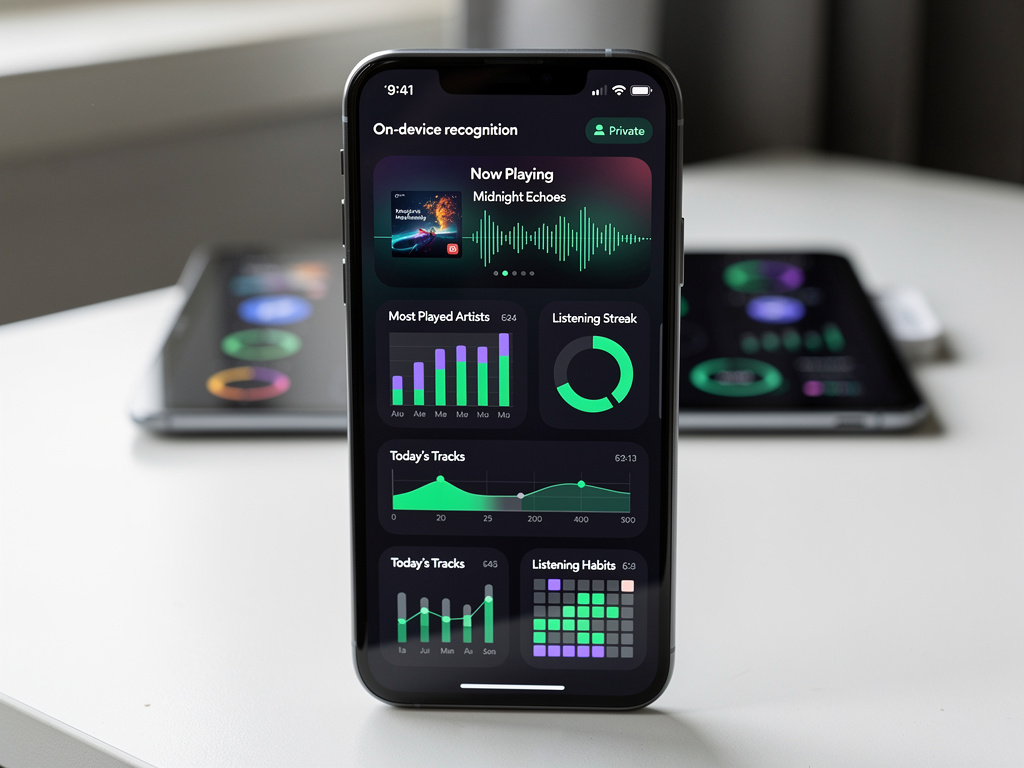
For years, the Google Pixel line has distinguished itself through ambient computing—features that operate quietly in the background to assist users without demanding direct interaction. Among these, “Now Playing” has stood as a technical hallmark since the Pixel 2. By automatically identifying songs playing in the environment using on-device intelligence, Google offered a frictionless alternative to Apple’s Shazam. However, recent developments indicate a strategic pivot. Google is preparing to transform this passive utility into an active engagement hub, mirroring the data-visualization trends popularized by music streaming services.
According to a recent findings by Android Authority, Google is overhauling the user interface of the Now Playing history. The current iteration, a utilitarian list of text-heavy logs, is slated for replacement by a visually rich interface that emphasizes album artwork and statistical breakdowns. This move suggests that Google no longer views Now Playing merely as a background service, but as a sticky feature designed to keep users interacting with the Pixel software experience.
Visualizing the Ambient Data Stream
The proposed interface changes represent a fundamental departure from the feature’s original design philosophy. Historically, the Now Playing history served as a simple repository—a place to retrieve the name of a song heard at a coffee shop three hours prior. The new design, unearthed through an analysis of the Android System Intelligence app, introduces a tabbed interface separating “Recents” from “Summary.”
The “Recents” tab abandons the linear text list in favor of a grid layout populated by album covers. This aesthetic alignment with dedicated music apps like Spotify or YouTube Music signals an intent to make the history browsable and engaging rather than strictly functional. By elevating the visual components, Google is acknowledging that metadata alone is insufficient for modern user expectations. Users do not just want to know what they heard; they want a visual catalog of their auditory environment.
The Quantified Self and Music Habits
Perhaps the most significant addition is the “Summary” tab, which introduces analytics to the ambient listening experience. The report from Android Authority notes that this section will categorize identified songs by genre, artist, and frequency. This effectively brings the “Spotify Wrapped” phenomenon directly into the operating system’s settings menu.
The psychological driver here is the “quantified self”—the consumer desire to track, measure, and visualize personal habits. Streaming services have successfully weaponized this data to drive social sharing and platform loyalty. By integrating similar metrics into the Pixel’s native software, Google provides users with a distinct value proposition: the phone understands your taste not because you told it to, but because it was there with you. This creates a feedback loop where the hardware feels more personalized the longer it is owned.
On-Device Processing as a Privacy Moat
A critical differentiator for Google in this domain is the reliance on the Private Compute Core. Unlike competitors that often require cloud connectivity to match audio fingerprints against a massive server-side database, Pixel’s Now Playing feature processes audio locally against a compressed, regionally relevant database stored on the device. This architecture ensures that raw audio data never leaves the phone, addressing privacy concerns inherent in always-listening technology.
This local processing capability is not merely a privacy feature; it is a demonstration of Google’s custom Tensor silicon. By handling these tasks on low-power cores, the device can maintain constant vigilance for music without draining the battery. The UI overhaul highlights this technical achievement by making the results of that processing more visible and accessible. It transforms an invisible technical feat into a tangible consumer benefit.
Competitive Positioning Against Apple
The timing of these updates is relevant when viewed against the broader mobile market. Apple acquired Shazam in 2018 and has integrated it tightly into the iOS Control Center. However, the implementation remains largely reactive—the user must trigger the listening event. Google’s proactive approach, which identifies music without a prompt, creates a layer of convenience that iOS has yet to replicate natively.
By enriching the post-identification experience with statistics and artwork, Google is shoring up this specific competitive advantage. If a user can look back at their week and see a breakdown of the genres they encountered in the real world, the Pixel offers a unique narrative of their life that an iPhone does not. In a saturated hardware market, these micro-differentiators contribute to user retention.
The Shift from Utility to Entertainment
The evolution of Now Playing follows a broader trend in software design where utility apps are gamified to increase time-in-app. Google has previously applied similar logic to Google Maps, adding social features and contribution stats, and to Google Photos with its “Memories” collections. The objective is to transition users from passive consumers of a service to active participants.
Technical teardowns indicate that the new interface allows for multi-select management, enabling users to favorite or delete multiple tracks simultaneously. This functional improvement supports the shift toward treating the history as a curated playlist rather than a temporary cache. It implies that Google expects users to spend time organizing this data, further cementing their investment in the platform.
Implications for the Android Environment
While this feature is currently exclusive to the Pixel line, Google often uses its hardware to pilot features that eventually trickle down to the broader Android operating system or become requirements for OEM partners. However, given the hardware dependencies—specifically the low-power co-processor requirements for battery-efficient listening—Now Playing is likely to remain a Pixel-exclusive differentiator for the near future.
This exclusivity is vital for Google’s hardware strategy. The company needs unique selling points to draw users away from Samsung and other Android manufacturers. By polishing the UI of exclusive features, Google signals that the Pixel offers a more cohesive and intelligent software experience than its specifications sheet might suggest.
The Future of Contextual Awareness
Looking ahead, the refinement of Now Playing suggests a future where mobile devices become increasingly context-aware. If the phone can categorize the music environment, it can theoretically adjust other settings—such as notification profiles or display brightness—based on the “vibe” of the location. A heavy metal concert and a jazz library demand different device behaviors.
While the current update focuses on retrospective history and visualization, the underlying data categorization paves the way for real-time adaptations. The “Summary” tab proves that the device understands the type of audio environment it is in, not just the specific track. This is a foundational step toward more advanced ambient computing scenarios where the phone reacts to the acoustic context of the user.
Deployment and Availability
As is typical with features discovered through APK teardowns, Google has not provided an official release timeline. These changes are often rolled out via “Pixel Feature Drops,” quarterly updates that inject new software capabilities into existing hardware. The presence of polished assets and functional code suggests the update is in advanced stages of testing.
For industry observers, the rollout will be a test case for how much value users place on passive data collection. If the new Now Playing interface drives significant engagement, it validates the thesis that smartphones should act as passive journals of our digital and physical lives. If ignored, it reinforces the notion that utility features should remain invisible.


 WebProNews is an iEntry Publication