
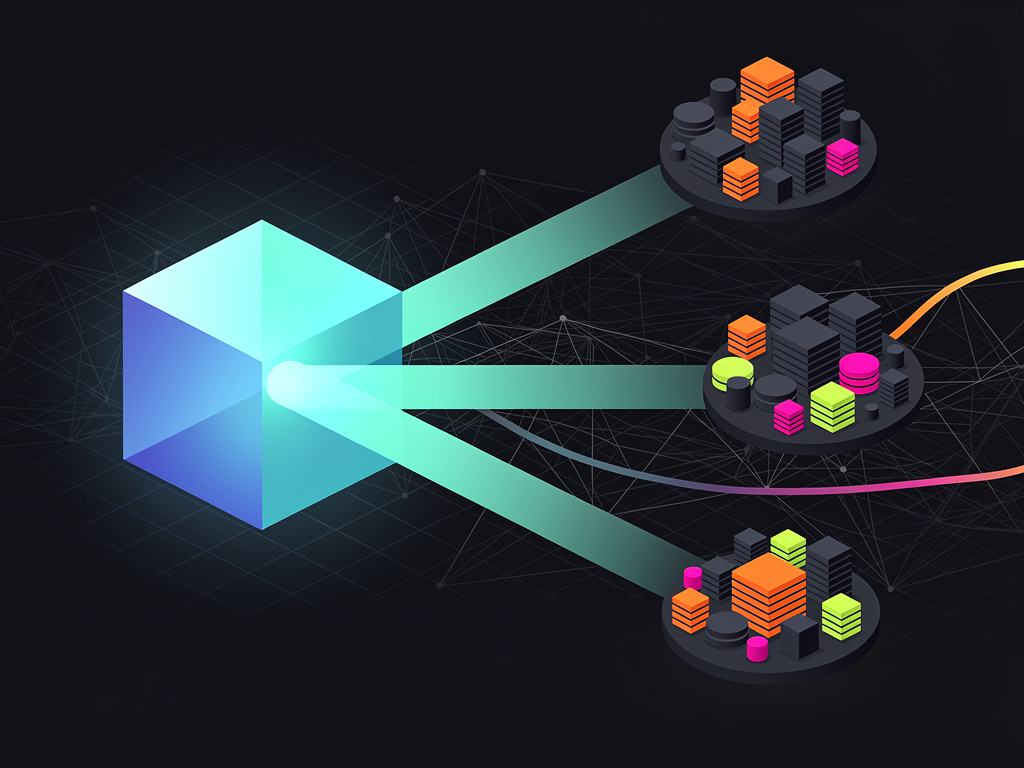
Blackstone and KKR hold sway over thousands of companies. Now they stand at the center of a frantic push by AI leaders to reach them. Alphabet’s Google has opened talks with the two buyout giants, plus Europe’s EQT, on master licensing pacts. These omnibus agreements would hand entire portfolios access to Gemini models and Google Cloud tools in one stroke.
The move marks a sharp contrast to rivals. OpenAI and Anthropic have poured billions into joint ventures that embed their engineers inside portfolio firms. Google skips the consultants. It offers broad licenses instead. And it bets that easier procurement will drive faster uptake across healthcare operators, logistics providers, software makers and more.
But the talks remain fluid. No contracts signed. Discussions aren’t exclusive. Still, the outlines have emerged in recent days with striking clarity. Private equity firms see a chance to accelerate value creation inside their holdings. Google sees a sales channel it could never build on its own. The potential prize spans assets worth trillions.
Blackstone and KKR together command more than $2 trillion in assets under management. Their portfolios stretch across sectors and geographies. EQT adds another roughly 130 billion euros. Secure deals with all three and Google taps hundreds of operating businesses at once. Direct sales teams have struggled to reach many of these midmarket and large enterprises. An omnibus deal compresses sales cycles from months to weeks.
Details surfaced first in a Bloomberg report. The news outlet described confidential discussions in which the private equity firms would negotiate single frameworks covering multiple companies. Bloomberg noted the talks coincide with OpenAI and Anthropic forming their own AI consultancies tied to buyout shops. Those efforts focus on implementation. Google’s centers on access.
The distinction matters. OpenAI closed its $10 billion Deployment Company venture anchored by TPG and backed by 19 investors including Brookfield, Advent and Bain. It promises 17.5% annual returns over five years. OpenAI commits up to $1.5 billion and keeps control through super-voting shares. Engineers will redesign workflows in healthcare, logistics, manufacturing and financial services.
Anthropic took a parallel path. It launched a $1.5 billion enterprise services firm backed by Blackstone, Hellman & Friedman and Goldman Sachs, each committing around $300 million. General Atlantic, Leonard Green, Apollo, GIC and Sequoia joined too. The setup embeds specialists to integrate Claude models deep into operations. Implementation becomes the product.
Google charts another course. It has already committed $750 million to a partner fund that supports agentic AI deployments through established consultants such as Accenture, Deloitte, KPMG, PwC and NTT Data. Many of those firms already advise Blackstone and KKR holdings. The omnibus licenses would sit atop that network. Licensing revenue flows to Google. Implementation stays with partners.
This approach trades high-margin services work for speed and breadth. It assumes the real barrier for most companies isn’t custom integration but simply getting the models in the door. Once inside, existing advisors can handle the rest. Feedback from real deployments then loops back to improve Gemini.
Alphabet enters these talks from strength. Its market value topped $4.6 trillion after first-quarter 2026 results beat forecasts. Google Cloud revenue crossed $20 billion in a quarter for the first time, up 63%. The cloud backlog nearly doubled to more than $460 billion. Revenue tied to generative AI products jumped nearly 800% year over year. Gemini already counts 750 million users.
Yet competition presses. Blackstone sits on both sides of the table. It invests in the Anthropic venture even as it explores Google’s licenses. The firm recently formed Blackstone N1, a West Coast unit focused on AI and high-growth technology. It holds stakes in OpenAI and Anthropic alike. Such positioning lets Blackstone extract concessions from multiple labs rather than pick one winner.
KKR and EQT bring their own scale. Combined with Blackstone, the three control an enormous slice of the corporate world. For Google, success here would represent its largest new enterprise channel since Google Cloud launched. The structure also aligns with broader moves. Earlier this year Vista Equity Partners struck a multiyear pact with Google Cloud to speed AI across its software portfolio. That deal emphasized agentic systems needing limited human oversight.
Google Cloud chief executive Thomas Kurian has pushed the company toward enterprise AI agents. At Cloud Next in April, Sundar Pichai highlighted plans to spend as much as $185 billion this year on infrastructure for what he termed the agentic era. The investment dwarfs the $31 billion spent in 2022. It signals conviction that autonomous AI systems will reshape business processes.
But questions linger. Will Gemini prove capable enough across diverse industries without heavy hand-holding? OpenAI and Anthropic bet that deep implementation creates stickiness. Their models become embedded in redesigned operations. Switching costs soar. Google’s lighter touch risks shallower adoption or easier displacement if rivals deliver superior results through consultants.
Private equity firms gain either way. They gain leverage to demand favorable terms. They can push portfolio companies toward AI without each signing separate contracts. And they position themselves as gatekeepers in the AI supply chain. Data from deployments across dozens of holdings can inform future negotiations or even direct investments.
The Next Web analysis captured the strategic split well. “OpenAI built a ten billion dollar consulting company. Anthropic built a 1.5 billion dollar consulting company. Google is writing a licensing agreement.” The publication noted Google’s bet that procurement, not implementation, forms the true bottleneck. It also highlighted how the model prioritizes distribution speed over depth.
Recent coverage reinforces the momentum. A Billionaires.Africa report observed that Google aims to lock in deals before rivals fully consolidate the private equity channel. It stressed that omnibus pacts give Alphabet simultaneous reach into hundreds of companies its sales teams could not easily target.
Other voices echo the theme. Private equity has quietly become enterprise AI’s most potent distribution layer. Rather than sell one by one, AI labs sell to the owners who control the portfolio. The shift could compress adoption timelines industrywide. It also concentrates power. A few large buyout firms could shape which models dominate midmarket and enterprise deployments for years.
So far the discussions remain at an early stage. Terms, pricing, usage limits, none have been disclosed. Success depends on execution. Google must demonstrate that its models deliver measurable gains without armies of embedded specialists. The private equity firms must convince their portfolio leaders that a master license brings real advantage over shopping individually.
Yet the direction feels set. AI labs now treat buyout giants as infrastructure, not mere customers. Blackstone, KKR and peers sit at the intersection of capital, operations and technology. Their decisions will ripple across thousands of businesses. Google’s omnibus push tests whether platforms can win on product strength alone. The coming months will reveal if that wager pays off. Or whether the consulting-heavy models from OpenAI and Anthropic create barriers too high to clear.
One thing looks clear already. The race for enterprise AI has moved beyond benchmarks and model sizes. It now runs through boardrooms in New York and London where private equity partners weigh options. The winners may not boast the smartest model. They may simply reach the most companies fastest.


 WebProNews is an iEntry Publication