
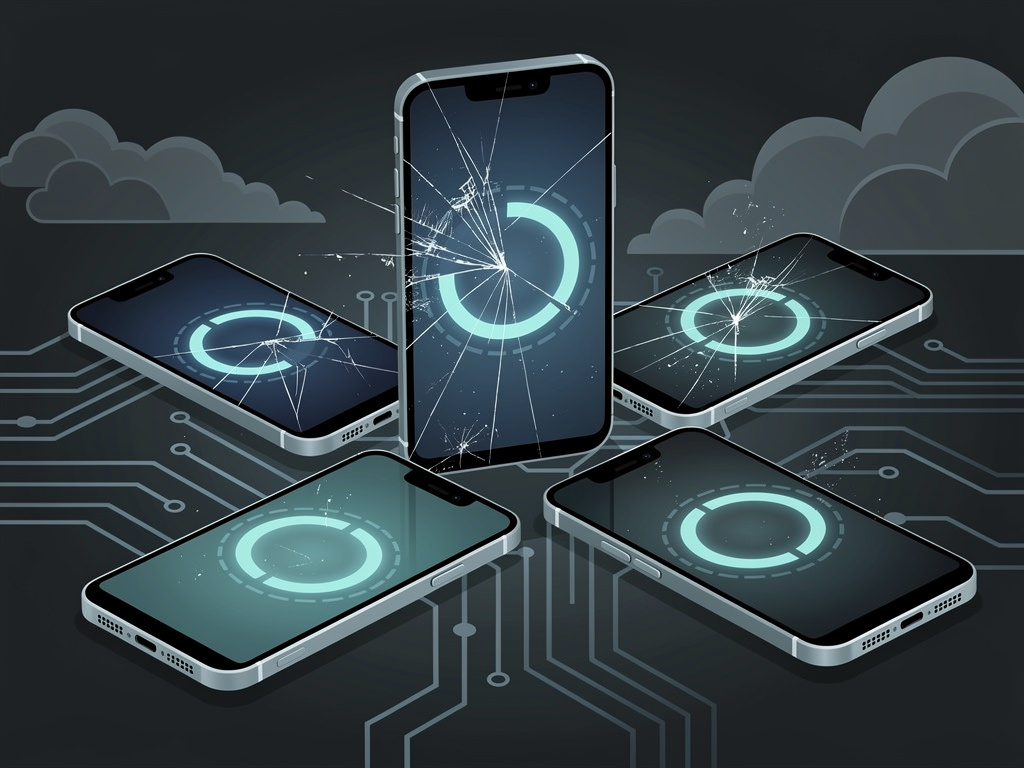
A routine software update has become anything but routine for thousands of Google Pixel owners. The March 2025 security patch, intended to fix vulnerabilities and improve device stability, is instead sending phones into endless boot loops — rendering them effectively useless. For a company that markets the Pixel line as the purest expression of Android, it’s a brutal look.
The problem first surfaced shortly after Google began rolling out its March Pixel Drop update. Users reported that after installing the update and restarting their devices, their phones became stuck in a cycle of endlessly rebooting. No home screen. No recovery mode. Just the Google logo, over and over again.
Reports flooded into Google’s support forums, Reddit, and social media. The devices most commonly affected appear to be the Pixel 7 series and Pixel 8 series, though scattered complaints have involved other models as well. As Android Authority reported, the scope of the issue quickly became clear: this wasn’t a handful of isolated incidents but a pattern affecting a meaningful number of devices.
A Familiar Nightmare for Pixel Owners
Boot loops aren’t new to the Pixel line. Google has dealt with similar crises before — most notably with the Pixel 6 series, which suffered from a range of software-related headaches after launch. But each recurrence erodes trust a little further. Pixel’s selling proposition has always been that Google controls both the hardware and software, so the experience should be tighter, more reliable, and better maintained than what you’d get from Samsung or OnePlus. When the company’s own updates brick the company’s own phones, that argument collapses.
The timing is particularly bad. Google has been aggressively pushing the Pixel 9 series and expanding its hardware ambitions. The company is competing not just on features but on reliability and long-term software support — areas where Apple has traditionally dominated. An update that turns phones into expensive paperweights undermines that positioning in a way that no marketing campaign can easily undo.
What makes this episode especially frustrating for affected users is the lack of a straightforward fix. Some have reported that a factory reset resolves the issue, but that means losing all data not backed up to the cloud. Others say even a factory reset doesn’t help. And for users who can’t get into recovery mode at all, the phone is essentially dead without professional intervention or a replacement.
Google acknowledged the issue but has been measured — critics would say slow — in its public response. The company paused the rollout of the March update for affected devices, a standard move when widespread problems emerge. But for users whose phones are already stuck, pausing the update does nothing.
On Google’s official Pixel support forums, community managers have directed affected users to contact Google support for potential device replacements or repairs. Some users report being offered replacements relatively quickly. Others describe long wait times and confusing instructions. The inconsistency itself has become a source of anger.
“My phone is my life,” one user wrote on Reddit. “I can’t access my banking apps, my two-factor authentication, my work email. And Google’s telling me to wait 5-7 business days for a callback.”
That sentiment is widespread. Modern smartphones aren’t optional accessories — they’re infrastructure. When one fails catastrophically, the downstream effects are immediate and serious. Lost access to authentication apps alone can lock users out of dozens of accounts.
The Engineering Question: What Went Wrong?
Google hasn’t provided a detailed technical explanation for the boot loop issue. Software updates for Android devices go through extensive testing, including staged rollouts designed to catch exactly this kind of problem before it reaches the entire user base. That the March update made it far enough to affect a significant number of users suggests either the testing pipeline missed something or the bug is triggered by a specific combination of conditions — device model, storage state, previously installed apps — that didn’t appear in pre-release testing.
This isn’t an uncommon scenario in software engineering. Edge cases are, by definition, hard to catch. But Google has more data on Pixel usage patterns than anyone, and it controls the entire software stack from the kernel up through the user interface. If any company should be able to prevent an update from boot-looping its own hardware, it’s Google.
Some developers and engineers on X (formerly Twitter) have speculated that the issue may be related to a filesystem or partition-level error introduced during the update process. Others have pointed to potential conflicts with the Tensor chip’s firmware. Without an official root-cause analysis from Google, these remain educated guesses.
The broader Android community has taken notice. Samsung and OnePlus users have pointed to the incident as evidence that Pixel’s “pure Android” advantage is overstated. That’s a simplistic reading — every manufacturer deals with update-related bugs — but perception matters, and right now the perception is that Google fumbled badly.
Industry analysts have noted that incidents like this, while technically recoverable, leave lasting impressions on consumers. A person whose phone was bricked by a Google update is unlikely to forget that experience when shopping for their next device. And they’ll tell their friends.
So where does this leave Pixel? In the short term, Google needs to do three things: issue a corrected update, provide clear and fast remediation for affected users, and publish a transparent explanation of what went wrong. The first is presumably underway. The second has been uneven at best. The third would be unusual for Google — the company tends to fix problems quietly rather than explain them publicly — but it would go a long way toward restoring credibility.
In the longer term, this episode should prompt hard questions inside Google’s hardware division about update testing and rollout procedures. Staged rollouts are supposed to be a safety net. If the net has holes, the process needs to change. More aggressive canary testing, longer soak periods for updates before wider release, and better rollback mechanisms on-device are all options that other companies have adopted with varying degrees of success.
The Pixel brand is still relatively small compared to Samsung or Apple. It can’t afford to squander the goodwill of its core user base — the enthusiasts, developers, and Android loyalists who buy Pixel phones specifically because they trust Google to get the software right. That trust is a finite resource. And with every boot loop, every lost photo library, every missed two-factor authentication code, a little more of it disappears.
Google will almost certainly fix this specific bug. The question is whether it will fix the process that allowed the bug to ship in the first place. For Pixel owners stuck staring at a looping Google logo, the answer can’t come soon enough.


 WebProNews is an iEntry Publication