
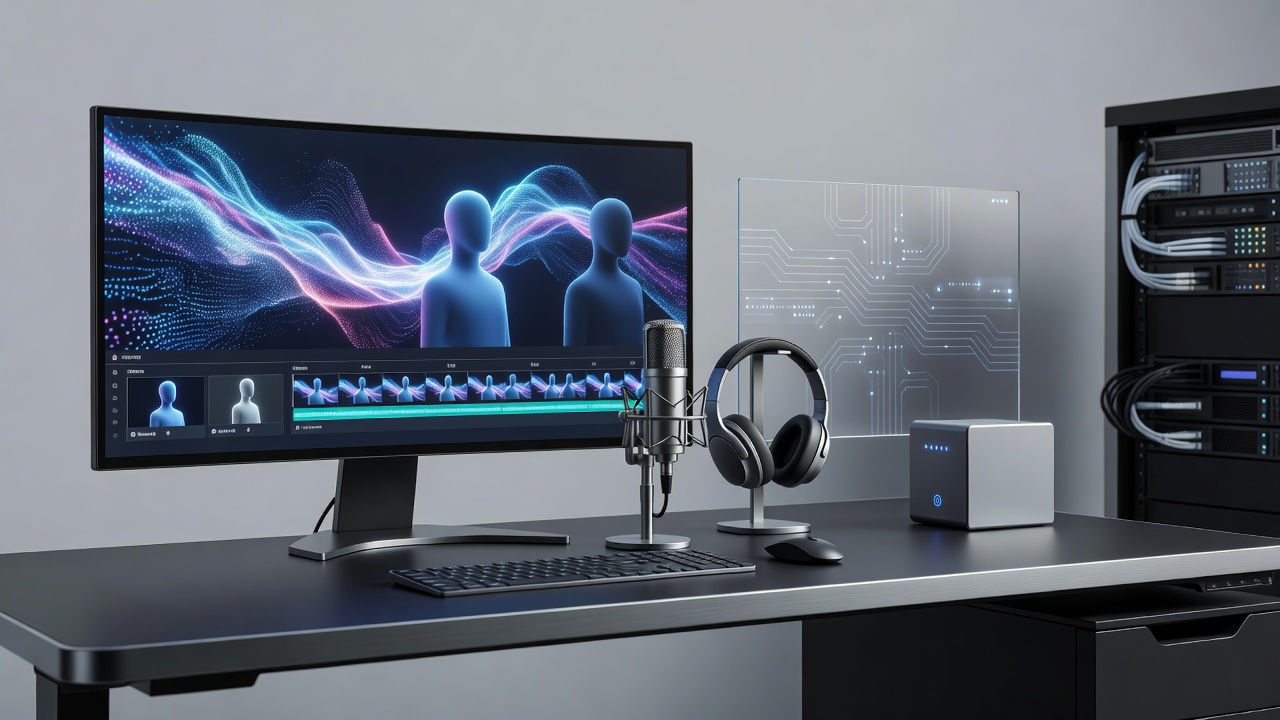
Google just made it possible for almost anyone to star in polished video productions without ever stepping in front of a camera. The company rolled out Gemini Omni inside Google Vids on July 16 along with a new personal avatar system. Professionals who once spent hours scripting, filming and editing can now type a few sentences and watch an AI version of themselves deliver the lines.
The Workspace Updates blog spelled out the basics. Users verify their likeness through a secure process tied to their Google Account. Once approved, that digital double appears as a selectable character when generating clips in Vids. No studio lights. No retakes. Just text prompts that tell the avatar what to say and where to stand. Google Workspace Updates noted the feature starts with English only, targets users 18 and older, and skips the European Economic Area, Switzerland and the United Kingdom for now.
But the avatar is only half the story. Gemini Omni itself handles the heavier creative work. The model accepts plain-language instructions plus reference images or sketches. It produces video clips, then lets users refine them through conversation. Change the background. Brighten the scene. Add motion. Each adjustment builds on the last without forcing a full restart. The official Google blog post captured the shift clearly. “Gemini Omni takes the hard work out of the editing process, so generating and refining high-quality clips is as easy as writing a simple prompt.” Blog.google.
Product manager Justin Luk described the combination as a way to send quick updates or personalized messages without camera anxiety. Upload one selfie and a brief voice sample. The system constructs an avatar that looks and sounds like the owner. Type the script. The avatar speaks it. Early testers on X called the results surprisingly consistent. One post from @_shafis highlighted how the update pushes Vids beyond simple presentation tools and into direct competition with dedicated avatar platforms such as HeyGen, Synthesia and D-ID.
Google didn’t leave safety to chance. Every generated clip carries an invisible SynthID watermark developed by Google DeepMind. The mark survives most edits and lets detectors confirm the content came from AI. The company stressed that avatars stay locked to the account holder’s likeness. Only the verified user can generate video with that specific digital self. Admins gain controls inside the Workspace console to turn the feature on or off for entire domains.
Availability follows familiar Google tiers. Google AI Pro and Ultra subscribers get immediate access. So do business customers on Workspace plans from Business Starter upward, plus Education Plus and several enterprise editions. Those with the AI Expanded Access add-on receive higher usage quotas. Rollout began immediately for rapid-release domains and reaches scheduled domains in early August. The support page walks through setup. Open Vids, click the avatar option, follow the verification flow on a mobile device, then select the new character in future prompts. Google Docs Editors Help.
Industry observers wasted little time connecting the dots. TechCrunch reported the launch came days after OpenAI decided to shut down its Sora video generator. While Sora focused on pure text-to-video creativity, Google’s approach centers on letting real people insert themselves into the output. The timing feels deliberate. “Google apparently thinks there’s still interest in a tool that lets you star in your own AI videos,” the article observed. TechCrunch.
Practical applications already surface in workplaces. Sales teams can produce personalized outreach videos at scale. Internal communications teams can deliver executive messages without scheduling endless recording sessions. Training departments can create consistent on-screen instructors who never tire. And yet the same ease raises familiar questions about authenticity. When an avatar can deliver any script in a manager’s voice and face, how do viewers know which messages reflect real intent?
Google’s answer rests on the watermark and the strict account linkage. Still, the distinction between “this person recorded this” and “this avatar voiced these words” will blur quickly. Companies may soon need policies that disclose avatar use the same way they now flag AI-written copy. The DeepMind page for Gemini Omni frames the model as a leap in multimodality and editing. It reasons across video, audio and text, then applies those insights to refine footage conversationally. DeepMind.
Early X discussions mixed excitement with caution. Android Authority pointed readers to the announcement and called Vids far more capable. Japanese and Korean accounts praised the removal of complex timelines. One user noted that rendering times stayed reasonable even on complex prompts. Another observed that Google’s massive video training data gives it an edge few competitors can match. Yet several posts flagged the regional limits and age gate as signs that Google expects regulatory scrutiny.
The personal avatar flow itself demands a quick mobile verification. Users scan a QR code, speak sample phrases, and turn their head as instructed. The process echoes biometric checks now common in banking apps. Once complete, the avatar lives inside the user’s Google Account and cannot be transferred or shared. That design choice reduces misuse but also limits collaborative storytelling. A marketing team cannot yet have the CEO’s avatar appear alongside an employee’s unless both verify separate avatars and the system later adds multi-character support.
Look closer at the editing capabilities and the potential grows. A field salesperson records a shaky product demo on a phone. Gemini Omni can stabilize the footage, replace the busy background with a clean office, adjust harsh lighting, then insert the sales rep’s polished avatar to deliver a refined closing pitch. All from iterative text commands. The model keeps characters, physics and lighting consistent across edits. That consistency matters. Previous video tools often drifted in style between shots. Omni appears to remember context.
Google positioned the updates as evolutionary rather than flashy. Vids already converted Slides into narrated videos with AI scripts and music. The new tools simply remove more friction. No more hunting stock footage for simple explainers. No more booking studio time for talking-head segments. The company expects the biggest gains inside enterprises where video volume keeps rising but production budgets do not.
Of course expectations must stay grounded. Current demos show clean, well-lit results. Real-world prompts with complex gestures or emotional range may still expose artifacts. Voice cloning works best for neutral delivery; strong accents or dramatic inflection could require extra passes. And the 18-plus restriction plus geographic blocks signal that Google anticipates pushback from privacy regulators who view digital likenesses as sensitive personal data.
Even so, the direction feels inevitable. Video has become table stakes for communication. Tools that once required specialized skills now fit inside everyday workspace apps. Gemini Omni and its avatar system compress the entire production pipeline into a chat window. Professionals will spend less time on mechanics and more on message and audience. That trade-off defines the current wave of AI office tools. They don’t replace judgment. They remove drudgery.
Google plans further expansion. Multilingual support sits high on the roadmap. Broader regional availability will follow privacy reviews. Integration with other Workspace apps could let users pull avatars into Docs comments or Meet backgrounds. For now the immediate impact lands on anyone tired of another “just one more take” session. They can instead type their thoughts, pick their digital self, and let the model handle the performance.
The rest of the industry will watch closely. Competitors offering similar avatar services suddenly face a deeply integrated alternative inside tools millions already pay for. Open-source video models may accelerate efforts to match the conversational editing loop. And regulators will debate whether watermarks and account locks provide enough protection against sophisticated deepfakes built on legitimate user data.
One thing looks certain. The barrier between idea and on-screen presence just dropped again. Google handed knowledge workers a mirror that talks back. How they choose to use it will shape internal culture, external branding and the very definition of corporate authenticity for years ahead.


 WebProNews is an iEntry Publication