
Gemini’s Kitchen Conquest: How Google’s AI is Revolutionizing Household Appliances
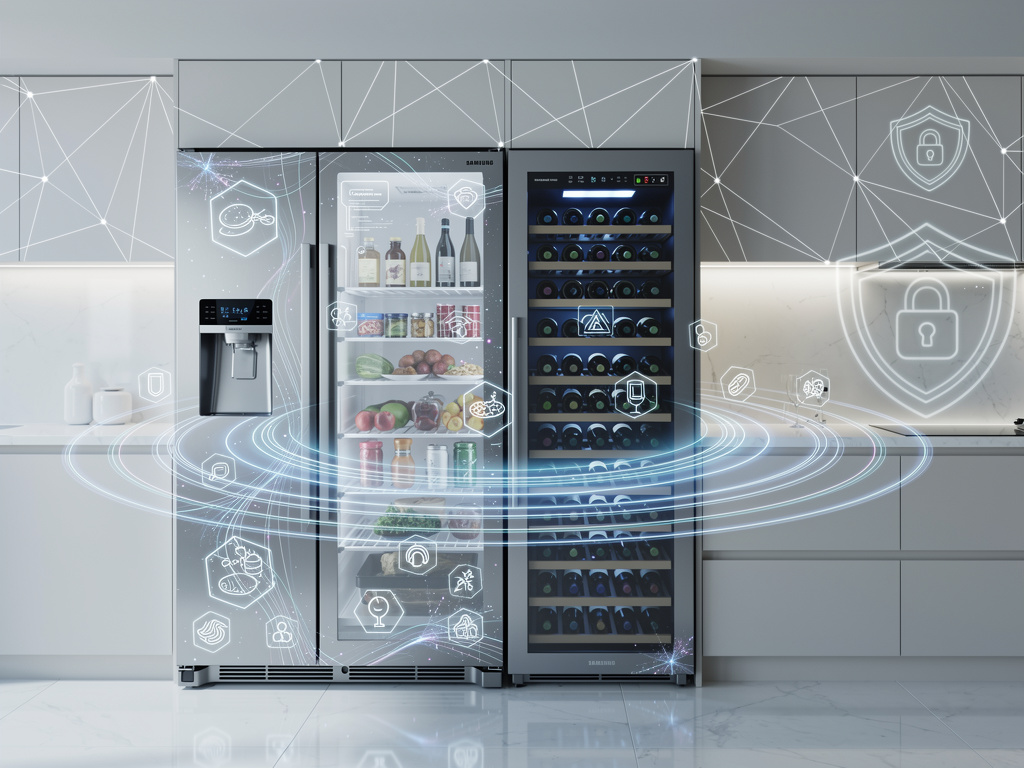
Google’s ambitious push into artificial intelligence is extending beyond smartphones and search engines, now targeting the heart of the home: kitchen appliances. At the upcoming CES 2026, the tech giant plans to debut its Gemini AI in select Samsung home appliances, marking a significant expansion of AI capabilities into everyday household items. This integration promises to transform mundane tasks like food management and wine storage into intelligent, predictive experiences. According to a recent report from Android Authority, the rollout begins with Samsung’s new Family Hub refrigerator and an AI-powered wine cellar, showcasing Gemini’s multimodal abilities to recognize foods, track inventory, and offer personalized suggestions.
The move comes amid Google’s broader strategy to embed Gemini across its ecosystem, following its introduction in smart home devices like Nest speakers and cameras. Industry observers note that this appliance integration could set a new standard for smart homes, where AI doesn’t just respond to commands but anticipates needs. For instance, the Family Hub refrigerator will use Gemini to identify a wider array of foods via its internal camera, going beyond basic detection to suggest recipes or alert users about expiring items. Similarly, the wine cellar will automatically catalog bottles, recommend pairings, and even monitor optimal storage conditions.
This development builds on Google’s earlier announcements, such as the launch of Gemini for Home in October 2025, which enhanced Nest products with advanced reasoning and natural language processing. Posts on X from users and tech enthusiasts highlight growing excitement, with some praising the seamless OTA updates that deployed Gemini to millions of devices without hardware changes. However, not all feedback is positive; reports of bugs and inconsistent responses have surfaced, indicating that the technology is still maturing.
Expanding AI Horizons in Domestic Spaces
Samsung’s collaboration with Google underscores a trend where appliance manufacturers are partnering with AI leaders to differentiate their products in a competitive market. The CES 2026 unveiling, detailed in a press release from PR Newswire, positions Gemini as the brain behind Samsung’s “AI Vision” initiative. This system leverages vision-based AI to expand food recognition, enabling the refrigerator to auto-track inventory and generate shopping lists intelligently. Industry insiders suggest this could reduce food waste by providing timely reminders and recipe ideas tailored to what’s on hand.
Beyond refrigerators, the integration hints at future applications in other appliances, potentially including ovens, dishwashers, and laundry machines. Google’s blog post on The Keyword earlier this year outlined how Gemini for Home enables more natural interactions, such as conversational queries about home automation. For example, users can ask their smart fridge to “plan a meal with what’s inside,” and Gemini would cross-reference inventory with online recipes, nutritional data, and user preferences.
However, the rollout hasn’t been without hurdles. A piece from TechRadar reports user complaints about broken responses and missing features in the initial Gemini for Home deployment. Some early adopters on X have echoed these sentiments, describing instances where AI misinterpreted commands or failed to integrate properly with third-party devices. Google has acknowledged these issues, promising iterative improvements, but this raises questions about the readiness of AI for critical home functions.
Technical Underpinnings and Market Implications
At its core, Gemini’s strength lies in its multimodal capabilities, processing text, images, and voice inputs simultaneously—a leap from predecessors like Google Assistant. This is evident in the wine cellar’s ability to identify bottles via labels and suggest pairings based on user history or online databases. As noted in updates from 9to5Google, Google is delaying the full replacement of Assistant with Gemini on Android devices until 2026 to ensure a smoother transition, a decision that might influence appliance integrations.
For industry players, this partnership could accelerate the adoption of Matter standards, the universal protocol for smart home connectivity. Google’s support page on Google Nest Help explains how opting into Gemini for Home activates these features across eligible devices, fostering interoperability. Analysts predict that by embedding AI directly into appliances, companies like Samsung and Google could capture a larger share of the growing smart home market, projected to reach hundreds of billions in value by the end of the decade.
Competitive pressures are mounting, with rivals like Amazon’s Alexa and Apple’s Siri also vying for dominance in home AI. Posts on X from tech journalists, such as those discussing Google’s OTA deployment to 750 million devices, emphasize the scalability advantage. Yet, privacy concerns loom large; with cameras inside refrigerators scanning contents, users worry about data security. Google has emphasized opt-in features and on-device processing to mitigate these risks, but regulatory scrutiny could intensify as AI becomes more pervasive in homes.
Challenges in AI Deployment and User Adoption
Despite the promise, integrating advanced AI into appliances presents engineering challenges. The need for robust hardware to run complex models without constant cloud reliance is paramount. Samsung’s Bespoke lineup, as highlighted in reports from Android Authority, incorporates edge computing to handle real-time tasks like food recognition, reducing latency and enhancing reliability. This approach aligns with Google’s push for efficient models, as seen in their experimental “Deep Think” mode announced at Google I/O 2025.
User adoption will hinge on demonstrating tangible benefits. For wine enthusiasts, the AI cellar’s tracking could revolutionize collections, automatically updating inventories and alerting to peak drinking windows. Broader applications might include energy optimization, where Gemini analyzes usage patterns to suggest efficient cycles for appliances, potentially lowering utility bills. However, the TechRadar article points to current shortcomings, like inaccurate task execution, which could deter early adopters.
Moreover, the ecosystem’s fragmentation poses risks. While Google promotes compatibility with third-party Matter devices, as detailed in their Google Home fall update, not all appliances are yet aligned. Industry insiders speculate that CES 2026 will feature more partnerships, possibly with brands like LG or Whirlpool, expanding Gemini’s reach. X posts from traders and analysts, such as those noting stock implications for Alphabet Inc., suggest investor optimism, viewing this as a moat against competitors.
Strategic Shifts and Future Trajectories
Google’s timeline adjustments, including the delayed Android transition reported by TechRadar in another piece, reflect a cautious approach to AI rollouts. This prudence is echoed in Android Central, where Google commits to a “seamless” shift, preserving user familiarity while introducing enhancements. In appliances, this means gradual feature additions, starting with vision AI in kitchens.
The collaboration with Samsung also highlights geopolitical and supply chain dynamics. As global chip shortages ease, integrating AI hardware becomes feasible, but trade tensions could impact partnerships. For consumers, the allure is in personalization; imagine a fridge that not only stocks your favorites but learns dietary habits to promote healthier choices. Yet, as X users debate, the “magic” of Gemini must outweigh initial bugs to gain widespread trust.
Looking ahead, this integration could pave the way for AI in non-kitchen appliances, like smart washers that optimize loads based on fabric analysis. Google’s vision, as articulated in their blog on Gemini for Home, is a home that “understands what you need” proactively. Industry experts anticipate that by 2027, such features could become standard, driven by consumer demand for efficiency.
Innovation Meets Everyday Utility
The CES 2026 spotlight on Gemini-powered appliances signals a maturation of AI from novelty to necessity. Samsung’s press materials emphasize expanded capabilities, like the refrigerator’s enhanced camera recognizing obscure ingredients for global cuisines. This builds on Google’s earlier Nest Cam upgrades, where AI distinguishes specific activities, as mentioned in their product announcements.
Critics, however, caution against overhyping. The rollout issues reported across sources like TechRadar underscore the gap between prototype and polished product. For insiders, the key metric will be user retention post-adoption, with metrics from OTA updates providing early indicators.
Ultimately, Google’s foray into appliances with Gemini represents a bold bet on AI’s role in daily life, blending technology with domestic routines in ways that could redefine convenience. As partnerships evolve and features refine, the true test will be whether these smart devices deliver on their promise without compromising reliability or privacy.


 WebProNews is an iEntry Publication