
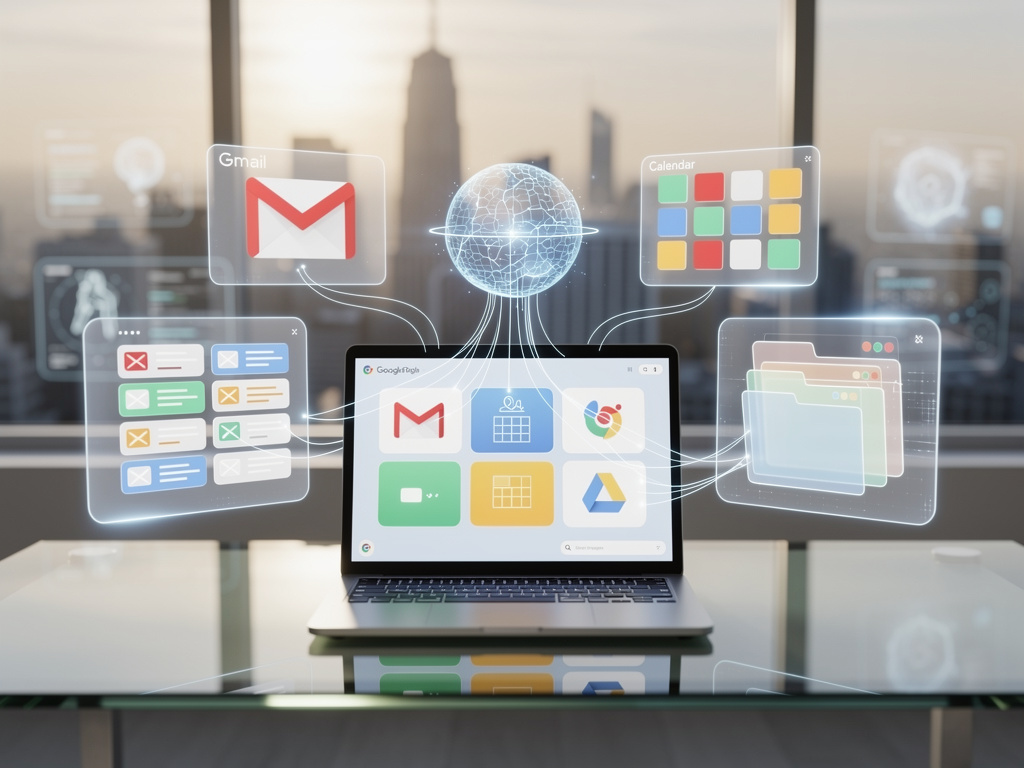
In the fast-evolving world of artificial intelligence, Google has once again pushed boundaries with its latest experimental tool, CC—an AI agent designed to streamline daily productivity by integrating deeply with users’ digital lives. Announced through Google Labs, CC leverages the advanced capabilities of the Gemini model to deliver personalized morning briefings, drawing from Gmail, Google Calendar, and Google Drive. This isn’t just another chatbot; it’s an agent that anticipates needs, drafts emails, and organizes tasks, marking a significant step in Google’s broader strategy to embed AI agents into everyday workflows.
At its core, CC functions as a virtual assistant that scans and synthesizes information from connected Google services. Users who sign up for the experimental program grant access to their accounts, allowing the agent to compile a concise daily summary. This could include upcoming meetings, pending emails, or document updates, presented in a digestible format via email or the CC app. According to details shared in a recent blog post from Google, the tool aims to reduce the cognitive load of starting the day, letting users focus on high-priority actions rather than sifting through notifications.
The rollout comes amid a surge in AI agent development across the tech industry, where companies are racing to create systems that not only respond to queries but also act autonomously. Google’s move with CC builds on its Gemini ecosystem, which has seen rapid iterations. For instance, recent updates to Gemini have enhanced its reasoning and multimodal capabilities, enabling agents like CC to handle complex, context-aware tasks without constant human input.
Unpacking CC’s Core Functionalities
What sets CC apart is its proactive approach. Unlike passive AI tools that wait for prompts, CC initiates interactions by generating a morning briefing tailored to the user’s schedule and habits. It can highlight conflicts in calendars, suggest responses to urgent emails, or even pull insights from shared Drive documents. Early testers, as reported in coverage from The Verge, describe it as a “personal chief of staff,” capable of drafting professional replies or summarizing lengthy threads.
Integration with Gemini’s latest models ensures that CC isn’t limited to rote summarization. It employs advanced natural language processing to infer priorities—for example, flagging a missed deadline in a project file or reminding users of travel plans buried in an email chain. This level of intuition stems from Gemini’s training on vast datasets, allowing the agent to mimic human-like decision-making in organizing information.
Privacy considerations are front and center, given the agent’s access to sensitive data. Google emphasizes that CC operates with user consent and includes options to revoke permissions at any time. However, industry observers note the inherent risks of such deep integrations, echoing broader debates about data security in AI systems.
Gemini’s Role in Powering Autonomous Agents
Google’s investment in Gemini has been pivotal, with the model evolving from a foundational language tool into a platform for agentic AI. Recent announcements, such as the release of Gemini 3, highlight improvements in reasoning and task execution, which directly benefit tools like CC. As detailed in a post on Google’s blog, Gemini 3 introduces enhanced agentic development features, enabling developers to build custom agents that plan and execute workflows autonomously.
This aligns with Google’s push toward “agent-ready” infrastructures. For example, the company has launched managed servers using the Model Context Protocol (MCP), simplifying how AI agents connect to services like Maps and BigQuery. Posts on X from AI enthusiasts and developers underscore the excitement, with many highlighting how these updates allow for seamless embedding of research agents into apps, potentially extending CC’s capabilities beyond personal productivity.
In the context of CC, Gemini’s strengths shine in handling multimodal data—combining text from emails with calendar events and document visuals. This fusion creates a holistic view of a user’s day, far surpassing traditional productivity apps that rely on siloed information.
Competitive Dynamics in AI Productivity Tools
The introduction of CC positions Google in direct competition with rivals like Microsoft and OpenAI, who have their own AI-driven assistants. Microsoft’s Copilot, for instance, integrates with Office suites for similar task automation, while OpenAI’s advancements in models like GPT-5.2 focus on deep research and agentic behaviors. Yet, Google’s ecosystem advantage—rooted in its dominance of email and cloud services—gives CC a unique edge, as it taps into data users already entrust to the company.
Industry insiders point to the timing of CC’s launch, coinciding with broader Gemini updates. A TechCrunch article from earlier this month noted that Google released its Deep Research agent on the same day OpenAI unveiled GPT-5.2, signaling an intensifying arms race in AI agents. This agent, based on Gemini 3 Pro, allows developers to embed advanced research into applications, a feature that could eventually enhance CC’s briefings with external web insights.
User feedback from early adopters, shared across tech forums and X, praises CC’s accuracy in drafting emails that sound authentically human. One developer recounted how the agent not only summarized a chaotic inbox but also proposed agenda items for an upcoming meeting, saving hours of manual preparation.
Technical Underpinnings and Development Insights
Diving deeper into the tech stack, CC relies on Gemini’s Interactions API, a next-generation interface that streamlines agent-model communications. As explained in a developer-focused post on Google’s technology blog, this API supports background execution and state handling, crucial for agents that perform long-running tasks like CC’s daily scans.
Recent X posts from figures like Jeff Dean, a key Google AI executive, reveal the company’s focus on agentic eras, with announcements including Project Astra and Mariner for building sophisticated agents. These developments suggest CC is just the tip of the iceberg, potentially evolving into a full-fledged AI companion that handles voice interactions or web-based tasks.
Moreover, Google’s open-sourcing of benchmarks like DeepSearchQA allows the community to measure agent performance, fostering transparency. This has led to rapid improvements, with Gemini agents achieving higher scores on complex evaluations, directly benefiting end-user tools like CC.
Real-World Applications and User Experiences
For professionals juggling multiple responsibilities, CC offers tangible benefits. Imagine a marketing executive receiving a briefing that not only lists client emails but also cross-references campaign data from Drive, suggesting follow-up actions. Such scenarios are already playing out, as per reports from Tom’s Guide, which tested CC’s inbox management and found it surprisingly adept at prioritizing tasks.
The agent’s experimental nature means it’s currently limited to select users, but Google plans expansions. Integration with other Gemini features, like the audio model updates mentioned in X posts from AI news accounts, could soon enable voice-activated briefings, making CC even more versatile.
Challenges remain, including ensuring the agent’s suggestions align with user preferences without overstepping. Early critiques highlight occasional misinterpretations of email tones, but iterative updates based on user input are addressing these.
Future Trajectories for Google’s AI Agents
Looking ahead, CC exemplifies Google’s vision for a world where AI agents handle mundane tasks, freeing humans for creative pursuits. The company’s rollout of Gemini subscriptions for enterprises, as covered in a CNBC piece, extends this to corporate settings, where agents build data science workflows or customer engagement strategies.
X discussions among developers buzz with ideas for customizing CC-like agents, from integrating with third-party apps to enhancing research depth. This community-driven evolution could lead to agents that not only brief but also execute actions, like booking meetings or generating reports.
As Google continues to refine Gemini, tools like CC are poised to become indispensable. The blend of accessibility and power positions them as harbingers of a more efficient digital future, where AI doesn’t just assist but anticipates.
Ethical Considerations and Broader Implications
No discussion of AI agents is complete without addressing ethics. Google’s approach with CC includes built-in safeguards, such as data encryption and opt-out mechanisms, but questions linger about long-term data usage. Industry reports, including those from CNET on Gemini’s integration with Maps, emphasize the need for responsible AI that respects user autonomy.
In corporate environments, the rise of agents raises concerns about job displacement, though proponents argue they augment human capabilities. Google’s emphasis on experimental labs allows for cautious scaling, incorporating feedback to mitigate risks.
Ultimately, CC represents a microcosm of Google’s ambitious AI agenda, blending innovation with practicality to reshape how we interact with technology.
Expanding Horizons with Collaborative AI
Collaboration features in CC hint at future expansions, where agents could coordinate across users—say, aligning team schedules or sharing briefing insights. This draws from Gemini’s multi-agent systems, as described in X posts about automated scientific research, where agents generate and rank ideas collaboratively.
Developer access to tools like the Gemini CLI, praised in open-source communities, empowers custom agent builds, potentially leading to specialized versions of CC for niches like healthcare or education.
As adoption grows, the true test will be in scalability and user trust, with Google positioning itself as a leader in ethical AI deployment.
Innovations on the Horizon
Recent news from Google DeepMind, including the Gemini 3 series, promises even more intelligent agents. With state-of-the-art reasoning, these models could enable CC to handle predictive tasks, like forecasting workload based on historical data.
X sentiment reflects optimism, with posts lauding Google’s pivot to agentic AI over mere chatbots. This shift could redefine productivity, making agents like CC ubiquitous.
In essence, Google’s CC is more than an app—it’s a glimpse into an AI-augmented reality, where technology seamlessly enhances daily life without overwhelming it.


 WebProNews is an iEntry Publication