
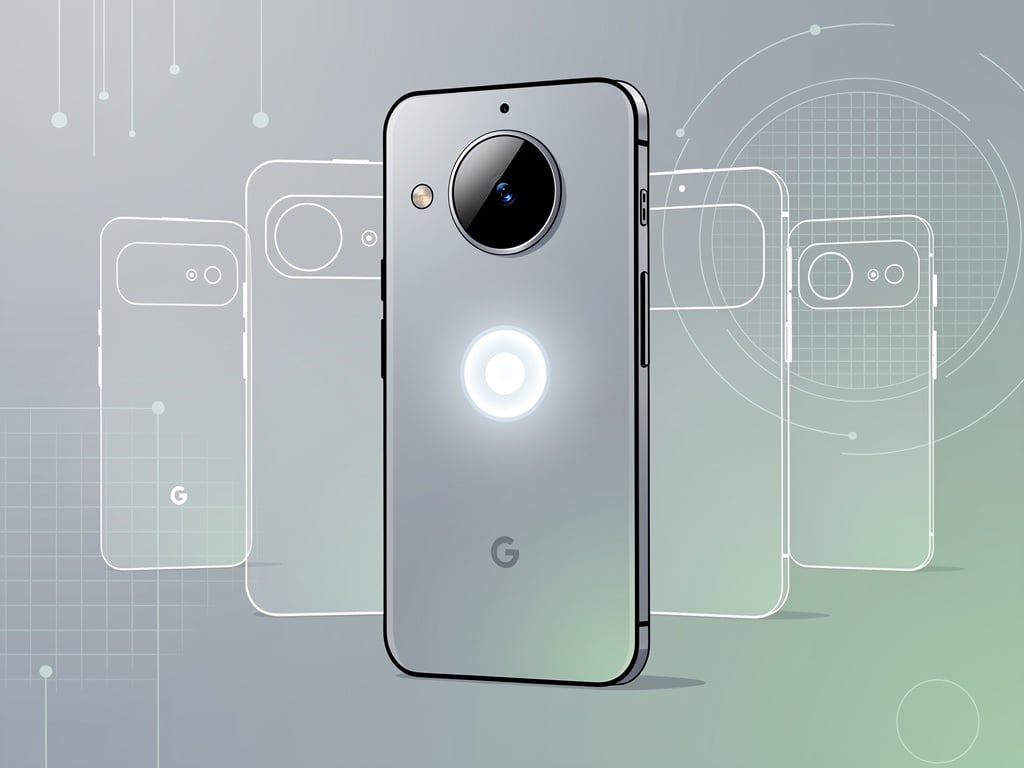
A single camera lens, centered and staring. That’s the defining visual signature Google appears to be doubling down on for its next flagship phone, the Pixel 11, according to early leaked renders that surfaced this week. The design language — already polarizing when it debuted on the Pixel 9a — places a lone circular camera module dead center on the phone’s rear panel, earning it the inevitable “cyclops” nickname. Love it or hate it, Google seems committed.
The leak, first reported by Digital Trends, draws on renders shared by the prolific leaker OnLeaks in collaboration with Android Headlines. The images depict a device that closely mirrors the Pixel 9a’s rear aesthetic — a clean, uninterrupted back panel with a single prominent camera circle replacing the horizontal camera bar that defined the Pixel 6 through Pixel 9 Pro series. It’s a striking departure from the visor-style strip Google had turned into a brand identifier, and it signals a philosophical shift in how the company wants its phones to look and feel in the hand.
But here’s the thing. These are early renders, and “early” in the phone leak cycle means details can shift. OnLeaks has a strong track record — one of the most reliable sources for pre-release phone designs in the industry — but even accurate leakers work from prototype-stage CAD files that manufacturers sometimes revise before production. The broad strokes, though, tend to hold. And the broad strokes here say Google is going all-in on the cyclops look across its lineup.
The Pixel 9a, which launched in spring 2025, was the testing ground. Google moved away from the camera bar on its budget-friendly model, opting instead for a single flush-mounted camera circle. Reviews were mixed on the aesthetics but largely positive on the phone’s overall value proposition. The design made the phone look cleaner, simpler, more approachable. It also made it look less distinctly “Pixel” to longtime fans who had come to associate the brand with that bold horizontal bar running across the upper back panel.
Now, with the Pixel 11 renders suggesting the same visual approach for the mainline flagship, it appears Google is standardizing this design language rather than treating it as a budget-line experiment. That’s a meaningful decision. It tells us Google believes the cyclops camera module isn’t just a cost-saving measure for cheaper phones — it’s the future of the brand’s industrial design.
The renders show what appears to be a relatively flat rear panel with minimal camera bump, a design choice that would improve how the phone sits on flat surfaces and in pockets. The front appears to feature slim bezels and a centered hole-punch selfie camera, consistent with current Pixel design conventions. No dramatic changes there. The real story is the back.
So why the single-lens look when the phone almost certainly packs multiple cameras? It’s about housing design, not sensor count. Google has been consolidating its camera hardware into more compact arrangements, and the circular module likely contains multiple lenses arranged tightly together under a single glass cover — similar to what Samsung has done with certain Galaxy models and what Apple explored with its centered camera concepts in patent filings. The “cyclops” label is a bit misleading. It’s one eye on the outside, but there’s more going on underneath.
Timing matters here. The Pixel 11 isn’t expected until fall 2025 at the earliest, which means these renders are surfacing roughly five to six months ahead of a probable launch. That’s an unusually long lead time for detailed CAD-based leaks, suggesting either that Google’s design was finalized early or that supply chain partners have already begun tooling for production. Either way, the confidence level among leakers appears high.
Google’s hardware division has been on a notable upswing. The Pixel 9 series sold better than any previous generation, buoyed by aggressive AI marketing, improved camera performance, and a more polished build quality that narrowed the gap with Samsung and Apple in the premium segment. The company has also expanded its retail presence and carrier partnerships, making Pixels more accessible to mainstream buyers who previously defaulted to Galaxy or iPhone.
Against that backdrop, the decision to overhaul the phone’s most recognizable design element carries real risk. Brand recognition in smartphones is built on visual consistency — Apple’s camera square, Samsung’s elongated oval module, the old Pixel bar. Abandoning a signature look when sales are climbing takes nerve. Or conviction. Possibly both.
There’s a practical argument for the change, too. The camera bar, while distinctive, created structural challenges. It added thickness at the top of the phone, required specific case designs, and occasionally caused the phone to rock on flat surfaces. A centered circular module distributes weight more evenly and allows for a slimmer overall profile. These aren’t trivial engineering considerations when you’re shipping millions of units.
The chip inside is another open question the leaks haven’t answered. Google has been designing its own Tensor processors since the Pixel 6, with each generation bringing incremental improvements in AI and machine learning performance alongside persistent criticism of thermal management and raw CPU/GPU benchmarks compared to Qualcomm’s Snapdragon and Apple’s A-series chips. The Pixel 11 would presumably run a Tensor G6, though no specifications have leaked yet. If Google can close the efficiency and performance gaps that reviewers have flagged in previous Tensor generations, the Pixel 11 could be a genuinely compelling all-around flagship rather than one that leans heavily on computational photography and AI tricks to justify its price.
Software will be a major differentiator, as always. Google has been layering Gemini AI capabilities into every corner of the Pixel experience — from photo editing to call screening to real-time translation. The Pixel 11 will almost certainly debut with Android 16 and a new batch of AI-powered features designed to showcase what on-device processing can do. Google’s advantage here is obvious: it controls both the silicon design and the software stack, giving it tighter integration than most Android competitors can achieve.
And then there’s the competitive picture. Apple’s iPhone 17 lineup is expected around the same September-October window, with its own rumored design changes including a thinner “Air” model. Samsung will have already launched its Galaxy S26 series by then. OnePlus, Xiaomi, and other Chinese manufacturers continue to push aggressively in markets where Google is trying to grow. The Pixel 11 won’t launch in a vacuum — it’ll land in one of the most crowded premium phone markets in years.
The cyclops design could actually help Google stand out, paradoxically. In a sea of phones with increasingly similar multi-lens camera arrays arranged in squares, rectangles, and ovals, a single centered circle is visually distinct. It’s minimalist in a market that trends maximalist. Whether consumers respond to that minimalism with enthusiasm or indifference will depend heavily on execution — materials, color options, how the camera module interacts with the overall design language.
One thing the leaks make clear: Google isn’t done experimenting. The company spent years building recognition around the camera bar, then pivoted sharply with the Pixel 9a, and now appears ready to make that pivot permanent. It’s the kind of move that suggests internal confidence — a design team that believes it has found something better, not just different.
Whether they’re right, we’ll find out in the fall. For now, the cyclops is watching.


 WebProNews is an iEntry Publication