
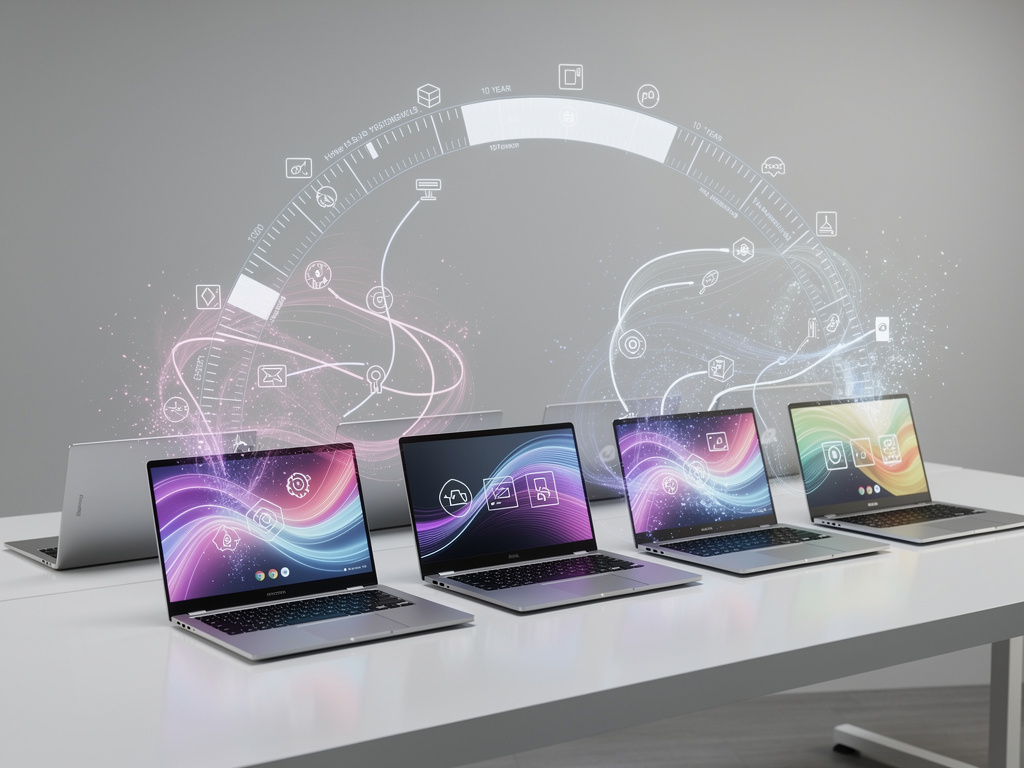
Google moved quickly to calm nerves Tuesday. One day after unveiling Googlebooks as its next big bet on premium laptops, the company published a blog post directed at schools and businesses that rely on Chromebooks. The message was clear. Buy with confidence. Deploy without worry. Chromebooks remain a reliable, long-term investment.
Yet the reassurance came wrapped in careful language. It left key questions unanswered. How long will Google actively develop the ChromeOS platform that millions of devices depend on? What exactly does a phased transition look like over the next couple of years? And where do traditional Chromebooks fit once Googlebooks arrive this fall?
The timing tells its own story. At the Android Show on May 12, Google introduced Googlebooks. These devices promise Gemini intelligence at their core. Features include a Magic Pointer that interprets cursor movements to suggest actions such as scheduling meetings. Custom GenAI widgets organize files and tasks directly on the home screen. The new line builds on a fusion of Android and ChromeOS code, expanding access to Android apps while keeping Chrome web capabilities. Partners like Acer, Asus, Dell, HP and Lenovo will build the hardware. A glowing multicolored light bar serves as the signature design element.
Hours later, Naveen Viswanatha, director of product management for ChromeOS, posted on the Google Cloud Blog. He reminded readers that Chromebooks have served organizations securely for more than 15 years. Expanding the device portfolio marks an exciting step forward, he wrote, and the company is taking a phased approach over the next couple of years for enterprises and educational institutions.
Three bullet points followed. Continued support: ChromeOS will continue to receive 10 years of automatic updates. Consistent management: Current fleets can be handled through the Google Admin console without new licenses. Flexible adoption options: When the time comes, multiple pathways will help organizations transition to the new experience.
Those words echo what Google told reporters. Peter Du from the company’s global communications team confirmed to The Verge that Chromebooks will keep releasing after Googlebooks launch. All existing devices will receive support through their device’s existing date commitment. That commitment, established for models from 2021 onward, guarantees 10 years of automatic security updates from the platform release date, as outlined in Google’s official auto-update policy.
But the details stop there. No timeline for when the transition pathways open. No list of which Chromebooks can upgrade to the new experience. No indication of how much engineering focus will shift away from pure ChromeOS development once the Android-based platform gains traction.
This isn’t the first time Google has promised longevity. In 2023 the company extended automatic updates to a full decade for Chromebooks released that year or later. John Maletis, then vice president of ChromeOS, called the 10-year pledge very, very, very important. Court documents from Google’s antitrust battles, referenced by PCMag in February 2026, projected that ChromeOS maintenance would need to continue at least through 2034 to honor those promises on older hardware.
Recent coverage shows the market has already cooled on Chromebooks. Shipments plunged after the post-pandemic boom. Schools that loaded up on the devices during remote learning now face waves of units reaching their auto-update expiration dates. Google has promoted ChromeOS Flex as a way to revive aging Windows PCs, yet the core Chromebook hardware business faces pressure from AI PCs running Windows on Arm and from Apple’s continued education push.
Google’s latest statement tries to thread the needle. Bryan Lee, vice president of ChromeOS Enterprise Go-to-Market, told ZDNET that the company absolutely intends to continue investing in those experiences and supporting those users. The blog post reinforces that Chromebooks can still be purchased confidently. Yet the emphasis on Googlebooks as the future vehicle for Gemini intelligence suggests where new innovation dollars will flow.
Some existing Chromebooks will transition. Many models are eligible, Google has said, though it has not named them. Devices that cannot make the jump will simply continue on their original ChromeOS track until their 10-year window closes. That split approach buys time. A device bought in 2026 could theoretically receive updates into 2036. But after that? The pathway grows less certain.
And the bigger picture involves more than support calendars. Googlebooks run on a common platform that blends Chrome’s security model with Android’s vast application library. Management tools will cover laptops, mobiles and other form factors through the same admin console. This convergence makes sense from an engineering standpoint. It also signals that the days of ChromeOS as a completely distinct operating system may be numbered, even if the brand and the update commitment live on.
Analysts and reporters immediately spotted the ambiguity. Android Police noted that Google’s post reassures without specifying duration of active development or consumer choices in a world where AI dominates device interaction. Chrome Unboxed highlighted the repeated assurances that ChromeOS is not dead, with the 10-year promise holding firm regardless of whether a device upgrades to the new experience or stays on ChromeOS.
Digital Trends reported that some Chromebooks will gain a second act as Googlebooks while others ride out their support cycles. The publication pointed out that familiar ChromeOS features such as virtual desks and screen recorders are expected to carry over in some form. Still, the exact technical path remains undisclosed.
Computerworld raised eight critical questions after the announcements. Will Chromebooks continue indefinitely alongside the new devices? How will the underlying operating system shift affect app compatibility? The answers, so far, remain partial. Executives emphasized support for existing users. A media relations representative confirmed that Chromebooks will continue to be sold, with more devices already in the pipeline.
That pipeline matters for education buyers especially. School districts operate on multi-year refresh cycles. They need predictability. The 10-year commitment provides it on paper. Yet the introduction of a premium Googlebook category, complete with advanced Gemini agents, risks making standard Chromebooks look like yesterday’s option. Schools may hesitate to buy devices that could soon feel secondary.
Google has not commented on pricing, specific hardware specifications or exact availability dates beyond the fall launch window. It has not detailed how the Magic Pointer or custom widgets will translate to education workflows. Those details will come later, the company says.
For IT administrators the message is pragmatic. No immediate action required. Map out plans with Google or partners. Extend older Windows machines using ChromeOS Flex in the meantime. The phased approach gives breathing room. But it also keeps organizations in a holding pattern while Google figures out the balance between its legacy platform and its new flagship offering.
So the commitment is real. Ten years of updates will arrive as promised. New Chromebooks will ship. Existing ones won’t lose support overnight. But the momentum has clearly shifted. Googlebooks represent the proactive, agent-driven future the company wants to sell. Chromebooks, for all the reassuring language, now play a supporting role in that story.
How that role evolves over the next 24 months will determine whether the reassurance holds or whether it becomes the polite way of saying the transition has already begun.


 WebProNews is an iEntry Publication