
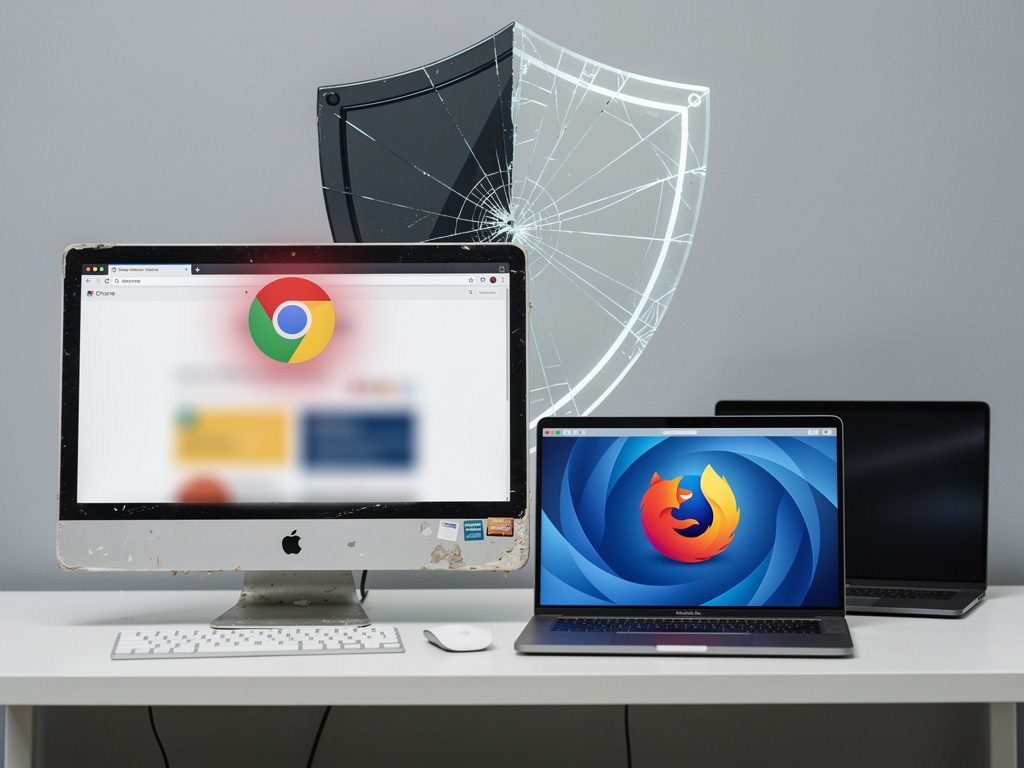
In a move that underscores the relentless forward march of technology, Google has officially ended support for its Chrome browser on millions of older Apple computers, creating a significant security and usability dilemma for individuals and organizations still reliant on aging hardware. The change, which took effect with the release of Chrome version 117, ceases all future updates, including critical security patches, for any Mac running macOS 10.13 High Sierra or macOS 10.14 Mojave. This decision effectively pushes a large user base to a crossroads: invest in new hardware or navigate the web with an increasingly vulnerable browser.
The policy shift, while not unexpected in an industry defined by rapid development cycles, represents a major turning point for users of Macs manufactured as recently as 2012. Google’s official reasoning centers on the need to allocate engineering resources toward modern operating systems that can support the latest security features and browser capabilities. According to a Google Chrome Enterprise and Education Help page, to receive future Chrome updates, devices must be running macOS 10.15 Catalina or newer. For those left behind, Chrome will continue to function, but it will become a static, unpatched piece of software—a digital relic frozen in time while the threats of the internet continue to evolve daily.
The Widening Security Chasm for Legacy Systems
For information technology administrators in corporate and educational settings, the end of support is more than an inconvenience; it is a significant security event. An unsupported browser is a primary vector for malware, phishing attacks, and data breaches. As new vulnerabilities are discovered in the Chromium engine—the open-source foundation for Chrome and many other browsers—patches will be rolled out to supported systems, while High Sierra and Mojave users will remain exposed. This creates a two-tiered system where a segment of the user base becomes a soft target for cybercriminals.
The impact is magnified by Chrome’s dominant market share. It is the default browser for countless workflows and web applications, and its absence from the regular update cycle can introduce compatibility issues as web standards advance. As TechRadar noted, the core issue is that without security updates, users are left navigating a modern web with outdated defenses. The recommendation for these users is stark: find an alternative browser or, preferably, upgrade the operating system, which for many, is not a simple proposition.
A Hardware Ceiling Creates a Forced Upgrade Path
The primary obstacle for many affected users is not a reluctance to update, but a hard limit imposed by Apple’s own hardware lifecycle. For instance, macOS Catalina, the new minimum requirement for Chrome, does not support a range of popular machines, including the mid-2012 MacBook Pro, a workhorse model still in wide use. To run a supported operating system like macOS Ventura, Apple’s own documentation confirms a user would need a Mac model from 2017 or later, as detailed on an official Apple support page. This policy effectively renders perfectly functional, high-performance hardware obsolete from a software security standpoint.
This hardware ceiling forces a costly decision upon individuals, small businesses, and underfunded institutions like schools that often extend the life of their technology assets well beyond the manufacturer’s preferred upgrade cycle. The choice is no longer about preference but about capital expenditure. The secondary market for older Macs remains robust precisely because the hardware is durable, but decisions from software giants like Google can single-handedly undermine that longevity and value, pushing users toward a cycle of recurring hardware investments.
The Search for Viable Alternatives
With Chrome’s departure, many are turning to Mozilla’s Firefox browser as a potential safe harbor. Historically, Mozilla has maintained support for older operating systems longer than Google. In this case, Firefox offers a temporary reprieve. According to a Mozilla support article, users on macOS High Sierra and Mojave will be supported by the Firefox Extended Support Release (ESR) channel until at least September 2024. This provides a crucial window for users to plan their next steps, but it is not a permanent solution, as Mozilla too will eventually need to cease support to keep its own browser modern and secure.
Other browsers built on the Chromium engine, such as Microsoft Edge and Brave, are likely to follow Google’s lead, as their development is intrinsically tied to the upstream Chromium project. Apple’s own Safari browser is not a viable alternative for secure browsing on these systems, as it is bundled with the operating system; an old version of macOS means an old, equally unsupported version of Safari. This leaves Firefox as the most prominent, albeit temporary, alternative for those unable or unwilling to upgrade their hardware immediately.
A Familiar Pattern of Planned Obsolescence
This move by Google is not an isolated event but part of a well-established pattern across the software industry. Developers must constantly weigh the cost of maintaining backward compatibility against the benefits of innovation and security offered by newer platforms. The engineering effort required to test and patch software for aging, little-used operating systems is substantial. A similar and even larger-scale transition occurred when Google officially ended Chrome support for the once-ubiquitous Windows 7 and 8.1 operating systems in early 2023, a move that ZDNet reported affected a significant slice of the desktop PC market at the time.
This relentless cycle serves the interests of security and progress but also fuels the engine of planned obsolescence. It creates a challenging environment for those focused on sustainability, as functional electronics are prematurely designated for recycling. While tech-savvy users may resort to unsupported, community-driven tools like the OpenCore Legacy Patcher to install newer versions of macOS on older hardware, these solutions are complex, carry their own risks, and are not tenable for the average user or in a managed IT environment. For most, the official software support wall is absolute, leaving them with difficult and often expensive choices as they seek to remain secure and productive online.


 WebProNews is an iEntry Publication