
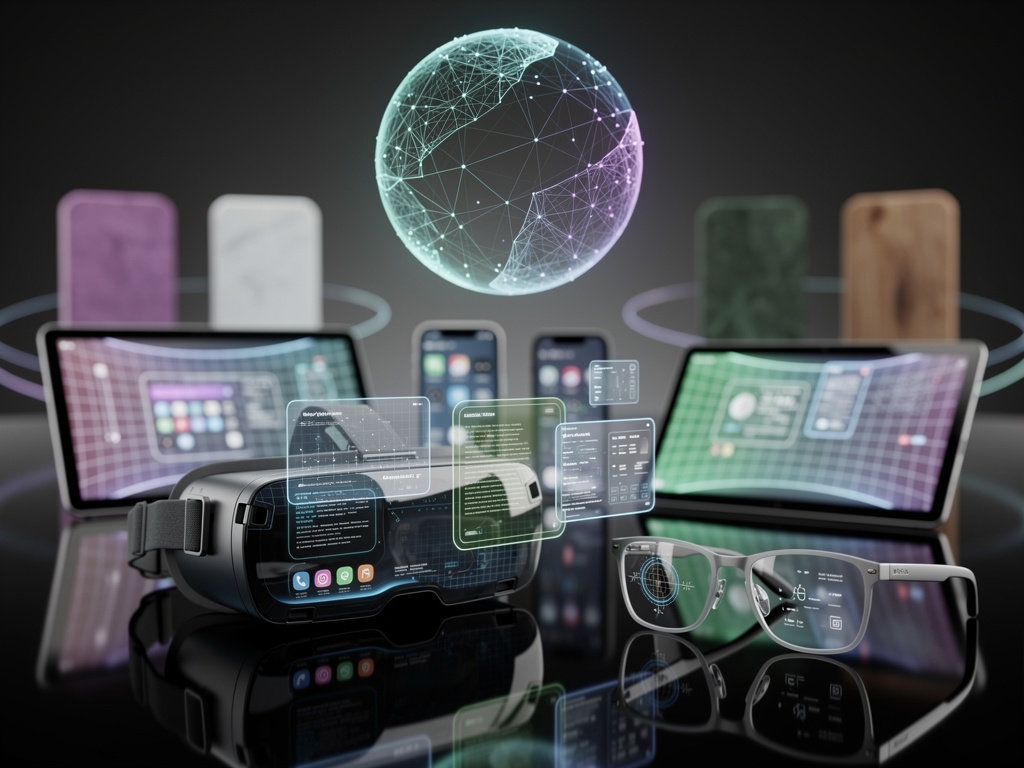
Dawn of Android XR: Google’s Bold Bet on the Next Era of Spatial Computing
In the rapidly evolving realm of extended reality technologies, Google has positioned itself as a pivotal player with the launch of Android XR, an operating system designed to unify virtual and augmented experiences across headsets and smart glasses. This initiative, developed in collaboration with Samsung, marks a significant step forward in blending digital and physical worlds, leveraging years of advancements in artificial intelligence and immersive interfaces. As industry observers note, Android XR isn’t merely an update but a foundational platform aiming to democratize access to mixed reality applications, much like Android did for smartphones.
The system’s roots trace back to Google’s earlier ventures, including the ill-fated Google Glass and subsequent projects like Daydream VR, which were discontinued but provided valuable lessons. Now, with Android XR, the company is integrating its Gemini AI chatbot deeply into the ecosystem, enabling features that enhance user interactions in real-time. Recent announcements highlight how this OS supports devices such as the Samsung Galaxy XR headset, promising seamless transitions between virtual environments and everyday tasks.
Drawing from insights shared in a TechRadar interview with Juston Payne, Google’s Senior Director of Product Management for XR, the platform’s vision emphasizes openness and collaboration. Payne describes the field as nascent, with untapped potential for innovation, underscoring that the narrative of XR is still being shaped. This perspective aligns with broader industry sentiments, where developers and hardware makers see Android XR as a catalyst for widespread adoption.
Ecosystem Building Blocks: Partnerships and Developer Engagement
Central to Android XR’s strategy is fostering a robust network of partners, including Qualcomm for hardware support and various app developers eager to explore spatial computing. Posts on X from figures like developer Guy Godin highlight enthusiasm for Google’s collaborative approach, contrasting it with more restrictive platforms. Such sentiments suggest that Android XR could attract a diverse array of creators, potentially accelerating the development of immersive applications.
Recent news from Next Reality indicates Google’s plans for AI-powered glasses slated for 2026, which will extend the ecosystem beyond headsets. These devices aim to realize the long-envisioned promise of augmented overlays in daily life, from navigation aids to contextual information displays. The integration of Gemini AI ensures that interactions feel intuitive, with features like real-time translation and object recognition enhancing usability.
Moreover, updates announced in Google’s blog detail new capabilities for the Galaxy XR, such as Travel Mode, which optimizes experiences for users on the move. This reflects Google’s commitment to addressing practical challenges, ensuring that XR isn’t confined to stationary setups but integrates into dynamic lifestyles.
Technological Foundations: AI Integration and Spatial Innovations
At the heart of Android XR lies its heavy reliance on AI, particularly Gemini, which powers generative features that adapt to user needs. As detailed in Wikipedia’s entry on Android XR, the OS was announced in late 2024 and launched in October 2025, building on Android’s core while adding XR-specific enhancements. This foundation allows for the spatialization of traditional 2D apps, converting them into 3D experiences on the fly—a feature stealthily revealed in recent updates, as reported by Tom’s Guide.
Industry insiders, including those from IndustryWired, emphasize how this capability could redefine content consumption, making virtual reality more accessible without requiring entirely new app development. For enterprises, this means easier integration of productivity tools into mixed reality workflows, potentially boosting efficiency in sectors like manufacturing and healthcare.
X posts from tech executives, such as Google’s Shahram Izadi, underscore ongoing enhancements like PC Connect, which bridges Android XR devices with traditional computing setups. These integrations aim to create a seamless continuum between flat screens and immersive spaces, addressing one of the key hurdles in XR adoption: interoperability with existing tech stacks.
Market Dynamics: Competition and Adoption Challenges
As Android XR gains traction, it faces stiff competition from established players like Meta’s Horizon OS. Analysis from posts on X by Ben Lang points out the advantage Google holds in porting familiar Android apps to XR, potentially outpacing rivals in ecosystem richness. This could tip the scales in favor of Android XR, especially as developers flock to a platform that promises broader reach.
However, challenges remain, including hardware limitations and user privacy concerns amplified by AI’s pervasive role. The Verge’s hands-on with Project Aura prototypes describes the glasses as chunky yet functional, running Android apps in a sunglasses-like form factor. Such designs must balance aesthetics with performance to appeal to mainstream consumers.
Further, 9to5Google reports suggest that full-display AI glasses in 2026 will finally fulfill the Google Glass vision, but scaling production and ensuring affordability will be crucial. Industry experts warn that without compelling use cases, XR risks repeating past failures, yet Google’s open ecosystem approach may mitigate this by encouraging innovation from third parties.
Future Trajectories: Enterprise Applications and Consumer Appeal
Looking ahead, Android XR’s potential in enterprise settings is immense. FrameSixty explores how its AI tools and flexibility cater to business needs, from virtual training simulations to collaborative design environments. This enterprise focus could provide a stable revenue stream while consumer adoption builds gradually.
On the consumer side, features like immersive entertainment and social interactions are poised to drive engagement. X discussions, including those from Matthew Berman, paint a vivid picture of a future where AI seamlessly augments reality, from personalized shopping experiences to enhanced gaming. Google’s strategy includes a three-tier approach to XR glasses, as outlined in Next Reality’s coverage of the 2026-2027 roadmap, offering varying levels of immersion to suit different user preferences.
Payne’s comments in the TechRadar interview reinforce that the space is in its infancy, with history yet to be written. This optimism is echoed in Takeaway Reality’s analysis, which posits that Android XR could redefine augmented and virtual reality industries over the coming decades by standardizing development and reducing barriers to entry.
Developer Perspectives and Innovation Drivers
Developers are key to Android XR’s success, and early feedback is promising. X posts from Kent Bye reference Guy Godin’s praise for Google’s collaborative stance, suggesting a shift away from walled gardens toward open innovation. This could lead to a proliferation of apps that leverage XR’s unique capabilities, such as spatial audio and gesture controls.
Qualcomm’s involvement, as noted in older X updates from Brad Lynch, indicates strong hardware backing, with developer kits released in late 2024 paving the way for the March 2025 consumer launch. Such timelines allow for iterative improvements based on real-world testing, ensuring robustness.
Moreover, Google’s acquisition of VR firms like Tilt Brush and Owlchemy Labs, as mentioned in Wikipedia’s overview, bolsters its content library, providing ready-made experiences to seed the ecosystem. This strategic accumulation of assets positions Android XR as a comprehensive platform rather than a mere OS.
Global Implications: Accessibility and Ethical Considerations
As Android XR expands globally, accessibility becomes a focal point. The platform’s Android base ensures compatibility with a wide range of devices, potentially lowering costs and increasing availability in emerging markets. IndustryWired’s exploration highlights how this could democratize XR, making advanced tech accessible beyond affluent users.
Ethical considerations, particularly around data privacy and AI ethics, are paramount. With Gemini’s deep integration, questions arise about data handling in immersive environments. TechRadar’s discussion with Payne touches on Google’s commitment to responsible development, emphasizing user control and transparency.
Finally, the collaborative model with Samsung and others, as announced in Google’s blog, fosters a diverse hardware lineup, from headsets to glasses. This variety could accelerate market penetration, with X posts from Android’s official account teasing new ways to watch, work, and explore, signaling a transformative shift in how we interact with technology.
Strategic Horizons: Long-Term Vision and Industry Impact
Google’s long-term vision for Android XR extends to creating an interconnected world where digital and physical realms merge effortlessly. The Verge’s report on Project Aura illustrates prototypes that blend functionality with everyday wearability, hinting at a future where XR is ubiquitous.
Competition with Apple’s Vision Pro and Meta’s offerings will intensify, but Google’s app ecosystem gives it an edge. As per Tom’s Guide, the 2D-to-3D conversion feature could be a game-changer, allowing legacy content to thrive in spatial formats without redevelopment.
In wrapping up this exploration, it’s clear that Android XR represents Google’s renewed push into XR, backed by AI prowess and partnerships. With announcements like those from 9to5Google on upcoming glasses, the platform is set to influence how industries and individuals engage with augmented worlds, potentially reshaping daily experiences in profound ways.


 WebProNews is an iEntry Publication