
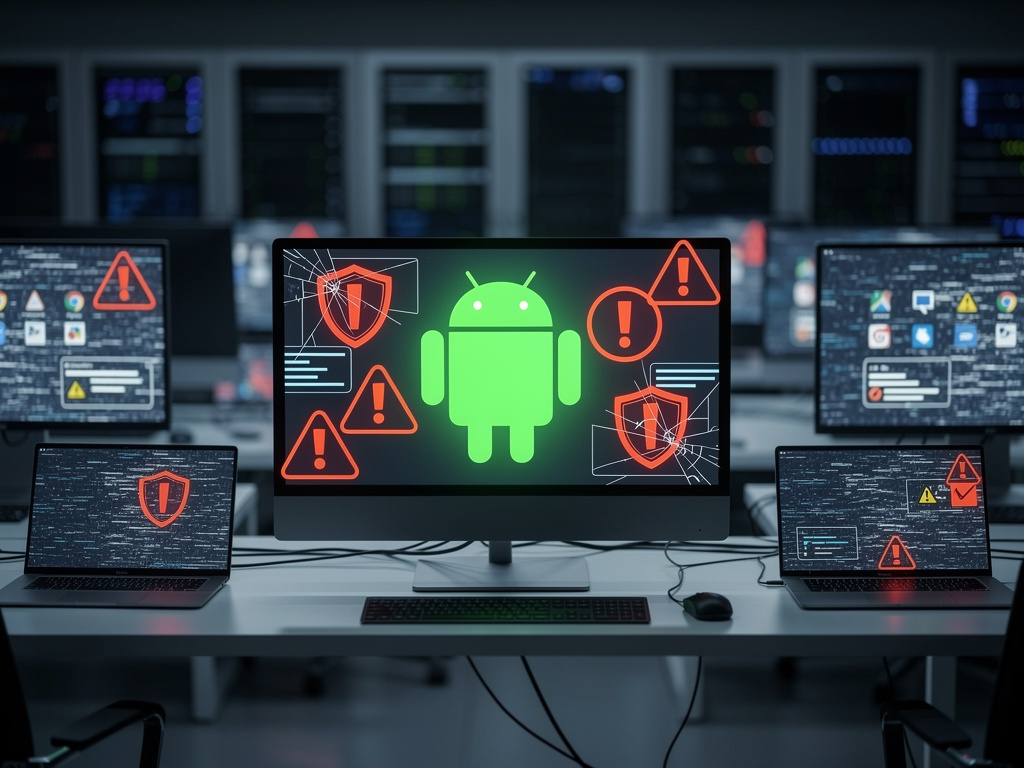
Google’s ambitious plan to bring Android to personal computers represents one of the most significant strategic pivots in the company’s history, yet industry insiders are raising serious questions about whether the tech giant can overcome fundamental technical hurdles and developer resistance that have plagued similar efforts in the past. The initiative, which aims to create a unified operating system experience across mobile devices and traditional PCs, faces challenges ranging from application compatibility to hardware fragmentation that could undermine its success before it gains meaningful traction.
According to Slashdot, the Android for PC launch is anticipated to be both messy and controversial, with technical analysts pointing to the inherent difficulties in adapting a mobile-first operating system to the demands of desktop computing. The concerns echo previous failed attempts to bridge the mobile-desktop divide, including Microsoft’s Windows 8 experiment and even Google’s own Chrome OS struggles in certain market segments. What makes this particular venture more complex is the expectation that Android will need to maintain backward compatibility with existing mobile applications while simultaneously supporting traditional desktop workflows that users have come to expect from Windows and macOS systems.
The timing of Google’s push into the PC space comes at a moment when the traditional boundaries between mobile and desktop computing are increasingly blurred, yet the fundamental differences in user behavior and expectations remain stark. Desktop users demand robust multitasking capabilities, extensive file management systems, and professional-grade applications that have been optimized for keyboard and mouse input over decades of refinement. Mobile applications, conversely, are designed for touch interfaces, simplified workflows, and resource constraints that differ dramatically from desktop environments.
The Application Compatibility Conundrum
Perhaps the most significant obstacle facing Android’s desktop ambitions is the application ecosystem challenge. While Android boasts millions of applications in the Google Play Store, the vast majority were designed exclusively for touchscreen devices with screen sizes ranging from four to thirteen inches. Scaling these applications to work effectively on monitors that can span up to 49 inches or more, while maintaining usability with traditional input devices, presents engineering challenges that go far beyond simple interface adjustments. Developers would need to fundamentally rethink their application architectures, user interface designs, and interaction models to create experiences that feel native to desktop environments rather than awkwardly ported mobile apps.
The financial incentive for developers to undertake such extensive redesigns remains unclear. Mobile application developers have traditionally operated on business models that emphasize high volume and low prices, with many apps being free or costing just a few dollars. Desktop software, particularly professional applications, commands significantly higher price points but also requires substantially more development investment. Without a clear path to monetization that justifies the additional development costs, many developers may choose to ignore the Android PC platform entirely, leaving users with a limited selection of properly optimized applications and forcing them to rely on mobile apps running in compatibility modes that deliver suboptimal experiences.
Hardware Fragmentation and Performance Expectations
The Android ecosystem has long struggled with hardware fragmentation, with thousands of different device configurations running various versions of the operating system. Extending this already complex situation to include PC hardware—with its virtually unlimited combinations of processors, graphics cards, memory configurations, and peripheral devices—threatens to create a support nightmare for both Google and application developers. Unlike Apple’s tightly controlled hardware ecosystem or even Microsoft’s relatively standardized PC architecture, Android PC would need to function across an enormous range of hardware specifications while maintaining consistent performance and user experience.
Desktop users also maintain significantly higher performance expectations than mobile users, particularly for tasks involving content creation, data analysis, and gaming. While mobile processors have made impressive strides in recent years, they still lag behind desktop-class CPUs and GPUs in raw computational power and sustained performance under heavy workloads. Google would need to ensure that Android can effectively utilize high-end desktop hardware while maintaining the power efficiency and instant-on capabilities that users have come to expect from mobile devices. This balancing act becomes even more challenging when considering the need to support both ARM-based processors, which dominate the mobile space, and x86 architectures that remain prevalent in traditional PCs.
The Enterprise Computing Challenge
For Android PC to achieve mainstream success, it must penetrate the enterprise market, where Windows has maintained near-total dominance for decades. Corporate IT departments have built extensive infrastructure around Windows-based systems, including management tools, security protocols, and integration with legacy applications that are critical to business operations. Convincing these organizations to adopt Android PC would require not only feature parity with existing Windows capabilities but also compelling advantages that justify the substantial costs and risks associated with platform migration.
Security concerns loom particularly large in enterprise contexts. While Android has made significant improvements in security over the years, its reputation has been tarnished by high-profile vulnerabilities and the fragmented nature of security updates across different device manufacturers. Desktop environments typically handle more sensitive data and require more sophisticated security controls than mobile devices, including support for hardware-based security features, advanced encryption, and integration with enterprise identity management systems. Google would need to demonstrate that Android PC can meet or exceed the security standards that enterprises currently rely on, a tall order given the platform’s mobile heritage and the additional attack surface created by desktop connectivity and peripheral support.
Developer Relations and Platform Politics
The controversy surrounding Android PC extends beyond technical challenges to encompass broader concerns about Google’s intentions and the potential impact on existing platform ecosystems. Microsoft, whose Windows operating system would face direct competition from Android PC, has already expressed reservations about Google’s approach to platform compatibility and openness. The tension between these two tech giants could manifest in various ways, from Microsoft potentially restricting Android PC’s access to certain Windows technologies to Google leveraging its dominant position in search and advertising to promote its new platform at the expense of competitors.
Developers caught in the middle of this platform war face difficult decisions about where to allocate their limited resources. Supporting Android PC would mean dividing attention between yet another platform, potentially at the expense of existing Windows, macOS, iOS, and traditional Android development efforts. The history of platform transitions is littered with examples of developers who bet on the wrong horse and suffered significant financial consequences as a result. Without clear signals from Google about long-term commitment and support for Android PC—backed by substantial investments in developer tools, documentation, and financial incentives—many developers are likely to adopt a wait-and-see approach that could doom the platform to a chicken-and-egg problem where lack of applications drives away users, and lack of users discourages application development.
The Chrome OS Complication
Google’s existing Chrome OS platform adds another layer of complexity to the Android PC strategy. Chrome OS has carved out a successful niche in education and certain enterprise segments, offering a simplified, security-focused computing experience built around web applications and cloud services. The introduction of Android PC raises questions about Google’s long-term plans for Chrome OS and whether the company intends to maintain two separate desktop operating systems or eventually merge them into a single platform. This uncertainty creates confusion for both users and developers, who may be reluctant to invest in either platform without clarity about Google’s strategic direction.
The technical architectures of Android and Chrome OS differ substantially, with Chrome OS built on a Linux foundation and emphasizing web technologies, while Android is designed around a mobile-optimized Linux kernel and native application framework. Merging these platforms would require resolving fundamental differences in security models, application frameworks, and system architectures—a monumental engineering challenge that could take years to complete. In the meantime, Google risks diluting its efforts by supporting two competing desktop platforms, neither of which may receive sufficient resources to effectively challenge Windows and macOS dominance.
Market Dynamics and User Adoption Barriers
Even if Google successfully addresses the technical and developer challenges facing Android PC, significant market barriers remain. Windows benefits from decades of user familiarity, with billions of people worldwide having learned computing on Microsoft’s platform. The cognitive overhead of switching to a new operating system, learning different interface conventions, and adapting to new workflows represents a substantial barrier to adoption, particularly for users who rely on specific Windows applications for their work or creative pursuits. Google would need to offer compelling advantages—whether through superior performance, lower costs, better integration with mobile devices, or unique features unavailable on competing platforms—to overcome this inertia.
The pricing strategy for Android PC will also prove critical to its success. If Google positions Android PC as a premium alternative to Windows, it will need to justify higher costs through demonstrably superior capabilities or user experiences. Conversely, if Android PC is marketed as a budget-friendly option, it risks being perceived as an inferior product suitable only for basic computing tasks, limiting its appeal to mainstream users and enterprises. Finding the right balance between affordability and perceived value will require careful market positioning and potentially different product tiers targeting distinct user segments with varying needs and budgets.
The Path Forward: Incremental Evolution or Revolutionary Disruption
Industry observers are divided on whether Google should pursue an incremental approach to Android PC, gradually adding desktop capabilities to the existing Android ecosystem, or attempt a revolutionary clean break that reimagines desktop computing from the ground up. The incremental approach offers the advantage of maintaining compatibility with existing Android applications and development tools, reducing the burden on developers and allowing users to leverage familiar mobile apps on their desktop systems. However, this strategy risks creating a compromised experience that satisfies neither mobile nor desktop users, falling into the uncanny valley of computing platforms that feel neither fully mobile nor truly desktop-class.
A revolutionary approach, while potentially more disruptive and risky, could allow Google to design an operating system that truly optimizes for the convergence of mobile and desktop computing paradigms. This might involve new interface paradigms that seamlessly transition between touch and traditional input methods, novel application models that automatically adapt to different screen sizes and usage contexts, or innovative approaches to multitasking and window management that improve upon decades-old desktop conventions. However, such radical innovation would require convincing developers to abandon established patterns and invest in entirely new development approaches, a proposition that becomes increasingly difficult as the mobile and desktop application ecosystems mature and consolidate.
The success or failure of Android PC will ultimately depend on Google’s ability to execute on multiple fronts simultaneously: delivering robust technical infrastructure that performs reliably across diverse hardware configurations, cultivating developer support through compelling tools and economic incentives, addressing legitimate security and enterprise management concerns, and articulating a clear strategic vision that gives users and developers confidence in the platform’s longevity. The challenges are formidable, and the history of platform transitions suggests that the odds are stacked against Google. Yet the potential rewards—a unified computing platform spanning mobile devices, tablets, and traditional PCs—remain tantalizing enough to justify the attempt, even as industry insiders prepare for what may indeed prove to be a messy and controversial launch that reshapes the competitive dynamics of personal computing for years to come.


 WebProNews is an iEntry Publication