
Google has tightened the screws on phone thieves with Android 17. The latest version doesn’t just add flashy tools. It makes cracking a Pixel far tougher than before. And the changes arrive at a moment when device theft keeps draining users’ savings and peace of mind.
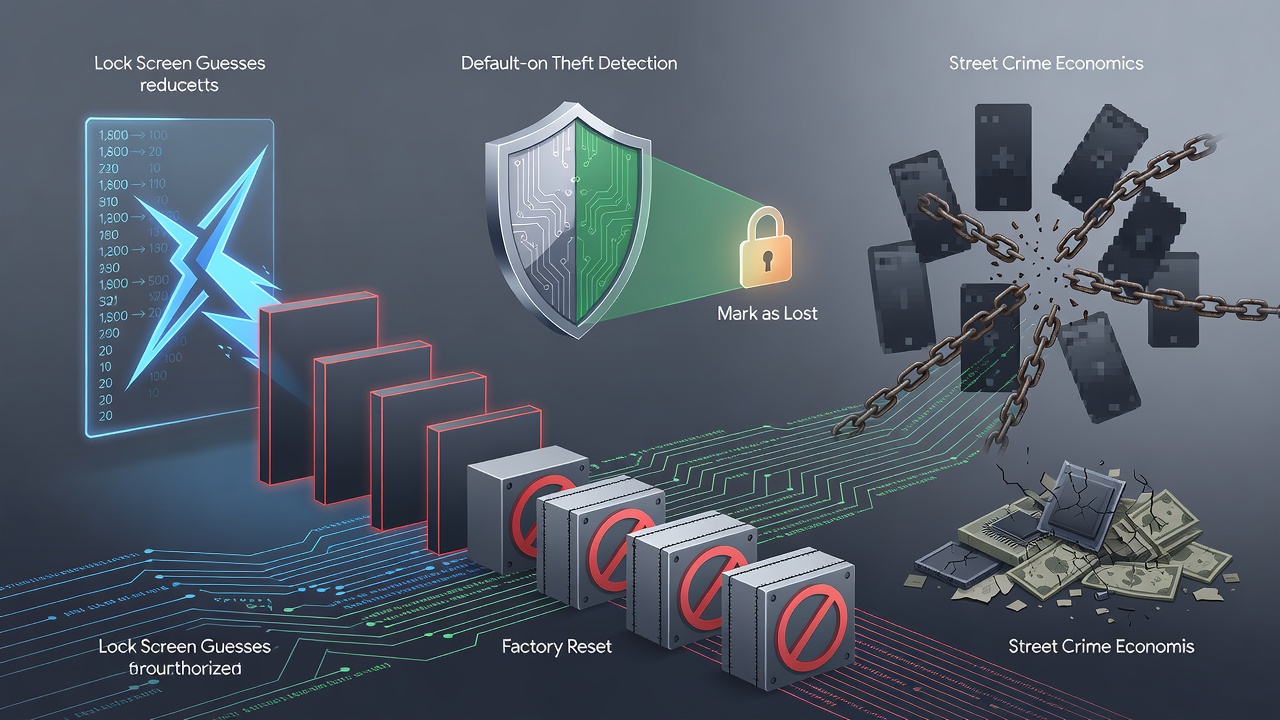
One headline adjustment slashes the number of passcode guesses allowed on the lock screen. Earlier Android releases permitted as many as 1,800 attempts spread over years. Android 17 cuts that figure to 20. The shift comes from new rate-limiting rules designed to thwart brute-force attacks on lockscreen knowledge factors such as PINs and passwords.
But that’s only part of the story. Google pairs the limit with longer delays between failed tries. Five wrong entries trigger a one-minute wait. By the 10th mistake the pause stretches to four hours. Reach 17 incorrect guesses and the system demands a full year before another shot. After 20 the device stays locked. No further attempts allowed. Period.
The adjustments build on lessons from real-world attacks. Most people pick predictable codes. Birthdays. Repeating digits. Attackers who know even basic details about a target succeed more often than random guessing would suggest. Mishaal Rahman, who works on Android’s community engagement team, spelled this out on X. “While this is pretty secure for PINs and passwords chosen randomly, most people don’t randomly choose their PIN or password. Attackers can achieve a significant success rate cracking into devices by entering PINs or passwords in order of decreasing frequency, and if they know anything about you (like your birthday), that success rate only increases.”
MakeUseOf reported on the change after testing the stable Android 17 release on Pixel devices. The publication noted that the new policy also reaches back to Android 16 QPR2. Duplicate guess detection offers some relief. Enter the same wrong code repeatedly and it counts only once. The lock screen now displays wait times in sensible units. No more “try again in 2,000 seconds” messages. Still, owners must stay alert. A few careless taps could lock them out for days or longer.
Google didn’t stop at the lock screen. The company expanded a whole set of anti-theft measures and turned several on by default. Theft Detection Lock activates automatically if the phone senses a sudden snatch. Remote Lock lets owners freeze the device from afar through the Find Hub. Mark as Lost now demands biometric confirmation. Even if a thief somehow learned the PIN, that extra fingerprint or face scan blocks them from disabling tracking or regaining access. Triggering the mode also conceals Quick Settings and stops new Wi-Fi or Bluetooth pairings.
Eugene Liderman, director of the Android Security and Privacy Team, explained the biometric upgrade in Google’s official blog. “We’re enhancing Find Hub’s Mark as lost feature in Android 17 with the ability to lock a phone with biometric authentication, in addition to the regular device passcode or PIN. This means that thieves who may have obtained your passcode or PIN won’t be able to turn off device tracking or re-access your phone if you mark it as lost.” The post appears at blog.google/security/whats-new-in-android-security-privacy-2026.
These protections first ran in a pilot in Brazil. Results convinced Google to roll them out globally for all new Android 17 devices, freshly reset units, and those upgraded to the latest OS. In high-theft markets such as Argentina, Chile, Colombia, Mexico, Peru and the UK the features now cover every phone running Android 10 or newer. The expansion aims to cut financial fraud that often follows physical theft. A lost handset doesn’t just cost the hardware price. It opens doors to banking apps, saved cards and personal data.
Seang Chau, vice president and general manager of the Android Platform, highlighted the PIN restrictions in a separate post. “To stop a thief who’s trying to guess their way into your phone, we also reduced the number of times someone can guess your PIN and added longer wait times between failed attempts,” he wrote. Help Net Security covered his comments alongside other Android 17 privacy additions such as scam detection in chat notifications and tighter controls on app behavior.
Factory Reset Protection received reinforcements too. A thief who forces a reset now faces another mandatory reset before reaching the home screen. The change destroys much of a stolen phone’s resale value. Thieves rely on quick wipes and flips on the secondary market. Making that path harder reduces the incentive to steal in the first place. Techlicious noted that these default-on tools matter more than they first appear because many users never bother to enable optional safeguards.
Android 17 also improves recovery options. On supported devices running Android 12 and above, law enforcement, manufacturers or carriers can pull the IMEI directly from the lock screen. The identifier helps prove ownership and speeds return of found phones. Users retain the choice to disable the feature in settings.
Industry observers see the collection of changes as a calculated response to shifting crime patterns. Phone snatchings in crowded cities often lead to rapid attempts to bypass security. By layering automatic locks, biometric gates and strict guess limits Google aims to make the entire process too time-consuming and unrewarding. Android Authority detailed how the Mark as Lost biometric step closes a loophole that existed in earlier releases where a known PIN granted full control.
Of course risks remain. Forgetful users might lock themselves out. Children playing with a parent’s device could burn through attempts. Google added visual cues and smarter timeout displays to soften the impact. The company also continues to refine lock screen messaging after failed entries. Yet the core message is clear. Convenience now takes a back seat to hardened defenses.
Pixel owners receive the update first. Broader Android rollout follows later in the year. Early feedback from the stable channel suggests the security upgrades feel invisible in daily use. That’s exactly the point. The best protections work without drawing attention until the moment they matter.
Recent coverage shows the momentum hasn’t slowed. In mid-July Google pushed the July 2026 security patch to Pixels on Android 17, addressing stability alongside the ongoing theft safeguards. Discussions on X highlighted the rapid beta cycle for quarterly updates, signaling that further refinements could arrive soon. One post from tech accounts noted that the combination of default protections and stricter lock limits already changes the economics for opportunistic thieves.
Google’s approach reflects a wider shift. Hardware alone no longer suffices. Software must anticipate physical threats the same way it counters malware. By making stolen devices far less useful Google doesn’t just protect data. It strikes at the profit motive behind street-level crime. The result could mean fewer incidents and faster recoveries when they do occur.
Users who upgrade gain these layers without extra setup in most cases. Those on older hardware in select countries receive backported coverage. The strategy maximizes reach while the features stay fresh. And as more brands adopt Android 17 the protections will spread across millions of devices worldwide.
Security teams inside Google spent years iterating on these ideas. Pilots revealed what worked. Adjustments followed. The final package in Android 17 shows the payoff. A phone snatched from a pocket now faces multiple independent barriers. Each one buys time for the owner to act. Each one raises the bar for the person holding the device.
The changes won’t end theft overnight. Determined attackers with physical access and specialized tools still pose dangers. Yet for the vast majority of cases the new rules tilt the odds sharply toward the owner. That represents real progress in an area long considered difficult to fix.


 WebProNews is an iEntry Publication