
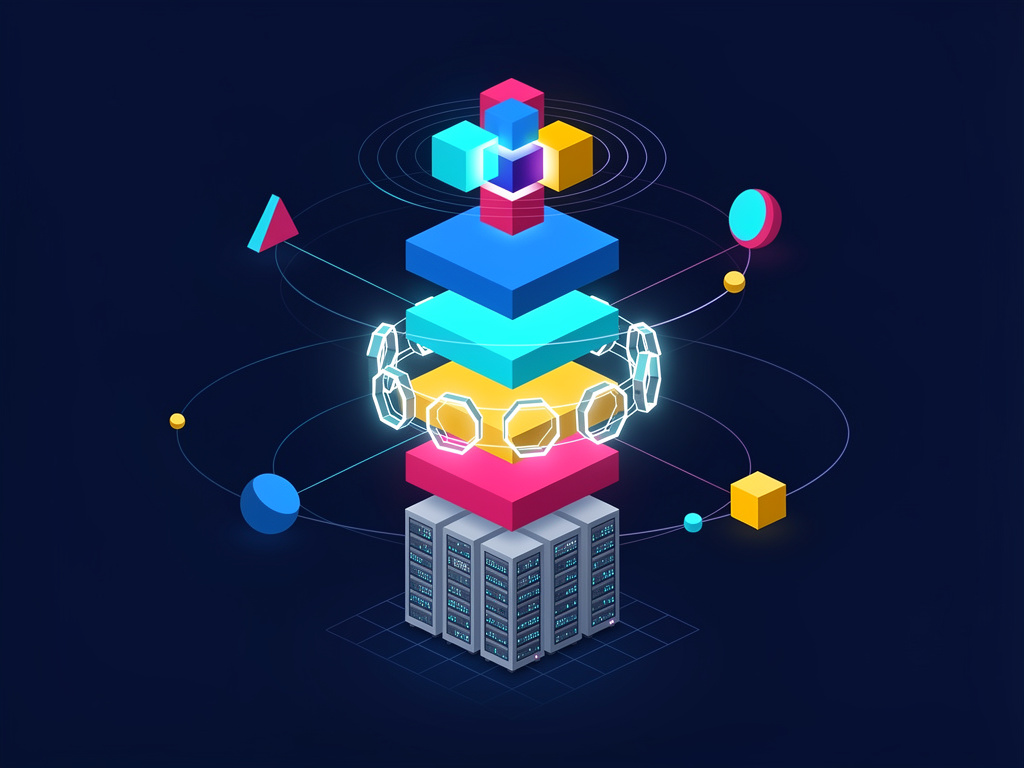
Google Cloud Next 2026 wrapped up in Las Vegas with a clear message. The future belongs to companies that control the full path from silicon to agents. And Google aims to own it all.
At the heart of the announcements sits the Gemini Enterprise Agent Platform. This reimagined Vertex AI now handles building, scaling, governing, and optimizing agents. Employees use a new app to create and run them. Developers get Agent Studio for low-code workflows and a graph-based kit for complex ones. Google Cloud Blog calls it the one-stop shop for autonomous agents.
But integration goes deeper. Andi Gutmans, who oversees Google Cloud’s data operations, laid it out in a recent interview. “We’re really the only provider that has the AI infrastructure, the model and the data platform,” he said. AWS and Azure offer infrastructure but lack proprietary models. Data vendors miss the hardware and AI layers. Model makers focus narrowly. Google ties them together. That matters as firms shift to agentic systems, where thousands of AI workers demand tight coordination to keep costs down. The Register.
Gemini 2.5 changed everything. Its reasoning leap forced Google to rebuild every agent—from conversation analytics to data engineering—in the past 18 months. Gutmans noted customers ditched last year’s versions for simple tasks. Now? Night and day. The Knowledge Catalog unlocks 90% of enterprise data: unstructured files long ignored without heavy prep. No more six-month ontology builds with teams of 20, as some did with Palantir. Agents reason over it directly.
And then there’s Agent2Agent, or A2A. This protocol lets agents from different vendors chat and delegate. Version 1.2 now runs in production at 150 organizations, governed by the Linux Foundation’s Agentic AI Foundation. Microsoft, AWS, Salesforce, SAP, and ServiceNow use it. Signed agent cards verify domains cryptographically. Google also rolled out managed Model Context Protocol servers via Apigee, bridging APIs to agents. The Next Web.
Hardware backs the stack. Eighth-generation Tensor Processing Units hit for training and inference. Google pairs its TPUs with Nvidia chips. A $750 million partner fund accelerates agent builds. Partnerships multiply: Accenture’s acceleration program blends Google engineering with industry know-how; Oracle’s AI Database Agent queries data in plain language via Gemini. Accenture Newsroom; Oracle Blogs.
Google hosts rivals too. Over 200 models in the garden, including Anthropic’s Claude, Llama, and DeepSeek. Databricks, Snowflake, Informatica integrate data tools. Salesforce and ServiceNow agents run on GCP. A cross-cloud lakehouse queries AWS or Azure data with low latency, strong security. Gutmans described it as differentiated yet open. “We want to build the best platform.”
Real-world proof emerged. GE Appliances deploys 800+ agents in manufacturing. KPMG saw 90% Gemini Enterprise adoption in a month. Comcast handles customer support; PayPal processes payments; hospitals schedule cancer screenings. Agentic development has gone mainstream, per Peter FitzGibbon of Insight Enterprises. No more tire-kicking. CRN.
Security weaves in. Agent governance controls cut risks like prompt injection. An AI control center monitors access. Workspace gets MCP servers for safe data pulls—synthesizing Docs, drafting Gmail, managing Calendar. A CLI simplifies it. Google processes 16 billion tokens per minute internally. Seventy-five percent of new code comes from AI, reviewed by engineers.
So why embrace competitors? Scale. Agents explode in number. Economics favor stack owners who bend price-performance curves. Gutmans again: From human-scale to agent-scale, integration wins. Google acts as customer zero across Search, YouTube, Android.
Critics might point to lags behind OpenAI or Anthropic in raw model power. But enterprise demands more: governance, interoperability, production readiness. A2A at 150 firms. Pre-built Task Forces for defense, data clouds. Project Mariner browses the web. Workspace Studio builds no-code agents.
The bet pays off if agents deliver outcomes, not just tasks. Thomas Kurian, Google Cloud CEO, framed it: Own from chip to inbox. Rivals hand pieces. Google builds the platform.
Nearly 80 data announcements. Rebuilt agents everywhere. Unstructured data activated. Cross-cloud queries. It’s a full-court press.
Enterprises watch closely. Pilots end. Production scales. Google’s stack positions it to capture the agentic wave.


 WebProNews is an iEntry Publication