
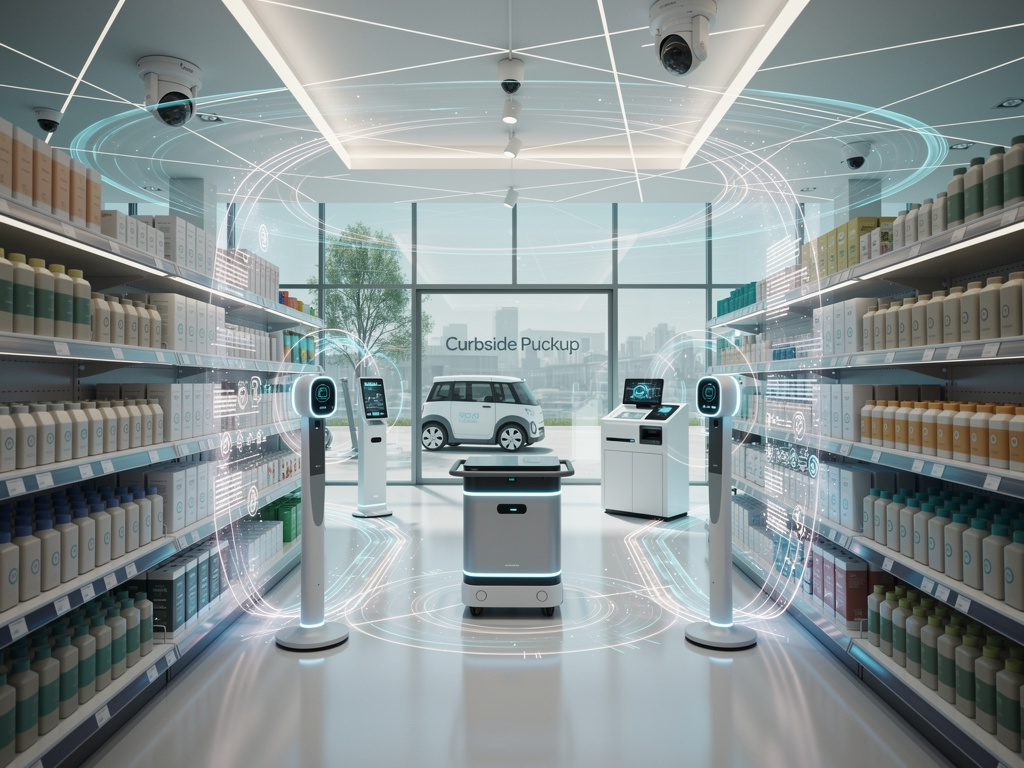
NEW YORK—At the National Retail Federation’s 2026 conference, Google Cloud unveiled Gemini Enterprise for Customer Experience, a bold agentic AI platform aimed at fusing shopping discovery with customer service into a seamless retail operation. Announced on January 11, the solution promises to deploy autonomous AI agents that reason, plan, and resolve issues across the entire customer journey, from product browsing to post-purchase support. This move positions Google squarely in the escalating race among hyperscalers to dominate enterprise AI for retail.
The platform builds on Google’s Gemini models and Vertex AI infrastructure, enabling retailers to create specialized agents that handle complex tasks without human intervention. Early adopters like Kroger, Lowe’s, Papa Johns, and Woolworths are already testing it, according to the official announcement. ‘Gemini Enterprise for CX is designed to bring shopping and customer service together as a single, intelligent agentic platform,’ Google Cloud stated in its PR Newswire release.
NRF Spotlight: Agentic Commerce Takes Center Stage
Speaking at NRF 2026, Alphabet CEO Sundar Pichai emphasized the shift toward ‘agentic AI,’ where systems proactively solve problems. ‘We’re one of the first places shoppers go to discover new brands and products, and people shop across Google more than a billion times a day,’ Pichai noted in a Google blog post. Google Cloud’s demonstration showcased agents guiding a shopper from party planning—recommending products via Google’s Shopping Graph—to checkout and returns, all powered by multimodal AI that processes text, images, and voice.
This isn’t merely conversational AI; Gemini Enterprise agents collaborate in real time, drawing from enterprise data, Google’s Knowledge Graph, and real-time inventory. Retailers can customize agents for specific workflows, such as personalized styling advice or supply chain troubleshooting. Posts on X from Google Cloud highlighted demos where agents orchestrated end-to-end journeys, transforming ‘browsing into buying.’
Early Adopters Signal Retail Transformation
Kroger, the U.S. supermarket giant, is leveraging the platform to enhance omnichannel experiences, integrating in-store picking with online fulfillment. Lowe’s plans to deploy agents for home improvement consultations, using computer vision to analyze customer-uploaded photos of spaces. Papa Johns aims at order customization, while Woolworths in Australia targets inventory-driven recommendations. These partnerships underscore the platform’s scalability across grocery, home goods, quick service, and grocery sectors.
The Futurum Group analyzed the announcement, questioning whether Gemini Enterprise delivers true ‘context’ in agent interactions. ‘Google announced Gemini Enterprise for Customer Experience, outlining the core capabilities required to drive adoption by customers,’ the firm wrote in its insight report, praising integrations but noting challenges in data silos.
Technical Foundations and Integration Depth
At its core, Gemini Enterprise for CX runs on Vertex AI’s agent builder, supporting multi-agent orchestration. Agents access Google’s vast datasets—Shopping Graph with billions of products—while securely querying private enterprise data via Vertex AI Search and Matching. Security features include enterprise-grade controls, with data never used to train public models. Deployment is rapid: Retailers can start with pre-built agents from the Agent Gallery and fine-tune via natural language prompts.
CMSWire reported the platform ‘merges shopping and service into one unified retail experience,’ highlighting agentic capabilities like autonomous issue resolution. ‘AI platform merges shopping and service into one unified retail experience,’ the publication stated in its coverage.
Competitive Pressures in Agentic Retail AI
Google’s push comes amid intensifying competition. Amazon’s Rufus and Anthropic’s partnerships with retailers like Shopify vie for similar ground, but Google’s edge lies in its consumer-scale graphs and cloud footprint. A Google Cloud Blog post detailed how the platform equips workforces with tools for ‘proactive problem-solving,’ citing a 2% conversion lift from similar AI at Wayfair.
Forbes noted Google’s and Walmart’s focus on agentic commerce, where AI handles discovery to checkout. ‘Google’s Gemini and agentic AI are transforming retail, turning discovery, decision-making, and checkout into a seamless, personalized, and fully integrated experience,’ analyst Clara Ludmir wrote in her analysis.
Real-World Deployments and Metrics
Wayfair uses Gemini on Vertex AI to validate 30 million products five times faster, boosting conversions by 2%. Honeywell’s Smart Shopping Platform pairs Mobility Edge hardware with Gemini for in-store personalization. Google Cloud’s X posts detailed Natural Intelligence’s use for Jira-Drive-email workflows and a demo of graduation party planning to support.
Dataconomy covered the launch: ‘Google Cloud launched Gemini Enterprise for Customer Experience at NRF 2026, introducing AI shopping agents that manage tasks from product discovery to fulfillment,’ per its article.
Challenges Ahead: Data, Adoption, and ROI
While promising, hurdles remain. Retailers must integrate siloed systems, ensure agent accuracy, and measure ROI amid high implementation costs. TechCrunch reported Google’s new protocol for AI agent commerce, allowing merchant discounts in AI results, as a complementary tool (link). Google Cloud press emphasized expansions like Wing drone delivery services alongside Gemini.
X sentiment from Google Cloud accounts shows enthusiasm, with over 11,000 views on the NRF announcement post. As retailers grapple with agentic shifts, Google’s platform could redefine CX economics, but execution will determine market leadership.


 WebProNews is an iEntry Publication