
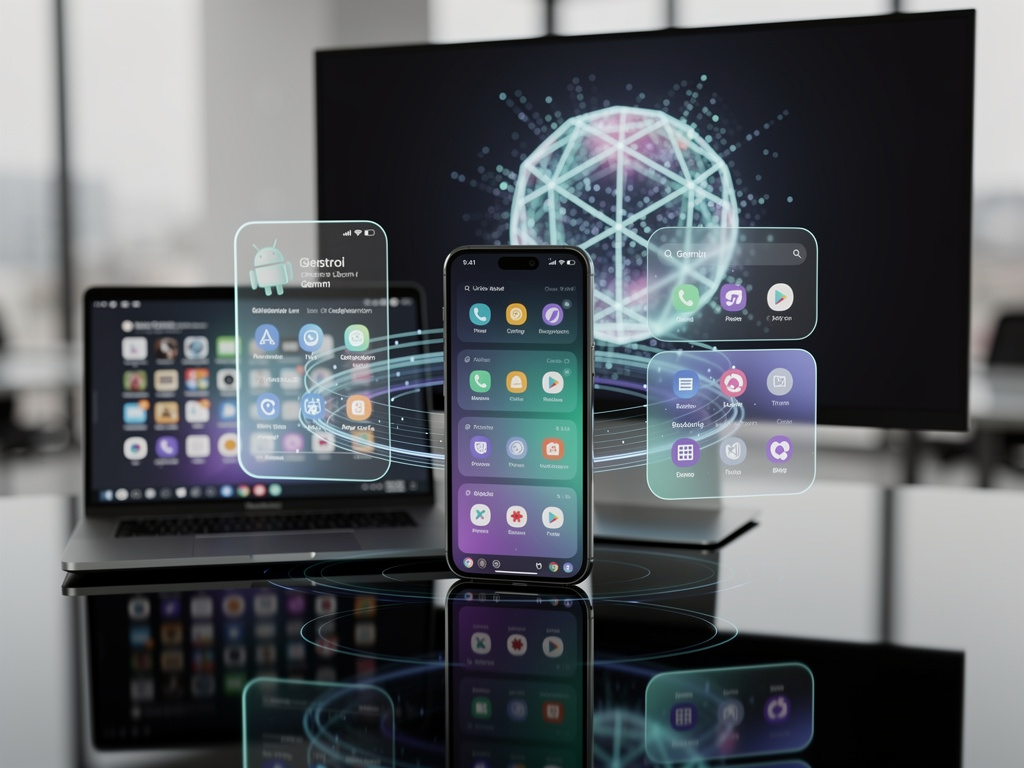
Revolutionizing the Screen: Android’s Bold Leap into Multitasking Mastery in 2025
In the ever-evolving world of mobile operating systems, Google is poised to redefine how users interact with their devices through a series of groundbreaking multitasking enhancements slated for Android in 2025 and beyond. Drawing from recent leaks and developer previews, these updates promise to bridge the gap between smartphones, tablets, and even emerging form factors like foldables and XR headsets. At the heart of this transformation is a focus on seamless app management, AI integration, and productivity tools that could finally make Android a formidable rival to desktop environments.
One key innovation surfacing in reports is the “drag-to-bubble” feature, which allows users to convert any app into a floating window with a simple gesture. This isn’t just a cosmetic tweak; it’s a fundamental shift in how apps coexist on screen. According to insights from WebProNews, this capability draws inspiration from existing desktop paradigms, aiming to position Android tablets as genuine alternatives to traditional PCs. Industry experts suggest that by enabling effortless app bubbling, Google is addressing long-standing complaints about fragmented multitasking on larger screens.
Beyond tablets, these changes are trickling down to smartphones. Leaks indicate that Google is preparing to introduce a phone-specific taskbar, complete with a recent apps button for quick access. This development, highlighted in posts from tech analyst Mishaal Rahman on X, builds on earlier experiments in Android versions, potentially rolling out in Android 16. The idea is to make switching between tasks as intuitive as on a computer, reducing the friction that often plagues mobile productivity.
Emerging Features in AI-Driven Multitasking
Perhaps the most talked-about update involves Google’s Gemini AI, which is receiving a significant overhaul to its overlay system. Currently, invoking Gemini often interrupts other activities by taking over the entire screen. But a new floating UI, now in beta testing, allows the AI to run in the background, responding to queries without disrupting ongoing tasks. As detailed in a report from PhoneArena, this upgrade could entice more users to adopt Gemini as a daily tool, transforming it from a novelty into a core multitasking companion.
This isn’t isolated; it’s part of a broader push toward tighter AI integration across the Android ecosystem. For instance, Android Central’s 2025 scorecard notes that Google accelerated the launch of Android 16, incorporating major UI overhauls and AI features earlier than usual. This includes enhanced split-screen capabilities and app pairing, evolving from concepts first teased in Android 12. Such integrations aim to make devices smarter, anticipating user needs like automatically bubbling chat apps during video calls.
On the hardware front, these software advancements are complemented by device-specific innovations. Samsung, a key Android partner, is expanding its ecosystem with multi-device sound features for 2026, but hints in recent announcements suggest multitasking synergies, such as seamless app handoffs between phones and tablets. Meanwhile, Google’s own Pixel lineup saw app portfolio growth in 2025, with exclusive tools that leverage these multitasking improvements, as covered in a recap by 9to5Google.
Challenges and Industry Implications
Despite the excitement, these updates aren’t without hurdles. Developers must adapt apps to support bubbling and floating modes, which could lead to inconsistencies across the vast Android device lineup. Reports from Android Central highlight that while Google nailed many aspects in 2025, challenges like update fragmentation persist, especially among third-party manufacturers.
Industry insiders point to potential productivity gains, particularly for professionals juggling multiple apps. A piece in Computerworld describes a “revelation” in third-party apps that quietly introduced advanced multitasking options, suggesting Google’s official features could inspire a wave of innovation. For tablets, this means evolving from media consumption devices to workhorses capable of handling complex workflows.
Looking at the competitive arena, these moves position Android against iOS, where multitasking has long been more constrained. Apple’s ecosystem emphasizes simplicity, but Google’s approach bets on flexibility, potentially attracting power users. Posts on X from users and analysts reflect growing enthusiasm, with many praising the bubble bar for making phone multitasking “way better,” echoing sentiments from early hands-on previews.
Innovations Beyond the Basics
Delving deeper, Android’s multitasking evolution includes subtle yet powerful tweaks like the redesigned QR code scanner and document tools in the December 2025 Google System Updates. These, as shared in X posts from Pixel UI enthusiasts, enhance stability and performance, ensuring that multitasking doesn’t drain battery or cause lags. Combined with power efficiency modes from Android 15 carryovers, devices can sustain prolonged split-screen sessions without compromise.
Another layer involves integration with emerging technologies. Android XR headsets, mentioned in Android Central’s outlook, could benefit from these features, allowing virtual multitasking in mixed-reality environments. Google’s fusion of ChromeOS elements with Android further blurs lines between mobile and desktop, enabling app continuity across platforms. This is evident in leaks about Gemini’s ability to pick up conversations mid-task, as noted in BigGo News.
For app developers, this shift demands new design paradigms. Creativity apps for tablets, spotlighted in a Peicheng QPS blog, are already adapting, turning devices into “creative powerhouses” with multitasking at their core. Expect more apps to embrace bubbling, allowing users to sketch while referencing notes or edit videos alongside research browsers.
User Sentiment and Future Prospects
Feedback from the tech community, gleaned from X discussions, shows a mix of optimism and calls for refinement. Users appreciate the Do Not Disturb supercharges from Android 15, which now offer customizable priority modes to minimize interruptions during multitasked workflows. However, some express concerns over privacy, especially with AI overlays accessing screen content.
Google’s strategy also ties into hardware releases. Exciting new devices in 2025, as previewed by Android Headlines, incorporate foldable designs that amplify multitasking potential, like dual-screen app pairing. Rankings from Android Authority place Google and Samsung at the top for embracing these innovations, while others lag in software support.
As 2025 wraps up, with the current date marking late December, these developments signal a maturing platform. The MSN article on Android’s potential major overhaul, accessible via MSN, underscores that while specifics remain under wraps, the direction is clear: more fluid, intelligent interactions.
Strategic Shifts in Ecosystem Dynamics
Strategically, Google’s accelerated update cycle—major builds in summer, minors in winter—ensures these multitasking features reach users faster. This responsiveness counters past criticisms of slow rollouts, fostering greater ecosystem enthusiasm as noted in Android Central’s report. For businesses, this means enhanced tools for remote work, where employees can juggle emails, documents, and chats without switching contexts.
Third-party contributions are amplifying Google’s efforts. Apps like those improving focus timers, mentioned in X posts, integrate with new multitasking APIs, offering automatic status updates during calls or calendar events. This symbiotic relationship could lead to a richer app store, where multitasking isn’t just a system feature but a developer-driven experience.
Internationally, adoption might vary. In regions with high tablet penetration, like Asia, features like the bubble bar could see rapid uptake, boosting productivity in education and creative fields. Conversely, in smartphone-dominant markets, the phone taskbar might drive the most impact, simplifying daily tasks for billions.
Anticipated Rollouts and Expert Views
Rollout timelines point to early 2026 for many features, with betas already teasing capabilities. A BGR report on Google’s big change to multitasking, found at BGR, emphasizes Gemini’s background operation as a game-changer, allowing uninterrupted AI assistance.
Experts anticipate ripple effects across industries. In healthcare, multitasking could enable doctors to reference patient data while consulting AI tools. In transportation, apps might overlay navigation with real-time updates. These applications extend beyond consumer use, potentially influencing enterprise software.
User education will be key. Google might launch tutorials or in-app guides to maximize adoption, addressing any learning curve. As sentiment on X suggests, early adopters are eager, with posts highlighting how these updates make Android feel “technologically advanced.”
Broader Technological Context
Tying into wider trends, Android’s multitasking push aligns with advancements in edge computing and 5G, enabling smoother multi-app performance. Integration with Matter protocol for smart devices, as seen in recent updates, could extend multitasking to IoT ecosystems, like controlling home devices while working.
Challenges remain, such as ensuring compatibility with older hardware. Google’s focus on optimization tweaks, like those for digital declutter in 2026, aims to boost performance across the board, as per X discussions.
Ultimately, these innovations position Android as a leader in mobile computing, blending AI, gestures, and app fluidity into a cohesive whole. As the platform evolves, users and developers alike stand to gain from a more versatile, efficient experience that redefines what’s possible on a handheld device.


 WebProNews is an iEntry Publication