
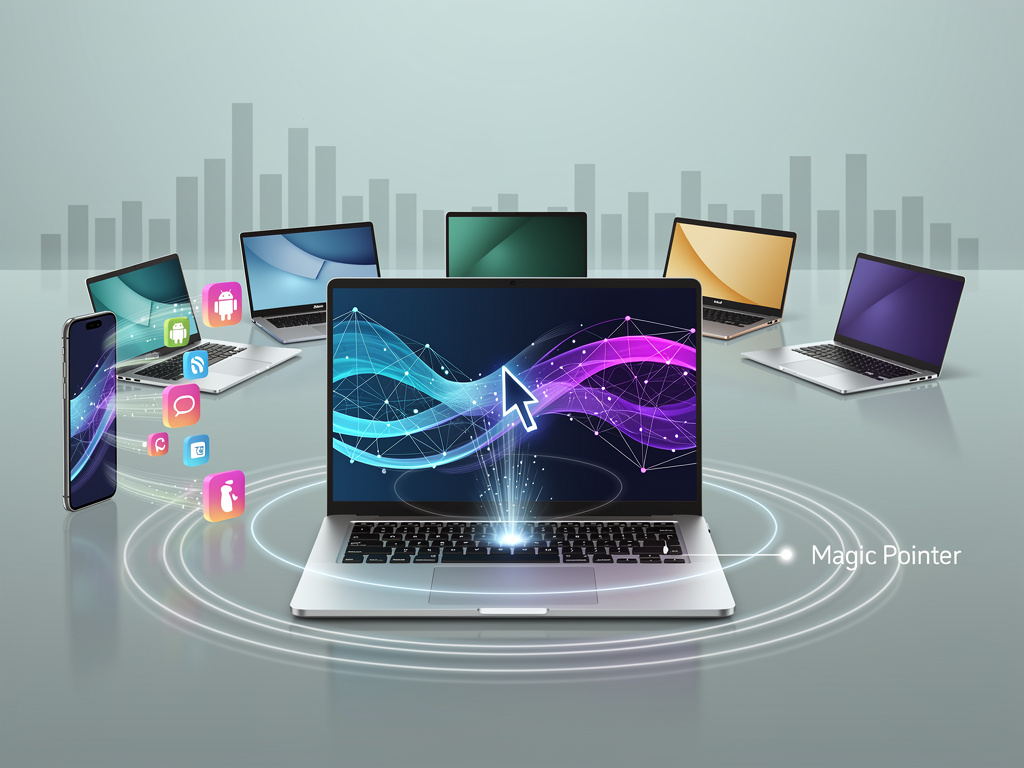
Google just unveiled a new category of laptops built from the start around its Gemini AI. Called Googlebook, the devices arrive this fall from partners including Acer, ASUS, Dell, HP and Lenovo. They run a modern operating system that blends Android apps with Chrome-like browsing. And they push artificial intelligence into places users have never seen it before.
The standout element is Magic Pointer. Wiggle the cursor over text in an email or an image on screen. Gemini immediately offers contextual actions. No separate app. No typing a prompt. Just point and act. In one demonstration, hovering over a date pulled up calendar options, reply suggestions and nearby meeting spots pulled from Maps. Drag a photo of nursery decor onto a wallpaper image and the system generates a composite scene. The whole process skips the usual upload-and-chatbot routine.
“The Magic Pointer uses Gemini to offer helpful, contextual suggestions right at your cursor,” the company stated in its official announcement. The feature was built with Google DeepMind. It aims to make assistance available at every point of interaction rather than only when summoned.
Alex Kuscher, senior director of laptops and tablets at Google, explained the thinking in interviews. “You want to take advantage of the fact that this ecosystem is innovating so fast that you make sure that laptops are at the tip of that innovation wave,” he told Wired. “We’re building on top of Android technologies—the apps are primary citizens that have access to hardware, have access to the OS at a level that would not be possible otherwise.”
That Android foundation changes how apps behave. Phone applications run natively on the laptop. Users can launch Duolingo in a portrait window that mirrors the mobile experience. Files sync instantly between device and phone through a Quick Access pane. No manual transfers. No cloud middleman for basic handoffs. The setup gives Android phone owners a more unified workflow than anything available to iPhone users on these machines.
Users can also create custom widgets by describing them in plain language. Tell Gemini to pull flight details, hotel reservations and a trip countdown into one dashboard element. The system assembles it from Gmail, Calendar and web data. Such tools build on features coming to Android 17 but feel native here.
Hardware carries a signature touch. Each Googlebook features a glowbar, a light strip on the lid that displays Google colors. It faces outward when the laptop opens. The bar serves as both brand marker and functional element with some undisclosed Easter eggs. Partners promise premium materials and craftsmanship. These machines target the higher end of the consumer market, well above typical Chromebook prices.
The timing looks tough. IDC has forecast an 11.3 percent drop in PC shipments for 2026 amid RAM shortages and longer device lifespans. Googlebook devices will compete against premium Windows laptops with Copilot and MacBooks that already embed their own intelligence layers. Yet the company sees an opening. Chromebooks succeeded in education and budget segments. Googlebook aims higher. It gives the search giant a fresh shot at the broader premium laptop business it has largely ceded to Apple and Microsoft.
Chromebooks themselves are not disappearing. Kuscher stressed continued support for that lineup, especially in schools and institutions. “We feel pretty committed to those users,” he said. Googlebooks represent a different category aimed at consumers who want more power and deeper AI assistance.
The underlying software carries the internal code name Aluminium OS. It takes the Android codebase as foundation, as Android chief Sameer Samat outlined in earlier comments. Chrome browser remains central. Play Store apps gain desktop-grade adaptations that adjust for larger screens and full hardware access. This approach lets Google move faster than the old Chrome OS development cycle allowed.
News coverage appeared quickly after the Tuesday reveal during The Android Show: I/O Edition. Digital Trends highlighted how the cursor-driven AI makes assistance proactive instead of reactive. The publication noted that real success will depend on what manufacturing partners deliver in the fall. The Register observed that the AI integration feels even more pervasive than Microsoft’s Copilot efforts in Windows 11. Hovering over screen elements triggers suggestions without user request. Some may find that intrusive.
Google also expanded Gemini Intelligence features for high-end Android phones like Pixel and Samsung Galaxy devices. Those updates, rolling out this summer, focus on automating tedious tasks such as form filling, web summarization and cleaning up voice transcripts. The phone work complements the laptop push. Together they signal a broader bet that AI should handle routine digital drudgery across every screen a person owns.
But questions remain. How accurate will Magic Pointer suggestions prove in daily use? Will the system respect privacy when it analyzes on-screen content? Google has not detailed exactly how much processing happens locally versus in the cloud. Hardware requirements likely include a capable neural processing unit, given the AI demands, though specific chipsets were not named. Intel Core Ultra, AMD Ryzen AI and Snapdragon X series processors have been mentioned in analyst speculation on X.
Reactions on the platform mixed curiosity with skepticism. Some users praised the phone-laptop integration as long overdue. Others worried about constant AI nudges. One post noted Google moved from experimental Bard to embedding Gemini everywhere in roughly 18 months. The speed impresses. The pervasiveness gives pause.
Googlebook arrives at a moment when the entire PC industry wrestles with slowing demand. Longer support cycles mean buyers keep machines for eight or ten years. AI features must deliver clear productivity gains to justify premium prices. Drag-and-drop image editing and cursor-activated scheduling sound convenient. Whether they prove transformative enough to drive upgrades is the test ahead.
The company plans more details at Google I/O later this month and through the summer. Devices themselves land in September to November. By then early reviews will reveal if Magic Pointer feels like genuine help or digital distraction. For now the vision is clear. Google wants its AI watching over your shoulder, ready to act the instant you point.
And that changes the laptop experience in ways both practical and unsettling. The cursor no longer simply selects. It queries. It suggests. It anticipates. Users who welcome that future will find much to like. Those who prefer their machines quieter may look elsewhere.


 WebProNews is an iEntry Publication